Analysis of the Current Status and Prospects of Wild Vegetable Cultivation: An Emerging Industry Makes Its Mark
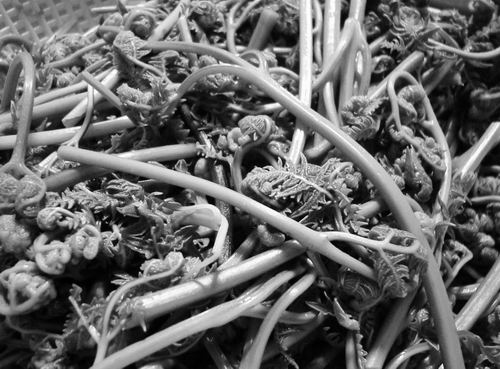
Fiddlehead fern
Shepherd's purse Image source: Baidu Images
Wild vegetables grow quickly and have strong reproductive capacity, and combined with their nutrient-rich, green and natural characteristics, they are deeply favored by growers and consumers at home and abroad.
■Our reporter Hu Xuanzi
In early spring in March, all things revive. When tasting fresh flavors in spring, wild vegetables are in vogue. In the vegetable market, wild vegetables are seemingly the darling of the season; although their prices are far higher than ordinary vegetables, they are still a seasonal fresh food that many people rush to buy.
The reporter learned that with the improvement of the utilization level of wild vegetable resources and the continuous expansion of market demand, wild vegetables have become a specialty industry in many regions and are becoming a thriving new agricultural industry.
Wild vegetables have a long history of being eaten
"Climbing that southern hill, I gather its fiddlehead ferns." "I gather the violets, the violets are sprouting." "The uneven water chestnuts, we gather them left and right." As is well known, these are all records about wild vegetables in the Book of Songs.
Wild vegetables not only have relatively high nutritional, medicinal and edible value, but also have relatively strong characteristics such as resistance to pests and diseases, tolerance to drought, moisture, high temperature, barren soil and salinity-alkalinity.
However, many wild vegetables that appeared in the Book of Songs have now become people's everyday vegetables. Take the fiddlehead fern mentioned in the Book of Songs as an example; this wild vegetable is widely distributed in the mountain forests of most parts of China and has now become a wild vegetable that people often taste.
For a long time, people ate wild vegetables mainly by gathering wild resources. Nowadays, in order to meet market demand, many wild vegetables have already begun to be cultivated artificially. Wild vegetables grow quickly and have strong reproductive capacity, and combined with their nutrient-rich, green and natural characteristics, they are deeply favored by growers and consumers at home and abroad.
At an agricultural trade product center in Beijing, the reporter saw that non-local wild vegetables such as Chinese toon and Artemisia selengensis, and Houttuynia cordata had already gone on the market and were selling at high prices. Chinese toon costs more than ten yuan per 50 g, and Artemisia selengensis also sells for more than 20 yuan per jin.
Some industry experts said that most of the wild vegetables sold on the market are artificially planted, while natural wild vegetables are generally mainly for self-sufficiency. Cultivated wild vegetables are better managed and have sufficient fertilizer and water, so they grow vigorously with lush branches and leaves; while wild ones grow relatively worse, but this is not absolute.
Wild vegetable cultivation rises
Ten years ago, Li Pengfei from Zhangjiakou, Hebei Province, tried planting wild dandelion for the first time. Dandelion can both be used as medicine and is a delicious wild vegetable. "Wild dandelion itself has strong vitality and grows quickly, and one crop can be harvested in 20-25 days," Li Pengfei told the reporter of China Science Daily.
This year he planted 40 mu of dandelion and also planted wild vegetables such as sand scallion and wild garlic in the field. In addition to selling fresh wild vegetables, he also processes the harvested wild vegetables into quick-frozen wild vegetables and wild vegetable dumplings, with the dumplings delivered to catering enterprises on a fixed basis.
Now, quite a few people, like Li Pengfei, have begun to engage in wild vegetable cultivation. Because wild vegetables have relatively strong adaptability to the environment and climate, and relatively strong resistance to pests and diseases, the amount of chemical fertilizer and pesticide applied is extremely small, so it can be said to require little investment, carry little risk and yield good returns.
Not only have individual farmers set their sights on the cultivation and planting of wild vegetables, but some regions rich in wild vegetable resources are also vigorously building up the wild vegetable industry.
For example, in Changzhi County, Shanxi Province, dandelion alone has an annual output of 7.2 million kg, with an annual output value of more than 6 million yuan. Driven by policy, led by leading enterprises, promoted by science and technology and spurred by services, the whole county presents a good situation in which one industry drives the economic development of a region.
Theoretically speaking, today's vegetables were once all wild vegetables, and today's so-called wild vegetables, after domestication, may also all become everyday table fare. Some domesticated wild vegetables are already different from pure wild vegetables. For example, wild dandelion generally has only five or six leaves, while dandelion planted at bases grows in clusters, and one hand cannot even hold it all.
"Wild vegetables need to undergo domestication from a wild state to an artificially cultivated state, and only then can they adapt to artificial concentrated cultivation," said Xiao Rixin, director of the Vegetable Research Institute of the Hainan Academy of Agricultural Sciences. Because each kind of wild vegetable has different environmental requirements for growth, research is needed when planting wild vegetables.
Precisely because wild vegetables have not undergone ecological domestication and their regional ecological adaptability is relatively obvious, only by paying attention to regionalized characteristics can high-yield and high-quality cultivation results be obtained.
How can the wild vegetable cultivation industry make its move
Once, wild vegetables were food for relieving famine and filling the stomach; now, because of their nutrition, health benefits and green nature, wild vegetables have become the "hot favorites" on the table, and the development and utilization of wild vegetable resources and the development of the wild vegetable industry have also received increasing attention in recent years.
In fact, wild vegetables are also agricultural products that earn foreign exchange through export. In Feixi County, Anhui Province, a certain company sells specialty wild vegetables to Japan, earning more than 5 million US dollars in foreign exchange annually. In Zhuzhou City, Hunan Province, a certain company is expected to export boiled wild fiddlehead fern to South Korea, accounting for 30% of the South Korean market, and the company's annual sales reach more than 60 million yuan.
However, as food, the domestic demand for wild vegetables is far less vigorous than that of overseas markets. In Li Pengfei's view, domestic consumers' awareness of wild vegetables is still insufficient, and the consumption habits for wild vegetables still need to be cultivated and strengthened. As agricultural products for sale and export, wild vegetables are also mainly primary products, so their added value is relatively low.
In fact, China is a country very rich in wild vegetable resources. Taking Hainan as an example, according to the results of a survey of agricultural wild plant resources organized by the provincial Department of Agriculture, the province has more than 130 kinds of wild vegetable germplasm resources. It can be said that the wild vegetables that have been developed and utilized so far are only a small part.
In 2015, members of the CPPCC in Wuzhishan City, Hainan Province, submitted a proposal titled "Vigorously Support and Cultivate the Wuzhishan Wild Vegetable Industry," believing that if the wild vegetable industry is supported and cultivated by the government, it can become a new growth point for the city's economy.
The proposal suggested cultivating leading enterprises, implementing a business model of company plus farmers, with the government providing support in many links such as policy, land, branding and sales, and adding a one-stop agricultural tourism project of planting, digging, eating and touring wild vegetables, using high and new technology to develop new products, such as developing quick-frozen products, wild vegetable juice and fermented wild vegetable foods, expanding the use of wild vegetable fruits, roots, stems, leaves and flowers, and extracting from them special nutritional components such as edible pigments, essences, spices, pectin, starch and sweeteners, thereby improving the utilization rate of wild vegetable resources, and so on.
Some experts also pointed out that wild vegetables are specialty resources of some regions, and to realize the sustainable development of the wild vegetable industry, it is necessary to do a good job in protecting specialty agricultural resources while increasing development efforts