Wild vegetables are selling well in the Ningbo market, with few varieties and mainly cultivated greens
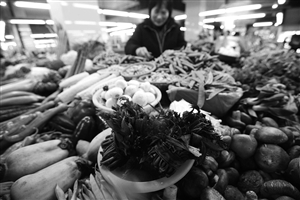
At a market in Jiangdong, local Chinese toon sprouts sold at a stall
Zhejiang Online, April 4 dispatch Kalimeris, Chinese toon, wild scallion, wild chive, fiddlehead……Recently, various wild vegetables have been very popular in the Ningbo market. However, it is not easy to eat delicious and authentic wild vegetables. There are not many varieties of wild vegetables in Ningbo's vegetable markets, and the wild vegetables supplied to the market are mostly "cultivated greens."
"Parents in the city might as well take advantage of holidays and take their children into the mountains, enjoying spring outings while picking wild vegetables, learning about farming and gaining some knowledge. This is very meaningful." Ma Minxia, who has more than twenty years of landscaping work experience, said that enjoying spring scenery and picking wild vegetables is timely, but there is quite a lot of knowledge involved.
Wild vegetables sell well in the market, with few varieties and mainly cultivated ones
A reporter visited vegetable markets in Ningbo and found that wild vegetables such as Indian kalimeris, Chinese toon, wild water dropwort, wild scallion, wild chive and fiddlehead were selling very well. "Kalimeris 8 yuan/jin, shepherd's purse 8 yuan/jin, kalimeris 8 yuan/jin, dog-head scallion 8 yuan/jin, Chinese toon 25 yuan/jin……" The reporter visited the Huayan, Yuehu and Zhangbinqiao vegetable markets and found that various wild vegetables were very popular. At Zhangbinqiao vegetable market, some residents carrying vegetable baskets were asking around for water dropwort and wild scallions.
"The weeds of the past have become new favorites on the dining table. One jin of Chinese toon is worth six or seven jin of eggs. At the most expensive time, it sold for 60 yuan/jin. Now the price of non-local Chinese toon has dropped to about 25 yuan/jin, while the price of local Chinese toon is 35 yuan/jin. Authentic wild wild vegetables are very rare. Take kalimeris, for example; the vast majority is grown in greenhouses." One vendor admitted, "If you really want to eat wild vegetables, it is best to go up into the mountains and dig them. There are plenty of all kinds of wild vegetables in the mountains."
"Compared with other wild vegetables, shepherd's purse comes to market early. It has now bloomed and is about to leave the market. Kalimeris and Chinese toon are in season and cheap, but most are cultivated." A vegetable market vendor said that many wild vegetables can now be eaten all year round precisely because they are grown in greenhouses.
The reporter's investigation found that eating wild vegetables has become a fashion among Ningbo residents, and some restaurants attract customers with wild vegetables. "There are wild vegetables in all four seasons. We have professional supply channels, including local wild vegetables and even more non-local wild vegetables, most of which are shipped in quickly from elsewhere." On the east side of the Yongjiang Bridge in Jiangdong, there is a restaurant called "Wild Vegetable Scoop" that specializes in wild vegetables all year round. The restaurant owner told the reporter, "We have run this wild vegetable restaurant for many years. We never advertise, but business has always been good." the restaurant owner said.
Ningbo has nearly 50 kinds of edible wild vegetables, and identifying them is "really hard"
"In this season, no matter which mountain you walk into, tender wild vegetables can be picked at hand. In the mountains, by mountain streams or riverbanks, they are available at any time." WeChat user "Sunshine 40" suggested to the reporter that to pick fragrant and tender wild vegetables, only by being in the mountains and "chewing" them can one "know the true face of wild vegetables." But the reporter's experience showed that identifying and picking wild vegetables in nature is really not easy.
"There is a lot of shepherd's purse here." In the mountains at Tiantong Temple, the reporter thought he had found a lot of shepherd's purse. "Not at all." After looking at the so-called shepherd's purse the reporter found, Sister Ma Minxia and her companions laughed heartily. "For a beginner, the mountains are all treasures, but to pick delicious and safe wild vegetables, you have to put in some effort and learn well." Sister Ma said that many residents who come for spring outings are at a loss about the wild vegetables in the mountains.
"When the children were very young, the first lesson I gave them was to recognize various wild vegetables and Chinese medicinal herbs in the mountains." Sister Ma said that Ningbo has nearly fifty common varieties of wild vegetables, including shepherd's purse, kalimeris, Chinese toon, water dropwort, plantain, houttuynia and mulberry leaves. Pointing to a clump of wild vegetables with small flowers, she said this was "white-haired summer bitter herb." "This herb often grows on roadsides, forest edges, grasslands, near villages and on relatively shady, moist and fertile soil by ditches. It can treat gum inflammation and oral inflammation."
In more than half a day, Sister Ma focused on introducing to the reporter more than 20 kinds of wild vegetables she herself eats, such as agrimony, eaten when having diarrhea, and Bainiaoli, which is covered with thorns all over so birds cannot land on it, but its tender tips are very tasty when stir-fried. Unfortunately, the reporter simply could not "digest" so many, and could confirm only wild kalimeris, wild scallion and fiddlehead.
What should be noted when digging and eating wild vegetables?
Sister Ma also told the reporter that different wild vegetables have different edible parts. Most wild vegetables are eaten for their tender leaves or whole plant, such as shepherd's purse, Chinese toon, kalimeris, water dropwort and dandelion; flower-eating wild vegetables include rhododendron, wisteria and pagoda tree flowers; root-eating ones include houttuynia, fleeceflower root, sand ginseng and Chinese onion.
Wild vegetables are not only delicious but also have certain medicinal effects. Many wild vegetables are also important Chinese medicinal herbs and can play a role in health care and treating diseases. For example, traditional Chinese medicine believes that kalimeris is pungent and cool in nature, slightly cold, and has the effects of clearing heat and detoxifying, cooling blood and stopping bleeding, promoting diuresis and reducing swelling, and resisting bacteria and inflammation. But experts suggest that although wild vegetables are tasty and nutritious, safety must be paid attention to. Wild vegetables that are unfamiliar or unrecognized must never be picked or eaten randomly. Residents who do not understand farming are best guided by someone when picking them.
"It is best to collect them in mountainous areas or open fields far from pollution sources. Wild vegetables growing on roadsides sprayed with herbicides, in places polluted by car exhaust, or at garbage dumps are best not collected for eating." Sister Ma said that in spring, farmland, flower and tree nurseries or fruit trees are often sprayed with pesticides, so do not go pick there. Before cooking, it is best to blanch the wild vegetables in hot water, then soak them in clean water, which helps remove toxins from the wild vegetables. Once you feel unwell after eating them, seek medical attention immediately, and remember to bring samples of the wild vegetables to make it easier for the doctor to treat the symptoms.