Why might the anti-tumor effect of Sanghuang be stronger than that of Lingzhi?
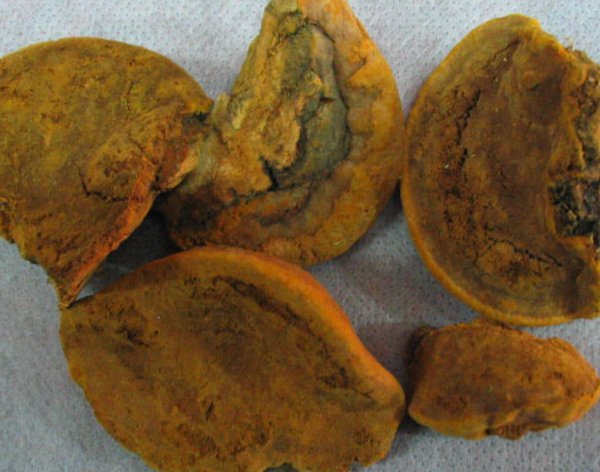
The anti-tumor effect of Sanghuang may be stronger than that of Lingzhi
Zhao Guoping
Hangzhou held two Sanghuang symposiums in half a year
Following the "Cross-Strait Lingzhi and Sanghuang Symposium" convened by the Hangzhou Association for Science and Technology on October 17, 2013, just half a year later, another national-scale "Cross-Strait Sanghuang Research and Industrial Development Symposium," hosted by the Mycological Society of China, was held in Hangzhou a few days ago. In just half a year, holding symposiums with basically the same content but with greatly increased attendance in the same city fully demonstrates the reality that Sanghuang is rapidly becoming popular in China's edible and medicinal fungi field.
This also seems to be a boom driven by market demand. Since 2010, in Hangzhou's famous time-honored Chinese medicine brands such as Hu Qing Yu Tang, Fang Hui Chun Tang, Ye Zhong De Tang, Wan Cheng Zhi Tang, Zhang Tong Tai, and Beijing Tong Ren Tang, wild Sanghuang, which had long been ignored by everyone, has repeatedly gone out of stock. After cancer patients took Sanghuang, their overall evaluations seemed better than those for Lingzhi. And starting this year, a group of patients with thyroid nodules and thyroid nodular adenomas have come to these time-honored Chinese medicine brands looking for wild Sanghuang. The wild Sanghuang resources in the areas around Hangzhou have long since been completely harvested.
The formation of the Sanghuang craze in the Hangzhou area cannot be separated from media guidance. However, industry insiders point out that today's consumers are very rational, and media hype alone cannot create a trend. Behind the Sanghuang craze, there must be genuinely credible effects that Sanghuang has brought to those who take it, and these effects cannot be replaced by anything else.
Hangzhou Hu Qing Yu Tang Chinese Medicine Pharmacy is one of the places where citizens most often go to buy Sanghuang, so typical cases related to Sanghuang frequently appear here. Last week, a consumer dressed in sanitation worker's clothing came to the counter, probably a sanitation worker from the Hefang Street area. She said that a month ago she had a 6 cm thyroid nodule on her neck. After taking Sanghuang for a month, the nodule, which originally felt hard to the touch, had become much softer and had shrunk by 1 cm. We asked whether they had the consumer's phone number, and they said they did not, and would ask again the next time this customer came.
Veteran pharmacists analyzed that in ancient times Lingzhi was roughly divided by color into 5 types: black Lingzhi governs the kidney, white Lingzhi governs the lung, yellow Lingzhi governs the spleen, red Lingzhi governs the heart, and blue-green Lingzhi governs the liver. Sanghuang belongs to the yellow Lingzhi category and strengthens the spleen. In traditional Chinese medicine, the spleen governs blood, which means Sanghuang enters the blood aspect, and this matches the record in the Yaoxing Lun. Tumors all have blood vessels. Sanghuang entering the blood aspect, activating blood circulation and removing blood stasis, softening hardness and dissipating nodules, may be the pharmacological mechanism by which thyroid nodules become softer.
In 2010, this publication began promoting Sanghuang. In view of the fact that wild Sanghuang, which had already been used in China's Tang Dynasty, had formed a mature industry in Japan and South Korea, while there was no movement at all here, after our reports there was almost no social response. At that time, our state of mind was lonely. In just 4 years, the development of Sanghuang in our province has greatly exceeded our expectations.
What reassures us even more is that Sanghuang may really be a wild medicinal fungus that is safer than Lingzhi and more effective for cancer patients. Although thousands of papers abroad say how much better Sanghuang is than Lingzhi, we have not seen domestic controlled clinical reports. We only heard from the time-honored Chinese medicine brands that nowadays cancer patients almost always specifically ask to buy wild Sanghuang.
The status of Sanghuang in South Korea and Japan is like that of Cordyceps sinensis here
Chen Ruoyun, a researcher at the Institute of Materia Medica of the Chinese Academy of Medical Sciences and an expert on Sanghuang and Lingzhi research in China, said that Sanghuang was also called Sangshen, Sang'er, or Husunyan in ancient China. In Japan and South Korea it is a medicinal fungus of high economic value. Taxonomically, it belongs to the fungal kingdom, Basidiomycota, Hymenochaetales, and Hymenochaetaceae. The name Sanghuang first appeared in the Yaoxing Lun written by Zhen Quan in the early Tang Dynasty 1380 years ago, which records its effects as: "Treats women's uterine bleeding and leukorrhea, menstrual blockage and blood coagulation, postpartum blood coagulation, men's abdominal masses, and also treats latent blood and lower red blood." It subsequently also appeared in the Xinxiu Bencao, the world's earliest officially compiled pharmacopoeia issued by the Tang Dynasty, and the Bencao Gangmu written by Li Shizhen in the Ming Dynasty also records the therapeutic effects of Sanghuang.
Professor Wu Shenghua, a researcher at the National Museum of Natural Science in Taiwan, China, is an expert on Sanghuang research. At the "Cross-Strait Sanghuang Research and Industrial Development Symposium" held on the 14th of last month, he said, "Because atomic bombs were dropped during World War II, cancer cases increased in the Hiroshima and Nagasaki areas. However, it was found that residents who had been evacuated to the island of Nagashima in Nagasaki had relatively good health and fewer cancers because they took Sanghuang, which was abundantly produced on the island. Research then began on the traditional medicinal fungus Sanghuang abundantly produced on Nagashima. In 1968, Japanese scholars published the anti-cancer effects of Sanghuang. They transplanted sarcoma 180 cancer cells into experimental mice, then injected hot-water extracts of more than 10 kinds of mushrooms into the abdomens of the mice, comparing the effects of these mushrooms in inhibiting cancer cell proliferation. As a result, Sanghuang's tumor inhibition rate reached as high as 96.7%, the highest among the tested mushroom species. Japan was the first to discover Sanghuang's miraculous anti-cancer effects through modern science. How could South Korea, which regards Sanghuang as a national herbal medicine, lag behind? South Korea began fully supporting Sanghuang research and development in 1984, and 10 years later the South Korean government approved Sanghuang mycelium as an anti-cancer auxiliary drug. To date, the vast majority of research papers worldwide on the pharmacology and medicine of Sanghuang have been proposed by South Korean scholars. The status of Sanghuang in Japan and South Korea is like that of Cordyceps sinensis in mainland China."
Sanghuang information we found online
From the materials we can see that Sanghuang is indeed very popular abroad.
A China News Service report on August 3, 2006, and the overseas edition of People's Daily on August 8, 2006, successively reported under the titles "Scientific Research Finds: Sanghuang Mushroom Helps Fight Cancer" and "British Chinese Scientists Find: Sanghuang Mushroom Helps Treat Prostate Cancer" a new discovery about Sanghuang: Chinese scientists at Boston University School of Medicine in the United Kingdom found that adding Sanghuang mushroom extract to the cancer drug "doxorubicin" can improve the drug's effectiveness in treating prostate cancer.
Chinese scientist Chen Changyan, who was in charge of the research, introduced in British Journal of Cancer: "Research shows that Sanghuang mushroom has a certain effect on cancer cell activity in the bodies of prostate cancer patients." The researchers added Sanghuang mushroom extract to a small dose of anti-cancer drug (because a large dose might overshadow the medicinal properties of Sanghuang mushroom), and found that the effect was equivalent to a large dose of anti-cancer drug without Sanghuang mushroom, effectively killing cancer cells without damaging normal cells, and with lower toxicity. Lewis of Cancer Research UK said: "There is currently evidence showing that Sanghuang mushroom extract mixed with certain anti-cancer drugs can slow the growth rate of prostate tumors."
In the November 26, 2007 issue of Medical Economic News, the author Xu Zhengkui wrote in "Sanghuang: The King of Anti-Cancer Fungi, with No Mature Industrial Chain in China," that abroad people believe Sanghuang's anti-tumor effect is stronger than that of Lingzhi, and Sanghuang is regarded as the "king of anti-cancer fungi."
Contemporary scholars generally acknowledge Sanghuang as the medicinal fungus with the first-ranked efficacy in the field of biological anti-tumor activity, and it has become a hotspot in the field of medicinal fungus research.
Experiments confirm that Sanghuang has an extraordinary ability to activate the human immune system. Through various animal and human experiments, it has been proven that Sanghuang can increase the activation level of NK cells by 2 times, T cells by 3 times, B cells by 129 times, and macrophages by 3 to 5 times (the above cells are collectively called white blood cells and are disease-resistance cells of the human body; the higher the activity of these cells, the better the patient's own immune function). By activating the human immune system, Sanghuang uses the body's own immune cells to attack tumor cells, thus avoiding the side effects produced by anti-tumor drugs or radiotherapy. If Sanghuang is used together with anti-tumor drugs or radiotherapy, it can further reduce side effects such as loss of appetite, high fever, vomiting, and hair loss. For patients who receive radiotherapy and chemotherapy after surgery, taking Sanghuang can restore and strengthen the immune system, thereby achieving the purpose of preventing tumor recurrence or inhibiting the metastasis of residual tumor cells.
Let us look at some clinical data.
Researcher: Yamana Seizo
Research institution: Saijo Central Hospital, Japan
Treatment subjects: 8 patients with advanced stomach tumors, 5 patients with lung tumors, 8 patients with liver tumors, 4 patients with esophageal tumors, and 5 patients with rectal tumors; among them 16 males and 14 females.
Treatment drug: 6 grams of Sanghuang administered daily. Therapeutic effect: patients generally reported reduced pain, improved appetite, maintained body weight, and reduced fatigue. In addition, the immune response of patients' lymphocytes (PHA response and ConA response) was tested, and it was found that the lymphocyte immune response of the group taking Sanghuang was almost the same as that of normal people, while the response of tumor patients not taking Sanghuang was significantly weakened. This further indicates that Sanghuang effectively enhanced patients' immunity, thereby correspondingly improving various symptoms of terminal cancer patients.
Clinical example of combined use of anti-tumor drugs and Sanghuang after stomach tumor surgery
Researcher: JounYonhun
Research institution: Chungnam National University College of Medicine, South Korea
Treatment subjects: 93 patients with terminal stomach tumors after surgery.
Treatment drug: the anti-tumor drug 5-fluorouracil (5-Fluorouracil) 600 mg, while orally administering 3.3 grams of Sanghuang daily for more than 2 years.
Therapeutic effect: during the treatment period, 3 cases died of tumor recurrence (accounting for 3.2% of the total), while the remaining 90 cases (accounting for 96.8% of the total) maintained a good condition. Based on physicians' treatment experience, it was judged that Sanghuang effectively inhibited tumor metastasis in these patients.
Analysis of the effect of Sanghuang in promoting immune recovery after resection surgery in stomach tumor patients
Researcher: KimJonboku
Research institution: Seoul National University
Treatment subjects: a total of 40 patients with terminal stomach tumors after gastrectomy, including 26 males and 14 females.
Treatment drug: this was a single-blind experiment. Group 1 was given the anti-tumor drugs mitomycin (Mitomycin, MMC) and 5-fluorouracil (5-Fluorouracil), and took Sanghuang 30 minutes after meals, 3 times a day; Group 2 was given anti-cancer drugs and, at the same time, a placebo 3 times a day.
Therapeutic effect: for patients who underwent gastrectomy, the numbers of immune T lymphocytes and helper-T lymphocytes were tested as indicators for evaluating recovery of immune function. The results found that the immune function recovery rate of the group taking Sanghuang was higher than that of the group taking only chemical anti-tumor drugs.
In the expert speeches at the symposium held on April 14, experts from the Xi'an Institute of Microbiology confirmed that Sanghuang showed clear anti-tumor activity in experiments, and that larger doses had better effects, with very clear tumor inhibition data for liver cancer, intestinal cancer, breast cancer, and stomach cancer animals.
Their experiment verified the observations of veteran pharmacists at Hu Qing Yu Tang Chinese Medicine Pharmacy. The veteran pharmacists at Hu Qing Yu Tang Chinese Medicine Pharmacy observed that the effect of taking 20 grams of Sanghuang daily was more obvious than that of taking 10 grams daily.
We visited a family member of someone who took Sanghuang. She said, my younger sister found a lump in her left breast in 2005 and had surgery. In May 2012, a lump was also found on the right side, and on July 22 she had surgery at Zhejiang University Second Hospital, and then began chemotherapy. The reaction was severe, and she would vomit more than 10 times a night. People in the same ward said to buy some wild Lingzhi to eat, and the reaction might be less. I thought Hu Qing Yu Tang is an old pharmacy, so after going there, the veteran pharmacist at Hu Qing Yu Tang said it would be better to take it together with wild Lingzhi. Only then did I know about Sanghuang. We started taking it immediately after bringing it back. After 20 days, at the second chemotherapy session, she vomited once or twice. Then after another 20 days, at the third chemotherapy session, my younger sister only felt a little nauseous and did not vomit. By the fourth chemotherapy session, she did not vomit at all. In this way she smoothly completed 6 chemotherapy sessions, and then had tests, and all indicators were normal.
Dr. Cai Weiming, a researcher at the Zhejiang Academy of Agricultural Sciences, editor-in-chief of Edible and Medicinal Mushrooms, vice president of the Zhejiang Provincial Edible Fungi Association, and an expert on Sanghuang research in our province, collected 5 germplasm resources of wild Sanghuang in our province from Lishui, Tonglu, and Chun'an in 2012. His analysis showed that among wild Sanghuang, those with short growth years had low polysaccharides, total flavonoids, and total triterpenes, while those with long growth years had high contents of polysaccharides, total flavonoids, and total triterpenes. Sanghuang has a definite effect on cancer patients.