Large-scale artificial cultivation of sanghuang succeeds
Report from our correspondent (correspondent Yang Yan, reporter Zhang Xingyong): Currently, in the greenhouse of the cultivation base of the Shaanxi Institute of Microbiology located in Dazhai Township, Yangling Demonstration Zone, golden crescent-shaped fruiting bodies have been emerging one after another on 5,000 sanghuang mushroom bags, growing vigorously. This marks the success of large-scale artificial cultivation of sanghuang in China.
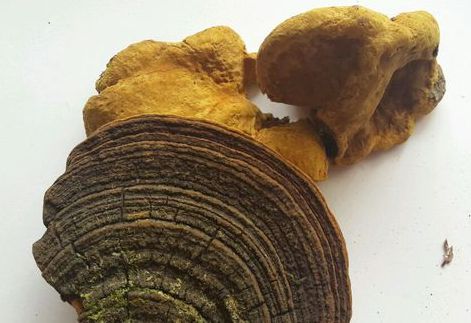
Sanghuang is known as the “forest gold” and is a traditional precious Chinese medicinal material. As market demand has increased over the past 10 years, sanghuang has been subjected to predatory harvesting. Due to the particularity and complexity of sanghuang's own physiology and ecology, the damaged wild sanghuang resources are difficult to restore and are even on the verge of depletion.
In 2006, Lei Ping, associate researcher at the Shaanxi Institute of Microbiology, led a team to discover sanghuang in the Qinling Mountains and isolated strains from it, carrying out a series of studies. Through the unremitting efforts of the researchers, the team successively made major breakthroughs in sanghuang strain identification, biological characteristics, submerged fermentation of mycelium, artificial domestication and cultivation, analysis of active ingredients, and safety toxicology and pharmacology research. In 2013, the team broke through the technical bottleneck in research on artificial cultivation of sanghuang and achieved success.
In addition, the research team also commissioned the Shaanxi Provincial Center for Disease Control and Prevention to conduct acute toxicity tests on artificially cultivated sanghuang fruiting bodies and fermented mycelium, and the test results showed that they belong to the non-toxic class; together with the Fourth Military Medical University, Northwest University, and the Institute of Materia Medica of Shaanxi University of Chinese Medicine, they conducted systematic research on the pharmacological effects and efficacy of sanghuang fermented mycelium. The test results showed that sanghuang fermented mycelium has a significant inhibitory effect on S180 and H22 tumor-bearing mice tumors and on tumors in HepG2-bearing nude mice, and has a certain therapeutic effect on chronic renal failure.