Why is the American potato industry so dominant?
Whether in planting area or total output, China's potatoes rank first in the world. However, 90% of China's potatoes are used for fresh consumption, and their economic value is far from being fully realized. The United States, by contrast, has far less potato planting area and total output than China, yet it makes huge profits in the world potato trade, becoming the country that earns the most money from potatoes in the world.
According to statistics from the United States Department of Agriculture, as early as 2004 the United States had planted and harvested more than 480,000 hectares of potatoes, with an output of 20.6 billion kg and an output value of 2.6 billion US dollars. So how did the American potato industry become so big and strong?
I. Regulations and standards solidify the foundation
The United States exercises legal supervision over products and enforces strict standards on the industry. In 1939, the United States introduced the Agricultural Marketing Agreement Act, and under this act the United States established the National Potato Council, which mainly carries out trade legislation and resolves domestic and international trade disputes.
Several states with large potato output established potato administrative committees. According to the Colorado Potato Administrative Committee, their duties are to research seed potato breeding, disease prevention, nutrition, storage, promotion, marketing and consumption, provide services according to customer needs, and provide relevant suggestions to relevant government departments on potato legislation. Of course, they are also responsible for supervising and inspecting the implementation of technical standards.
A click on the website of the United States Department of Agriculture shows that the United States has several hundred standards for potatoes, from seed potatoes to fresh potatoes, from storage to processing, all requiring testing and certification. All operations are based on the regulations of the U.S. Food and Drug Administration (FDA) and the United States Department of Agriculture. Each process must pass inspection by the United States Department of Agriculture, and all plants comply with HACCP operating norms to ensure the level of food safety.
The reporter visited two farms and three storage and processing plants in Colorado and Idaho, and in all of them saw quality inspectors testing fresh potatoes and seed potatoes; fresh potatoes alone have 4 grades. Products that pass inspection all have labels affixed to their packaging. According to the introduction, the United States Department of Agriculture's inspection of major potato production areas is mandatory, and starting before shipment, a series of physiological and biochemical tests must be passed. The United States Department of Agriculture has testing institutions and agricultural product organizations in every state, and inspectors all undergo strict training by the United States Department of Agriculture; only inspectors who meet the requirements can take up their posts. The health and hygiene conditions of inspectors are also assessed. The testing standards and testing procedures for all identical products are unified to ensure consistency of quality. Only products that pass inspection can enter the market. Both the testing process and the testing results must be archived, and customers can check them at any time.
On the website of the United States Department of Agriculture, one can also find the names of companies that have passed comprehensive inspection standards. The United States Department of Agriculture has a set of standards for comprehensive assessment of companies. The list of qualified companies is updated at any time according to inspection conditions.
It is precisely these regulations and strict testing standards that have solidified the foundation for the development of American potatoes, ensuring the standardized and stable development of the entire potato industry.
II. Scientific research and technology as the backing
All 50 states in the United States grow potatoes, but the main production areas are 10 states in the Midwest such as Colorado, Idaho, Washington and Wisconsin. This is because they have ideal growing temperatures, fertile soil, a complete scientific research system, modern machinery and equipment, and professional experience passed down from generation to generation, which makes American potato products outstanding.
In American potato cultivation, different potatoes for different uses are selected according to the different climate and soil conditions of each state. In Colorado, for example, because the main production area is in the San Luis Valley, where the environment is isolated from the outside and there are few pests and diseases, seed potatoes and fresh-eating potatoes are mainly grown. Idaho, by contrast, mainly produces commercial potatoes for processing.
The key to potato quality and yield lies in the seed potatoes. Colorado's potato research center is located in the main seed potato production area———the San Luis Valley. When we visited, we saw only a dozen or so small single-story houses, and really could not believe that this was the largest and most important potato research institution in the United States. But the facts told us that this place is truly excellent.
This research center is part of Colorado State University, and mainly conducts research on seed potato cultivation, potato pest and disease control, and mechanical equipment for water saving and high yield. According to the director of the research center, the center has only 5 professors, plus dozens of support staff. It has 160 acres of experimental fields and has already developed 475 varieties of seed potatoes. Seed potato cultivation mainly conducts experiments in many aspects, including increasing yield and resistance to pests and diseases, adaptability to the external environment, and nutrition and quality. Generally, seed potatoes require 16 to 18 years of research and cultivation, and even the fastest takes 6 to 8 years, going through 5 to 6 generations of breeding before they can be commercialized. However, seed potato cultivation at this center has already formed a virtuous development cycle, and several new varieties are brought to market every year.
Of course, in order to accelerate the promotion of new products, the center will sell some first- and second-generation seed potatoes to seed potato growers. When we visited SanLuisHillsFarm company, we saw the second- and third-generation fingerling seed potatoes they were growing, and these seed potatoes were not for sale yet; they had to be grown for another two generations, and only sold once the yield was high. The farm owner DavidRadtke told us that seed potato cultivation must be certified, and detailed records must be kept of what pesticides were used during cultivation, how many times they were used, when they were used, and the storage time after harvest, for inspection.
We also saw in American supermarkets that colored fresh-eating potatoes cost 1.99 US dollars per pound, while ordinary potatoes cost only 99 cents. Therefore, the continuous introduction of new varieties is very beneficial to improving both the quality and value of potatoes.
In addition to cultivating high-quality new potato varieties, the Colorado Potato Research Center is also responsible for research and determination of suitable soil fertilizer amounts and reduction of soil pollution, finding different management methods for different varieties, and at the same time researching water-saving and high-yield measures and irrigation methods, the best time to spray pesticides before harvest, and which crops rotated with potatoes best preserve the solid matter of the soil, and rapidly promoting the research results to growers.
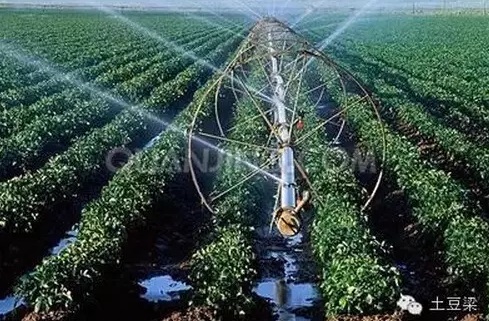
Because Colorado is very arid and annual rainfall is very low, irrigation mainly relies on groundwater and melted snow water from snowy mountains, so water-saving research is very important. In the past, they always used movable sprinkler irrigation machines to spray fertilizer and water mixed together. Now the research center has found through experiments that using drip irrigation with fertilizer placed in the pipes can not only save 30% of water, but also produce better results, and it is now being promoted to growers.
American potato growers use mechanized operations from planting to harvest and storage. We saw that because the potato vines had already been killed by spraying 26 days before harvest, in the distance only moving harvesters could be seen; after harvesting, the potatoes were directly loaded into trucks and pulled to warehouses, and through conveyor belts the potatoes on the trucks were sent directly into the warehouse for storage. The efficiency was extremely high, in stark contrast to China's digging by people and transport by horse.
Strong scientific research power and a high degree of mechanization have become a solid backing for the development of American potatoes.
III. Deep processing through multiple channels increases added value
Deep processing is an extension of the industrial chain. Modern deep processing is an important link in the appreciation of American potatoes. According to information provided by the United States Department of Agriculture, in 2004 the uses of American potatoes were: 37% frozen potato products (such as frozen French fries, potato puffs, potato rings, handmade fries, potato wedges and frozen whole potatoes); 32% fresh potato products (such as baked, boiled or mashed potatoes); 12% potato chips (including straight-cut fries); 12% dehydrated potatoes and potato starch (extruded chips, potato cakes, mashed potatoes, and canned stews); 6% seed potatoes; 1% canned (such as small potatoes, various stews, soups, chowders and potato salad).
According to statistics, the output and consumption of processed potato products in the United States account for about 76% of total output, and there are as many as hundreds of kinds of potato foods. In supermarkets, potato foods can be seen everywhere. There are more than 300 companies nationwide producing fried potato chips, and each person consumes an average of 60 kg of potato foods per year. In addition, potatoes are also processed into starch, feed and alcohol, and the processing volume has accounted for about 85% of potato output. At present, the United States already has several hundred varieties of processed products made from potatoes. It can be said that from food to use, processed potato products can be seen everywhere.
Potato processing in the United States starts right from the sale of fresh potatoes. Many growers process while harvesting, processing fresh potatoes into various packages according to the requirements of sellers. Idaho is the main production area for processed potatoes. In the city of Richby, we visited DaleMickelsen company, and it really opened our eyes. This company integrates cultivation and deep processing. They grow 7,000 hectares of potatoes, produce more than 100 million kg of potatoes, and process 750,000 kg of fresh potatoes every day. When we went, it was the busiest processing season, with 50 workers per shift and two shifts. Potatoes enter the processing line directly from the truck for washing, then move to an automatic sorting system, and after photographic sorting, potatoes of different sizes automatically enter different production lines. Some are made into quick-frozen potatoes, and some are put into bags to become French fries and potato chips. Products sold as fresh potatoes finally still have to go through manual screening once more, and are then packaged according to different customer requirements. From entering the production line to completing the entire packaging takes only more than 20 minutes, and the efficiency is astonishing.
This enterprise also produces potato bowls, French fries, mashed potatoes and frozen potatoes, and in addition to supplying the domestic market, it also supplies large quantities to Japan and South Korea. The host invited us to taste all the products, some of which were produced according to local flavors requested by importers, and to be honest, they were quite good. A 4-piece pack of stuffed potato bowls can sell for 4 to 5 US dollars, and the potato bowl is actually made from half a potato. The economic benefits of deep processing are evident.
At present, various American food research institutions and potato processors are also responding to people's demand for healthy diets by experimenting with the optimal ratio of flavor and fat content in potato foods, reducing fat content while ensuring deliciousness. Solving the issues consumers care about, increasing sales of potato products, and striving to maximize profits are the eternal goals of American processors.
IV. Associations are the vanguard of publicity and promotion
The United States has all kinds of agricultural product associations, and these associations become the vanguard of product publicity and promotion. The United States Potato Board is one of them.
The United States Potato Board (USPB) was founded in 1972, with its headquarters in Denver, Colorado. It was initially initiated by some potato growers to publicize and promote the dietary benefits of potatoes. The United States Potato Board represents the interests of more than 6,000 potato growers and operators across the United States. The association operates in a corporate manner, electing one board chairman and 104 directors each year to supervise the work of the association's president. The association's funding is mainly paid by potato growers according to sales proportion, at 2.5 cents per pound. When conducting training, seminars or promotion activities, it can apply to the United States Department of Agriculture and receive government funding.
The United States Potato Board has 25 offices around the world, and its staff is also very streamlined. It has been very active in recent years and is one of the earliest organizations to develop a commercial nutritional value table and obtain approval from the United States Department of Agriculture and the U.S. Food and Drug Administration. For a long time, the United States Potato Board has been committed to promoting the benefits, nutrition and multiple uses of potatoes to consumers, retailers and culinary professionals through cultivating consumer public relations, conducting nutrition education, holding retail point activities, implementing food service marketing and export plans.
We also saw that the potato association attaches great importance to publicizing and promoting potato cooking methods to industry service departments. They have established close ties with American culinary research institutions and food producers, researched new potato recipes, and funded the American Culinary Institute to train chefs to learn to cook various potato dishes. This year, the United States Potato Board launched another educational activity to publicize the extraordinary nutritional value of potatoes to consumers.
The goal of the United States Potato Board is to establish a healthy image for potatoes through public relations, introduce their nutritional value, provide recipes, encourage people to eat more, and promote them to retailers. In addition, it also needs to expand the application range of potato products through innovation.
In recent years, in its international promotion plan, the United States Potato Board has made Asia an important market, with 75% of the entire promotion funds spent in Asia. The association has established offices in Beijing and Shanghai, and last year alone it held dozens of seminars in China. It is precisely because of the association's tireless sales promotion and training that more and more people have come to recognize the advantages of American potatoes. It should be said that the American potato industry has been able to develop and grow continuously and gain increasing fame, and the United States Potato Board has made an indispensable contribution.
Some experts predict that within the next 10-plus years, global potato production will increase at an annual rate of 2.02%, and it is expected that by 2020 global potato production will increase from the current roughly 300 million tons to more than 400 million tons. Because of population growth, the advantages of the potato crop itself, the food supply crisis and economic development, Asia, especially Southeast Asia, Africa and Latin America will become hot regions for potato development in the world. As a major potato country, should China also make some moves?
V. The production of high-quality potatoes and dehydrated potatoes is second to none
Potatoes have high economic value and nutritional value. American potatoes are available all year round without shortage, and growers supply high-quality potatoes to processors throughout the year, including the early-harvested orkitahs and Shepodys varieties, and the later-maturing RussetBurbanks variety. American potatoes used for processing must have high "solid content" and low "sugar content." The so-called "solid content" refers to the content of dry matter inside the potato. "Solid content" determines how much water needs to be evaporated during the dehydration process, as well as the amount of oil absorbed by the potato during the frying process.
The United States is not only recognized as the country with the highest output of fresh and frozen potatoes, but its production of dehydrated potatoes is also second to none in the world. Because American varieties of potatoes are large and plump, the French fries made from them are the longest in the world, which also brings better production efficiency and higher profits. American processing plants use the top-grade fresh potatoes; in fact, the raw materials they use have an average total solid content of more than 21%. They also adopt special technologies, such as automatic defect removal and inspection systems, to reduce as much as possible the occurrence of discoloration or spots on French fries.
In the United States, dehydrated potatoes are very popular. Manufacturers first select first-grade white-fleshed varieties of potatoes, whose taste and mouthfeel are extremely outstanding. Only mature, firm and intact potatoes are selected to make dehydrated potato products; inferior goods or residual substances from other production processes are never used. There is a wide variety of dehydrated potato products, including potato dices, potato slices, potato shreds, mashed potatoes, potato granules, potato flour and frozen dehydrated potatoes, with a full range of styles.