How are rural dilapidated house renovation subsidies paid? Understanding the differences in amounts between households
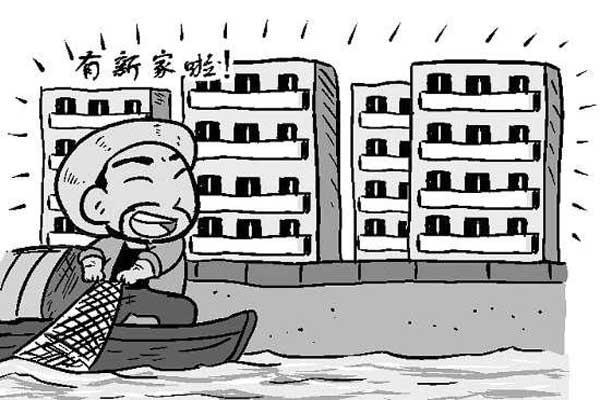
Rural dilapidated house renovation was a benefit policy proposed by the state in 2008 to solve the basic housing safety problem of disadvantaged rural people. In 2008, Guizhou was the first to be used as a pilot, and after 2009 it was rolled out comprehensively. The subsidy standards are also divided into two stages and differ. In addition to the central government financial subsidy portion, localities also allocate some financial funds for subsidies according to actual conditions. During the subsidy process, adjustments are also made according to the danger level of the dilapidated house and the circumstances of the renovation household, so different regions have different standards, and in the same region different renovation households also have different standards.
When the 2008 dilapidated house renovation policy was piloted in Guizhou, a preliminary survey was carried out first, and arrangements were then made according to the applications of renovation households. During the survey process, rural houses were divided into four grades: A, B, C, and D, namely, in order, no danger points, has danger points, partially dangerous, and wholly dangerous. Among the four grades, only C and D belong to dilapidated houses, and in Guizhou dilapidated houses were divided into first, second, and third grade dilapidated houses. Generally, the targets arranged each year for dilapidated house renovation are the dilapidated houses registered in the 2008 survey and statistics and entered into the system in later years.
The subsidy standards are also not egalitarian, but are divided according to the actual circumstances of the renovation household. Different renovation households and different grades of dilapidated houses have different standards.
Subsidy standards of the first stage:2008-2011 (the central government financial subsidies were respectively: 5000 yuan in 2008, 5000 yuan in 2009, 6000 yuan in 2010, and 6000 yuan in 2011. On this basis, an additional 2000-2500 yuan subsidy was given per household to some frontline poor farmers in border areas and building energy-efficiency demonstration households). At the same time, localities also increased subsidies according to actual conditions and adjusted subsidy standards according to the circumstances of renovation households and the renovation method. The renovation methods were mainly reconstruction and repair and reinforcement. The specific subsidy standards in Guizhou are as follows:
A: First-grade dilapidated house of a five-guarantee household,an average subsidy of 20,000 yuan per household; second-grade dilapidated house of a five-guarantee household, an average subsidy of 5,000 yuan per household; third-grade dilapidated house of a five-guarantee household, an average subsidy of 3,000 yuan per household;
B: First-grade dilapidated house of a low-income household,an average subsidy of 20,000 yuan per household;
C: First-grade dilapidated house of a disadvantaged household,an average subsidy of 10,000 yuan per household;
D: First-grade dilapidated house of an ordinary household,an average subsidy of 5,000 yuan per household;
E: Low-income households, disadvantaged households,and ordinary households with second-grade dilapidated houses, an average subsidy of 3,000 yuan per household;
F: Low-income households, disadvantaged households,and ordinary households with third-grade dilapidated houses, an average subsidy of 2,000 yuan per household.
Subsidy standards of the second stage:From 2012 to now (the central government financial subsidies were respectively: 7500 yuan in 2012, 7500 yuan in 2013, 7500 yuan in 2014, and 7500 yuan in 2015. On this basis, an additional 1000 yuan subsidy was given per household in poor areas, and an additional 2500 yuan subsidy was given per household to frontline poor farmers in border areas and building energy-efficiency demonstration households respectively. Likewise, localities also adjust according to the renovation method and actual conditions, and different situations have different standards). The specific standards in Guizhou are as follows:
A: First-grade dilapidated house of a five-guarantee household,an average subsidy of 22,300 yuan per household; second-grade dilapidated house of a five-guarantee household, an average subsidy of 8,500 yuan per household; third-grade dilapidated house of a five-guarantee household, an average subsidy of 7,000 yuan per household;
B: First-grade dilapidated house of a low-income household,an average subsidy of 22,300 yuan per household;
C: First-grade dilapidated house of a disadvantaged household,an average subsidy of 12,300 yuan per household;
D: First-grade dilapidated house of an ordinary household,an average subsidy of 8,300 yuan per household;
E: Low-income households, disadvantaged households,and ordinary households with second-grade dilapidated houses, an average subsidy of 7,000 yuan per household;
F: Low-income households, disadvantaged households,and ordinary households with third-grade dilapidated houses, an average subsidy of 6,500 yuan per household.
These are the per-household subsidy standards at the provincial, city, and prefecture levels. In the specific implementation process, each county and city will also appropriately adjust the per-household subsidy standards according to the poverty level of the renovation household, the danger level of the house, and other actual circumstances. But no matter how they are adjusted, they will not be lower than the above standards. Judging from the subsidies actually paid into the hands of renovation households, generally very few counties and cities make adjustments, one could say none.
Having covered the subsidy standards, let us now look at the conditions for applying for dilapidated house renovation. Generally, rural dilapidated house renovation subsidies are based on the household as a unit, with the head of the household submitting the application, but the applicant must simultaneously meet these conditions:First, have local agricultural household registration and live locally, and be the owner of the house property rights; second, belong to a dilapidated house household registered during the 2008 rural dilapidated house survey and entered into the national rural housing information system; third, belong to any one type among rural five-guarantee households, low-income households, disadvantaged households, and ordinary households.
In the next section, the editor will explain in detail how to apply. Please continue to follow Nongji. If you like it, please subscribe to Nongji and see information you cannot see elsewhere.
Article by Shanxiao
Welcome to subscribe to Nongji, a self-media platform that records the lives of rural people and truly speaks the truth for rural people
Reproduction must obtain the consent of the author of this Toutiao account. Without authorization, reproduction is not permitted.