Gansu Province Local Chinese Medicinal Herbs Inventory, Overview of Main Varieties
From March 15 to June 15 of this year, the market prices and external sales volumes of major locally produced Chinese medicinal herbs in Gansu Province have remained stable. Trading in the province's main herb markets has trended toward sluggishness. Although buyers and pharmaceutical companies had purchasing demand after the overall price of Chinese medicinal herbs in the market began to rebound in the first half of the year, they are still watching the later trend of the herb market. At present, the market prices of Chinese medicinal herbs in Gansu Province are still in a period of restorative increase, and the upward trend is emerging. Now, let us join the author in taking stock of the market conditions of Gansu's local varieties.
I. Hot Spots in Gansu Province's Chinese Medicinal Herb Industry
(2016.03.15-2016.06.15)
1. In April of this year, taking advantage of the stabilization and recovery of the Chinese medicinal herb market, Gansu Province took the lead in advancing quality management of Chinese medicinal herbs and formulated the "Opinions on Promoting the Standardized Development of the Chinese Medicinal Herb Industry." Subsequently, in the same month, it issued the "Measures for the Supervision and Administration of Traditional Chinese Medicine Decoction Pieces in Gansu Province (Interim)." The implementation of these opinions and measures is undoubtedly a major positive for the development of traditional Chinese medicine. Gansu Province has now established local standards for Chinese medicinal herbs and increased full-chain traceability of Long medicine production, strengthening supervision for the standardization of Chinese medicinal herbs across the province.
The cultivation of Chinese medicinal herbs in Gansu Province has become the leading industry for increasing farmers' income in some areas. Among them, income from medicinal herbs in Tanchang County of Longnan and Min County of Dingxi accounts for nearly 60% of farmers' per capita net income. In some major production towns such as Meichuan Town in Min County, Shouyang Town in Longxi, and Hadapu Town in Tanchang, it has even reached more than 70%. The scale of storage and primary processing of Chinese medicinal herbs in Gansu Province is also gradually expanding. At present, there are more than 100 Chinese medicinal herb processing enterprises in Gansu Province that have passed GMP certification, processing about 200,000 tons of genuine regional medicinal herbs annually, with a processing output value of about 2.5 billion yuan; the annual trading volume of the province's herb markets is 1.8 million tons, with a transaction value of more than 20 billion yuan; there are more than 20 modern warehousing and logistics enterprises with over 1,000 tons each, with a static storage capacity of more than 600,000 tons and an annual turnover storage capacity of 1.2 million tons.
2. In order to promote standardized management in the cultivation, production, processing and other fields of genuine regional medicinal herbs, Gansu Province has specially formulated the "Measures for the Administration of the Certification of Genuine Regional Medicinal Herbs in Gansu Province (Trial)." The Measures stipulate that, within the administrative region of Gansu, medicinal herbs that have been selected through long-term clinical application in traditional Chinese medicine, are produced in specific regions, are affected by specific production and processing methods, have better quality, better efficacy and stable quality compared with the same kind of medicinal herbs produced in other regions, and have relatively high reputation, may be declared for Gansu genuine regional medicinal herb certification by bases producing genuine regional medicinal herbs and units engaged in the production of genuine regional medicinal herbs only after the Provincial Health and Family Planning Commission organizes experts to review and issue standards.
II. Market Inventory of Gansu Varieties
1. Codonopsis pilosula
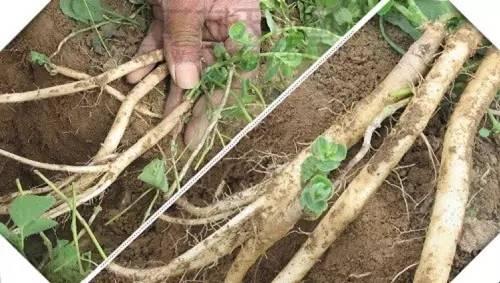
Figure 1: Codonopsis pilosula
From July 2015 to early 2016, Codonopsis pilosula ended its low-price market and prices showed a gradual, small upward trend. The price of pharmaceutical factory goods rose from 15 yuan to 28 yuan. At the beginning of this year, affected by the listing of seedlings, commodity prices fell somewhat. In May, the Codonopsis pilosula market had sufficient supply, goods moved slowly, and the market remained sluggish. Recently, the number of merchants seeking goods at the production areas has increased, supply has continued to move smoothly, and the price increase has been obvious. Prices have followed the production areas upward. At present, the price of small strips has risen from 25-26 yuan in May to the current 30 yuan; due to differences in quality, the price of medium strips has risen from 36-37 yuan last month to 40 yuan. The author has also noticed that, as the industry's supervision of medicinal herb quality becomes stricter, local governments also continue to strongly support sulfur-free processing of Chinese medicinal herbs. The sulfur fumigation of Chinese medicinal herbs represented by Codonopsis pilosula will gradually be effectively controlled. This year, due to the poor quality of Codonopsis pilosula seedlings, output may decrease by about 30%. This will be one of the focuses of merchants' attention in the future.
2. Angelica sinensis
Figure 2: Angelica sinensis
Recently, the number of merchants seeking goods in Angelica sinensis production areas has increased, and goods are moving briskly in small batches. Most market merchants currently hold a wait-and-see attitude, goods movement is not as brisk as in the production areas, and market conditions have temporarily shown no obvious fluctuation. At present, loose pharmaceutical factory goods are priced at 40-42 yuan, and good unified goods suitable for slicing are 45-47 yuan. Although Angelica sinensis planting has not been reduced in the past two years, it has not expanded much either. During the continuous price decline over the past two years, most of the goods hoarded at high prices have been gradually thrown onto the market. The inventory held by market operators is already visibly small, and goods mostly remain in the hands of farmers and large holders. Whether Gansu's Angelica sinensis output this year will decline due to the flooding of immature seedlings is being continuously watched by many merchants.
3. Astragalus membranaceus
Figure 3: Astragalus membranaceus
The Astragalus membranaceus market and production areas have sufficient supply, but due to a lack of actual demand, there are not many purchasing merchants. Holders have a strong willingness to actively sell, goods movement still has not improved, and the market continues to remain sluggish. At present, Gansu medium strips are priced at 16 yuan and small strips at 12 yuan. In terms of planting scale, the planting area of Astragalus membranaceus has not increased substantially in recent years, and the newly added area mainly comes from expanded planting in new production areas; in terms of inventory, it has also accumulated year by year in recent years. Therefore, the Astragalus membranaceus market has fallen into weakness, and merchants generally expect that it will be difficult for the Astragalus membranaceus market to improve in the short term.
4. Glycyrrhiza uralensis
Figure 4: Glycyrrhiza uralensis
The Glycyrrhiza uralensis market has sufficient supply, but due to a lack of actual demand, there are not many purchasing merchants. Holders have a strong willingness to actively sell, goods movement still has not improved, and the market continues to remain sluggish. At present, Gansu unified slices are sold at 10.5 yuan in the market, and slices passing a 0.3 sieve are sold at 11.5 yuan. As a major variety, Glycyrrhiza uralensis has basically maintained stable market conditions and prices in recent years, and goods movement in production areas has recently been mediocre. In the market, goods mainly move in small batches, while large goods move very little. This product has abundant market inventory, which is estimated to be difficult to consume in the short term. Prices fluctuate little, and attention from medicinal herb merchants is not high. However, as a conventional medicinal herb, market conditions should not fluctuate greatly in the short term, and the later market will continue to remain stable.
5. Epimedium
Figure 5: Epimedium
Recently, Gansu Epimedium has been in the new harvest period for some time, and new goods have been listed successively. However, after earlier consumption, old goods in the market are no longer abundant. Seeing this, holders have raised prices for sale, causing the Epimedium market to rise recently. In Gansu Epimedium, because pharmaceutical factories and merchants in the market have continuously maintained purchasing strength recently, goods movement has remained relatively smooth, and prices have consequently become firm. At present, unified goods meeting content standards are priced at about 70 yuan, and high-quality goods at 80 yuan. Due to strong attention from merchants and increasingly strict national controls, the later market is likely to continue polarizing amid fluctuations. It is worth noting that the problem of low content in cultivated varieties will still be a key bottleneck in the development of the Epimedium-related industry.
6. Arctium lappa
Figure 6: Arctium lappa
The purchasing and sales situation in Arctium lappa production areas has recently been good, popularity has gradually increased from multiple sides, and the market has risen steadily. At present, Gansu unified goods are sold at 14 yuan in the market. After the end of the 2015 harvest, Gansu production area unified goods once fell to 8 yuan. The recent rebound from the bottom indicates that the production efficiency of Arctium lappa is relatively low, farmers' planting enthusiasm has declined, the production scale has been reduced, and the supply-demand relationship is changing. Although current market and production area inventories are not as large as in previous years, most merchants still hold a certain amount of goods. Therefore, the author believes that in the short term Arctium lappa needs to actually consume inventory, creating conditions for business opportunities to appear later.
III. Outlook for Gansu Varieties
Affected by multiple snowfalls and temperature drops last winter, many medicinal herbs have favorable factors for reduced output. Under the overall environment of tightening market supervision, the 2016 herb market will still be a year of volatile adjustment. With the release of favorable factors from nationwide reductions in medicinal herb production, reduced pressure from inventory consumption, and a recovery in popularity, the Chinese medicinal herb market will gradually enter a new round of upward cycles in the future.