There are so many white tea varieties, so why is White Peony the only one I'm devoted to?
The "Dictionary of Chinese Tea" has an entry explaining: "Modern Chinese tea is divided into six major categories based on differences in manufacturing methods and the oxidation rate of tea polyphenols, namely green tea, white tea, yellow tea, oolong tea (blue tea), dark tea, and black tea." Fuding white tea is one of the six major categories of tea.
When did Fuding white tea originate?The exact year and month are difficult to verify, but the folk story of "Taimu Niangniang planting tea to cure illness" has been passed down for a very long time. It tells of a peasant woman from Caibao Village at the foot of Taimu Mountain during the reign of Emperor Yao, who was kind-hearted and always ready to help others, doing many good deeds. She made her living by planting indigo, and the villagers respectfully called her Lan Gu (Blue Auntie). One year, a measles epidemic broke out, spreading to villages around Taimu Mountain. Watching the disease claim many young lives, Lan Gu was frantic with worry and led the villagers up the mountain to search for medicine, but all efforts were in vain. At night, Lan Gu dreamed of the Old Man of the South Pole, who told her that on top of "Hongxue Cave" there was a tea tree, and that picking its leaves, drying them in the sun, and brewing them in boiling water would make a good medicine for treating measles. Upon waking, Lan Gu took advantage of the moonlight, found the tea tree among the thickets atop the cave, picked the tea leaves, dried them in the sun, and distributed them to every village, instructing people to boil the tea for the children to drink, and finally the sick were cured. From then on, people planted tea trees all over Taimu Mountain, with the seeds coming from the mother tree at "Hongxue Cave." The dried tea leaves became white tea, named "Lüxueya" (Green Snow Bud). Lan Gu attained the Dao and became an immortal on Taimu Mountain, and people worshipped her as "Taimu Niangniang" and recognized her as the founding ancestor of Fuding white tea.
The folk story expresses roughly three intentions: first, that white tea has a long history; second, that white tea has healing properties; and third, praise and reverence for Taimu Niangniang. Every time I visit Fuding, I hear this folk legend, and hearing it so many times, one tends to believe it as true. However, intentions cannot replace reality, and legends generally cannot serve as historical evidence.
Perhaps Taimu Niangniang's era is too distant, so there is also the story of Chen Huan and his bond with tea. It is said that during the 19th century, Chen Huan, a man from the Zhulantou natural village of Guojian Village in Diantou Town, was a filial son. His mother was blind in both eyes, and the family was too poor to afford medicine for treatment, so he vowed to eat a vegetarian diet as an act of devotion, praying for the gods to protect his mother. One day, while farming on the mountain, Chen Huan felt drowsy and dozed off, truly dreaming in broad daylight. In the dream, someone told him that on the opposite hilltop there was a tea tree, and that picking its buds and leaves, boiling them into a liquid, and washing his mother's eyes with it would cure her illness. After waking, Chen Huan found this tea tree, followed the instructions, and indeed restored his mother's eyesight. Overjoyed, Chen Huan transplanted and cultivated this mother tree, continuously propagating it, and through tea he became wealthy. Thus some people in folk tradition believe Chen Huan was one of the earliest tea farmers to transplant Fuding white tea. The story again features a wise figure giving guidance in a dream, unable to escape the conventional formula, mixing truth and fiction, and remains a legend.
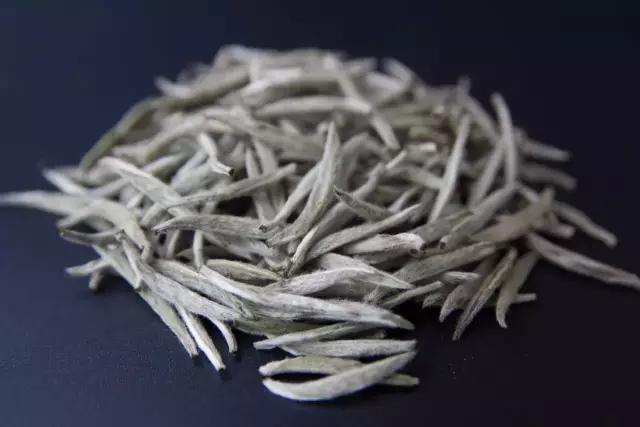
The renowned Chinese tea scientist Zhang Tangheng, in his book "Chinese Tea Manufacturing Techniques," records: "In the 60th year of the Qianlong Emperor's reign (which should be the first year of the Jiaqing Emperor -- 1796), Fuding tea farmers picked the buds and down from ordinary tea tree varieties to make Silver Needle." In the "Dictionary of Chinese Tea," under the entry for "Baihao Yinzhen" (Silver Needle), the time of its creation is confirmed to be consistent with this, so the tea industry generally regards 1796 as the founding time of white tea. Many historical questions have differing viewpoints, and there is still debate about when white tea originated. I think this is normal and awaits further verification.
White tea has many characteristics: lightly fermented and "closer to nature," mild in taste and suitable for many people to drink, possessing medicinal properties for household storage, and aged tea cakes are convenient to store. Of course, white tea has considerable economic value, benefiting tea farmers and merchants substantially. Additionally, it was brought to Southeast Asia by overseas Chinese in earlier times, giving it overseas distribution channels. In the Fuding tea region, white tea is inevitably highly esteemed.
A tea song composed in the late Qing Dynasty and early Republic of China era, "She Family Praises White Tea," sings:
"White tea is white as an immortal, born beside the rocks of Taimu, it is the Buddha Mother's sweet dew branch, cultivated for thousands of years. White tea is white as silver, ancients revered it as the antidote spirit, cooling and detoxifying, reducing internal heat, itinerant doctors used it to save all people. White tea is vast and white, spitting pearls at night and reflecting light by day, the She family calls it the money tree, made into tea grains to trade with foreign lands. White tea is vast and white, traded to foreign lands for silver, silver exchanged to build tea houses, picking green and making tea passed down through all ages."
So many white teas, 5 reasons for being especially devoted to White Peony
White Peony is actually not the most beautiful. When it comes to beauty, Baihao Yinzhen (Silver Needle) may be more delicate, as every single bud of Silver Needle looks pleasing to the eye. As for the intensity of floral fragrance, the new-process white tea, with its added light rolling step, has a more intense and prominent aroma that is immediately noticeable.
Why am I so devoted to White Peony?
First, appearance:Beautiful as a flower. Although its appearance cannot match the uniqueness of every single bud of Baihao Yinzhen, White Peony's uniform, flower-like shape is enough to make one enchanted. As the saying goes, buds and leaves connected in branches forming a flower, and upon close inspection it really does look like a blooming flower. The underside of the leaves reveals bud down, with a green surface and white underside, which locals also call "blue sky and white earth." Its leaf surface and veins differ in color, presenting a "green leaf with red veins" appearance, also called "red attire wrapped in white silk," rich in color.
Second, aroma:A refreshing melon-like aroma. The inner quality of White Peony retains a rich down fragrance, which textbooks call "down fragrance and honey rhyme," but my personal impression is that besides the down fragrance, it presents a refreshing melon-like aroma. Compared to Baihao Yinzhen's clearer, more transparent feel, it is richer, and compared to Shoumei's single leaf fragrance, it is more complex.
Third, the taste is more intense.This is also one of the reasons many tea lovers enjoy it. Pure buds inevitably have the characteristic of insufficient richness in internal substances, while appropriately adding leaves can increase its stimulation, also creating a throat rhyme similar to that of Lapsang Souchong, Dahongpao, and even Pu'er tea -- truly the pleasant sensation of tea soup gliding over the throat.
Fourth, rich experience after aging.If the internal substances are not rich, there is no aging value. With nothing there, how can it age? That is why teas like Pu'er with rich internal substances often taste better after aging, and White Peony also satisfies this characteristic. Unlike Baihao Yinzhen's simplicity, whose aging effect is not obvious, and unlike Shoumei which after aging has a somewhat monotonous medicinal fragrance, White Peony after aging still retains considerable richness. So, keeping some White Peony and watching it slowly change is also a kind of enjoyment.
Fifth, more moderate in cost-effectiveness.Baihao Yinzhen is not the most cost-effective commercially, because it involves purely picking or extracting buds, so even slightly inferior products are generally priced above White Peony. White Peony, on the other hand, has both a rich taste and is not too expensive. In fact, overall, it is even more affordable than green tea. While Shoumei and Gongmei are cheaper, they lack a certain down fragrance and the aesthetic beauty of an appearance worth admiring.
Of course, we must also recognize that different white teas have different characteristics, and everyone has different preferences and priorities. A beautiful appearance may be worth ten points to me but twenty points to you -- there is no good or bad in this, it is simply a choice.
But no matter what you choose, I just love White Peony this much.