Seedless lychees cultivated in Chengmai, Hainan sell well even at 98 yuan per jin
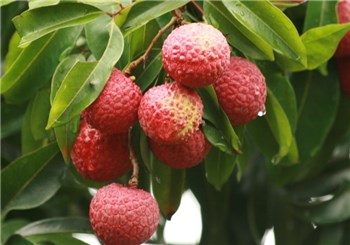
In Chengmai County, Hainan Province, lychees sell for as much as 98 yuan per jin. Since large-scale harvesting began on the 26th, more than 6,000 boxes of lychees have been shipped to all parts of the country every day, trucks hauling goods line up at the orchard gates, and many buyers worry that they "won't be able to get any goods."
"In the past we depended on the weather; now we depend on technology. The seedless lychees I cultivated are high-yielding and high-quality, with an average yield of more than 1,000 jin per mu, and the seedless rate of the fruit each year reaches more than 99 percent." Wang Tingbiao, 70 this year, is called the "Lychee King" by local villagers. He devoted more than 30 years of effort to researching and cultivating "seedless lychees."
Because this kind of lychee has no pit in the flesh, grows in pairs, and is large, juicy and sweet, it is sought after by consumers.
In 1982, Wang Tingbiao, an ordinary farmer from Qiaotou Town, Chengmai County, used 37 fine and rare Hainan lychee mother trees and, through countless rounds of selection, successfully bred a new variety, successfully cultivating the low-temperature-sensitive seedless type "Seedless Lychee A4." To date, he alone holds five lychee production technology patents, including "Lychee Seedless Agent," "Seedless Lychee Fruit-Stabilizing Agent," "Lychee Fruit Cell Membrane Preservation Agent," "Lychee Modifying Agent," and "Seedless Lychee Seedless Fruit Production Technology."
"This year I have just cultivated potted seedless lychees. A small lychee tree covered with red fruit can be moved into the home, and you can pick and taste the fruit whenever you like." As he spoke, Wang Tingbiao's order phone never stopped ringing.
Wang Tingbiao has also cultivated a large number of "seedless lychee" seedlings for shipment to other places. Guangdong, Guangxi, Fujian and other places have planted 1,500 mu. Although this has helped increase local farmers' incomes, Wang Tingbiao is full of worry: "Seedless lychee cultivation is technically demanding. Farmers do not know how to care for them, and the fruit quality has always been very poor."
Chengmai County has used Wang Tingbiao's patented technology to develop large seedless lychee production bases such as Luqiao and Meili. Group-based production and investment in science and technology funds have greatly increased seedless lychee output. Yang Sitao, secretary of the Chengmai County Party Committee, introduced that this year the county's seedless lychee planting area reached more than 10,000 mu, with more than 7,000 mu bearing fruit, and output value is expected to be more than 300 million yuan.
At the Luqiao seedless lychee base, the reporter saw that among the green branches and leaves of the fruit-bearing lychee trees were clusters of fiery red seedless lychees, and more than 200 farmers were busy picking them. In the production and processing workshop, all three production lines were running, and more than 300 employees were sorting and packing. Li Wengui, director of the base's production factory, said: "This year the base has 110,000 fruit-bearing trees, with output of more than 1 million jin. Online sales are currently booming, with more than 12,000 orders shipped in three or four days."
In fact, agricultural science and technology cannot be separated from capital investment. The base has invested more than 20 million yuan to build lychee processing workshops, including fully air-conditioned sorting and packaging workshops, a 200-ton cold storage and a -20°C low-temperature cold storage. Li Wengui said that investment in funds and technology has extended the freshness period of "seedless lychees" and allowed them to be sold farther away.
The quality and taste of Chengmai County's seedless lychees far exceed those of ordinary lychees. A fruit-bearing area of more than 7,000 mu appears very small relative to the national market. Therefore, the agricultural science and technology research and development of "seedless lychees" is far from being able to stop here.
"Now seedless lychees have only a one-month fruit production period each year, concentrated in June and July. Such a short marketing period is very unfavorable for an industry. This is exactly the direction I want to study, expanding lychee production in Hainan to the whole year," Wang Tingbiao said.