Why do farmers burn straw after it is collected? The reason is simple
By Xiangye Shenghuo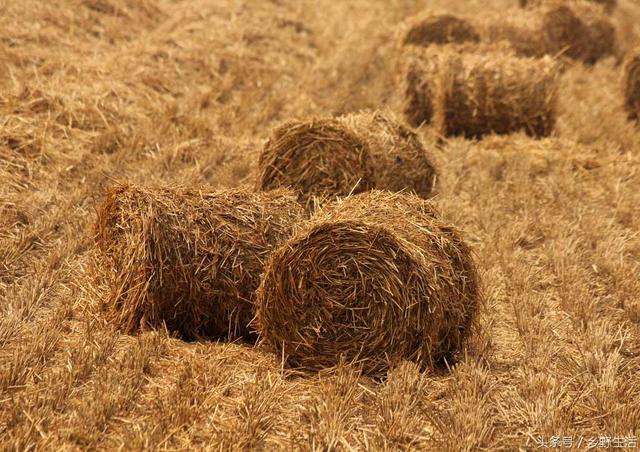 First, from the perspective of timing, the period for collecting straw happens to be close to the harvest season. For farmers, harvesting crops is simply the most important moment of their entire year. Who would settle for second best and go off to collect straw instead?
Second, analyzing from the perspective of human resources, to give a simple analogy: if the entire autumn harvest workload is regarded as 1 unit of work, then the time taken up by collecting straw reaches 0.5 units of work. A larger workload means greater labor costs. Straw collection can be simply broken down into the following steps: gathering and bundling the straw, loading it onto a cart, and transporting it. Never mind that the process is complicated; just the transportation alone is extremely heavy physical labor.
Finally, from the perspective of cost, in earlier years straw could be used as a raw material for papermaking. If there was a paper mill nearby, the straw had a good outlet. Although this was putting waste to use, rural people are not foolish either. Adding in the manpower and material resources, the cost of collecting it in the end exceeded the returns. Over time, they stopped bothering with it.
Burning straw inevitably has its advantageous aspects. High school chemistry has already introduced this in detail: the plant ash left after straw is burned is the best nutrient for plant growth. How could farmers not want a fertilizer that is so easy to obtain, effective, and low in cost? Furthermore, the large amount of heat generated during burning can kill cotton bollworms in the soil, preparing the way for a good harvest of the next year's crops. As the saying goes, where there are advantages there are disadvantages. So where are the disadvantages of burning straw? That would be pollution. For rural people, pollution naturally counts for little. During those few days of burning, drifting ash filling the sky is unavoidable, but that is just a few concentrated days when everyone deals with it, and if you endure it, it passes. Some people may not quite understand: why not let the straw rot directly in the soil or use it to make biogas? That takes too long, and farmers often cannot wait, otherwise the next year's crops will suffer again.
Rural people and urban people certainly have different perspectives. Urban people living around rural areas often sigh and lament when the straw-burning season comes, finding it hard to understand. If they could consciously understand the hardships of rural people, perhaps they would not think this way. Putting yourself in others' shoes, solving the problem is perhaps far better than blaming each other.