Contract farming can guard against market price fluctuations, but it cannot prevent farmers from defaulting
 Core Reading
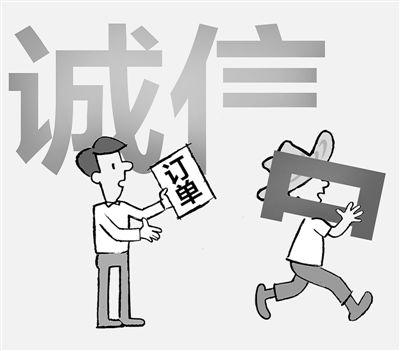
From garlic and ginger in previous years to maca and pineapple this year, farmers have been badly hurt amid the sharp plunge in agricultural product prices. Contract farming, as an important means of producing according to sales, plays a certain role in stabilizing agricultural product prices, ensuring farmers' reasonable returns, and withstanding market price risks. However, reporters found that in actual operation, contract farming has become difficult to carry out because some farmers have poor awareness of contracts and default maliciously, which in turn harms both merchants and farmers.
Agricultural product prices soar - expand planting scale - supply exceeds demand - prices plunge. This price roller coaster has undoubtedly made more and more farmers involved in cash crop cultivation nervous. This year's Yunnan maca went through a process of falling from 120 yuan per jin at its peak to 1 yuan. Local governments once tried to solve the problem of price fluctuations through contract farming, but the situation exceeded the expectations of the government and merchants...
When prices rise, the contract becomes a mere scrap of paper
"If someone else offers one or two yuan more, most farmers will no longer honor their promise and instead sell to other traders." A staff member promoting Chinese bee breeding in remote mountainous areas of Yunnan told reporters that although farmers in remote mountainous areas are simple and honest, they often lack the spirit of contract. "If you cannot 'hold' farmers through technology or follow-up policy subsidies, it is very difficult to make farmers keep their word with just a piece of agreement!" the staff member said.
Reporters learned that in Yunnan Province, many local governments actively promoted contract farming, guiding farmers to sign sales agreements with companies before planting maca, thereby avoiding the risk of market price fluctuations. But just a few years ago, farmers who had signed agreements did not sell maca to merchants, and they described their own breach of contract lightly as "human nature."
During the period of rising prices, farmers were unwilling to sign contracts with companies. In a maca-producing area in Yunnan, some companies encountered farmers refusing to sign before acquisition agreements were even signed with villagers. If an agreement were reached with a maca company, villagers could not only obtain seedlings for free, but also receive corresponding compensation, with income of nearly 10,000 yuan per mu according to the agreed purchase price. But some villagers still believed that at harvest time the maca market "might be better" and were unwilling to sell cheaply. Unexpectedly, at this year's harvest stage, what arrived was a sharp price plunge, leaving farmers with no tears left to cry.
In Bajie Subdistrict, Anning City, Yunnan Province, edible roses also experienced a price roller coaster last year, with the lowest rose price falling to two or three yuan, not even enough to cover the labor cost of harvesting. A company once tried to place orders with farmers in advance, but a piece of agreement produced no benefit. "During peak season, our company purchases seven or eight tons of rose flowers every day, but some small traders, because their purchase volume is small, buy at a slightly higher price. When other farmers hear about it, they start haggling with us." Dai Xiaobang, a staff member of Anning Runsen Agricultural Technology Co., Ltd., spoke with considerable helplessness when talking about rose flower purchases.
In fact, farmers who do not fulfill contracts also have their own calculations. "Selling to anyone is still selling; if the price is a little higher, the income is a little more. Besides, the people buying the flowers are acquaintances, so it is hard to refuse." Villager Li Shi (pseudonym) told reporters. As for the breach-of-contract clauses stated in the contract, Li Shi did not seem to care. "They are a big company, they do not lack my little bit of flowers, and they will not quibble with me over this." Dai Xiaobang was very helpless about this way of thinking: "There will be such people in every village. They think breaching a contract is no big deal. Even if they are kicked out of the cooperative, they will plead with village cadres. Everyone is from the same village, and in the end it all fizzles out."
A rose processor told reporters that to solve the problem of sharp declines in agricultural product prices hurting farmers, contract farming is effective, and the capital advantages of large companies help withstand the risk of market price fluctuations. "But given the current situation of farmers honoring contracts, whichever company signs purchase and sales contracts, that company suffers."
A contract that was originally supposed to benefit both sides has instead become a shackle that only restrains companies.
Merchants defend their rights: they win the lawsuit but cannot protect their rights
If farmers do not fulfill contracts, can companies defend their rights? It is by no means easy.
Although the overall losses are relatively high, the losses fall on relatively scattered farmer households, and each household's output and output value are not high. It is costly for companies to collect from each household one by one, and if they resort to court, the lawsuit is easy to win but enforcement is extremely difficult. "If enforcement is really carried out, once farmers band together to resist and it turns into a mass incident, the government often can only take a conciliatory approach." Liu Zhiwei, director of the Industry Office of Bajie Subdistrict, said.
And when prices plunge, companies still have to purchase at the order price. A very small number of farmers even refuse to sell to companies when prices are high in previous years, but demand that companies execute the contract when prices plummet. After several years, many companies are also unwilling to purchase agricultural products through orders, and contract farming is difficult to sustain in many places.
"Farmers often decide their planting scale based on the previous year's purchase price, but the market often lags, and farmers' ability to withstand risk is relatively poor." Liu Zhiwei said that the current prominent problem of untimely disclosure of supply and demand information in the agricultural product market is an important reason for large fluctuations in agricultural product prices.
Facing drastic fluctuations in agricultural product prices, the government is caught in a dilemma: on the one hand, the government has no right and does not dare to require farmers to plant more or less of a certain crop; on the other hand, if the government does nothing at all, once agricultural products are unsalable, it cannot ignore the resulting decline in farmers' income. In particular, once serious damage is caused to a local industry, it often also affects social stability in a small area.
Liu Zhixiong, associate professor at the Business School of China University of Political Science and Law, told reporters that it is still relatively common in reality for contract farming to encounter farmer default. "Once farmers default, companies are often in a weak position." Liu Zhixiong believes that under current circumstances, farmers' awareness of contracts is relatively poor, and the cost of forcing farmers to fulfill contracts is very high, with relatively high social risks. At present, there are still no effective measures to solve this problem.
Making up for the shortcomings in creditworthiness is a long and arduous task
In fact, precisely because they have seen the potential risks of contract farming, many grassroots governments have begun guiding companies to adopt protected prices to stabilize the market.
Reporters learned that entering July, the price of roses in Anning Bajie fell again to 3 yuan, and even at such a low price, many farmers still could not sell them.
But because they had signed protected-price agreements with Runsen Company, many farmer households were not worried about sales. Dai Xiaobang told reporters: "We signed contracts with farmer households and coordinated a protected price. This year we signed for more than 200 mu. When the market price is low, we purchase at 5 yuan per kilogram; if the market price is higher than the protected price, we follow the market."
Why 5 yuan? Dai Xiaobang did the math for reporters. In a sluggish market, after deducting farmers' costs and labor, a protected price of 5 yuan can ensure that a farmer household earns a net income of 2,600 to 2,700 yuan per mu of roses per year, better than growing rice. If it were lower than 5 yuan, flower farmers would simply dig up the flowers.
However, the scope of the protected price signed between Runsen Company and farmer households is not large, and the two sides have already cooperated for many years, with a certain relationship of trust. How to develop contract farming on a large scale? Opinions from all sides are relatively unified: the key is to do a good job in rural credit reporting.
"Many farmers are older, do not need bank loans, and rarely go out to work. After credit reporting problems arise, methods such as loan and ticket-purchase restrictions are all difficult to form effective constraints." Liu Zhiwei believes that, at least in the short term, it will not be easy for the rural credit reporting system to operate effectively quickly. Liu Zhixiong believes that the concept of credit reporting cannot be achieved overnight, and sustained and extensive publicity is particularly important. "It is suggested that companies learn more about farmer households before signing contracts, gradually establish relatively stable supply relationships with some farmer households, and then consider signing orders, thereby forming a community of shared interests of company + farmer households." Liu Zhixiong said. (Yang Wenming, Xu Qian)