By raising ecological laying hens, a hard-luck young man achieved annual sales of more than 20 million yuan
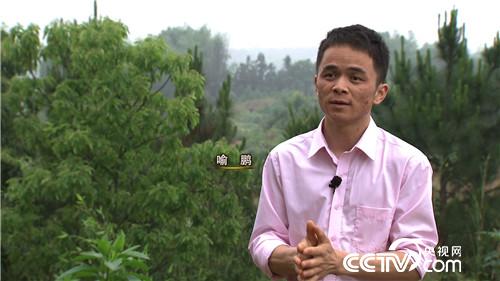
In 2010, because of a car accident his father suffered, he grew up overnight and took on the heavy burden of the family. In adversity, he relied on one trick to make a comeback, with annual sales reaching more than 3 million yuan. See how Yu Peng from Yueyang, Hunan, went from an inexperienced youth to a local leader in getting rich.
Liugui Village, Gangkou Town, Yueyang County, Hunan Province, May 12, 2016, 9:30 a.m.
Yu Peng: Catch your own color, catch your own color.
Yu Peng: It hasn't started yet, everyone warm up first, warm up first.
This young man is Yu Peng. To raise the profile of his chicken farm and let more people know about the Luonei native chickens he raises, today he specially organized a chicken-catching contest.
Yu Peng: Two people to a group, you have to catch chickens that match the color of your ribbon. The matching color. If a chicken flies out from here, whoever outside catches it gets to keep it.
Yu Peng: Okay, ready, start. Give them some applause.
To make chicken catching easier, Yu Peng enclosed the area with plastic sheeting, but the Luonei native chickens he raises are all free-range and full of wildness. These chickens are naturally fast runners, and when chased too hard they can even fly, making them very hard to catch.
Everyone taking part in today's chicken-catching contest signed up online. You only win if you catch a chicken matching the color of the ribbon in your hand. One contestant even lost a shoe while still chasing chickens, and the scene was extraordinarily lively.
In less than an hour, the 100 Luonei native chickens Yu Peng had prepared were all caught by the people taking part in the chicken-catching contest.
Tourist: I joined this activity to experience it, it's really fun, and I think catching this kind of chicken with my own hands for the first time feels great.
Reporter Li Yang: Have you caught chickens before?
Tourist: I have caught them before, but those chickens didn't move much. This kind is a bit harder to catch.
Yu Peng: Through small activities like this, they can understand our Luonei native chickens more intuitively. Then they can also buy our Luonei native chickens online.
In 2007, Yu Peng had just left school, and in 2010 a family upheaval suddenly changed the course of his life; in only five years, he built a native chicken farm with annual sales of more than 6 million yuan. So how did Yu Peng use native chickens to realize his dream of wealth?
This is Yu Peng's hometown. His parents ran a jade slab business and raised chickens at home. Yu Peng's family was well-off since childhood, and Yu Peng, who had always loved computers, went to Guangzhou in 2007 to learn computer repair. Through his own efforts, Yu Peng could earn more than 10,000 yuan a month in business commissions, and in Guangzhou he was planning his future in the computer industry.
However, one day in October 2010, Yu Peng received a phone call from his father, and that phone call changed the course of Yu Peng's life from then on.
Yu Peng: I had always lived under my father's protection. Now that something had suddenly happened to my father, it felt like a bolt from the blue. The whole burden of the family, including mixing feed and hauling feed, all of it needed me to do it.
On the afternoon of October 2, 2010, Yu Peng's father was driving out to deliver goods. On the way home, he collided with a car and had an accident. At the time, the accident happened on this bridge.
Yu Peng's father Yu Yunlai: Luckily I survived. There is still so much to do at home, and we raise so many chickens. In the hospital, you don't need to worry about anything, just take care of things at home.
Yu Peng: Suddenly I felt the burden of the family pressing on me.
His father's sudden car accident forced Yu Peng to take his father's place caring for the family chicken farm. Feeding the chickens twice a day, looking after the chicks at night, cleaning the chicken house, and carrying at least 20-odd sacks of 120-jin corn every day, a full month of chicken-farming life made Yu Peng understand his father's hardships. At this point, Yu Peng's thinking also changed: he wanted to stay home and raise chickens.
Yu Peng: What I thought about most was how I should share some of the family's burdens and how to do what I do well.
He took over his father's chicken farm, but a month later Yu Peng found that the laying hen market was fiercely competitive and simply not profitable, and raising laying hens was dirty and tiring work every day. He wanted to raise a kind of chicken that was easier to care for and could also make money, the local Luonei native chicken. Yu Peng wanted to catch a Luonei native chicken for the reporter to see, but these free-range Luonei native chickens were full of wildness and not easy to catch.
Reporter Li Yang: What characteristics does this Luonei native chicken have?
Yu Peng: Our combs are red, the skin is golden yellow, and the bones are yellow too.
Reporter Li Yang: How much do you sell a chicken like this for?
Yu Peng: A chicken like this sells for 100 yuan each.
Reporter Li Yang: 100 yuan each, that's too expensive.
Yu Peng: Our chickens are like this, 100 yuan each. Whichever one you say to catch, we catch that one. They are uniform in size, 2-3 jin.
Reporter Li Yang: For the same kind of chicken, why can your chickens sell for 100 yuan each?
Yu Peng: First, my chickens are raised ecologically. Each of our farming households raises no more than 300 per batch. We use corn to lure them out, then use corn to lure them back. They mainly eat wild food outside, so they are very vigorous.
This is Buxian Township, Yueyang County, Hunan Province. This local dual-purpose meat-and-egg native chicken breed is named Luonei native chicken. Luonei native chickens are mainly black, with tight feathers, upright combs, small heads and thin necks, and weigh around 3 jin. Luonei native chickens are not only delicious but also rich in nutrients. In Yu Peng's hometown, every household raises them, but all on a scattered scale, at most one or two dozen, and no one raised them on a large scale.
Wan Zhaohui, livestock and veterinary physician at the Yueyang County Animal Husbandry and Fisheries Bureau, Hunan Province: The mortality rate is high, and there is no technology. Farming households all hatch chicks themselves, with one hen raising a dozen or so chicks. There is no technology for raising them in large batches of hundreds, thousands or tens of thousands. The second problem is disease prevention. Without vaccines, chickens die easily, so it is very hard to raise them on a large scale.
When friends heard that Yu Peng wanted to raise Luonei native chickens on a large scale, many did not approve.
Yu Peng's friend Hu Shuixiong: Many people tried to talk him out of it. To put it bluntly, our advice was that you will definitely lose money.
But Yu Peng insisted on raising native chickens, and on a large scale too. Afterwards, Yu Peng went to surrounding villages to look for high-quality Luonei native chickens for breeding and raising. However, the following month was something Yu Peng still remembers as a nightmare. During the interview, Yu Peng insisted on taking the reporter to see a place.
Reporter Li Yang: Where are you taking us now?
Yu Peng: This is where I used to bury chickens. Under trees like these, I dug very big pits at the time and buried them below. They died in batches.
Reporter Li Yang: How many died at that time?
Yu Peng: About a thousand died. Every morning 100-200 were dying every day, and a batch of chickens was quickly wiped out.
Reporter Li Yang: How many died in total?
Yu Peng: 1400-1500, and they just died off continuously like that.
His father was still hospitalized because of the car accident. Because Yu Peng did not understand disease prevention technology, more than 1000 Luonei native chickens he raised all died, making an already heavily burdened family even worse. To raise the chickens well, Yu Peng lived every day in the house beside the chicken coop, observing the chickens' living habits.
Yu Peng: That feeling of wanting to give up but not being able to give up gave me a lot of inner torment, and it also taught me how to raise chickens well.
Through constant observation and learning from technicians at the Yueyang County Animal Husbandry and Fisheries Bureau, Yu Peng mastered the techniques for raising Luonei native chickens and preventing disease, and there were no more chicken deaths. During the interview, Yu Peng showed the reporter a special skill.
Reporter Li Yang: What are you doing with the whistle?
Yu Peng: They listen to my command. When we feed our chickens, we have to give them a unified whistle so they form a conditioned reflex. So every time I blow the whistle, they think it is feeding time and hurry back to eat.
At Yu Peng's whistle, the chickens in the woods were quickly gathered together. Yu Peng told the reporter that this skill cannot be mastered in a short time, and only someone the chickens are familiar with can summon them by blowing the whistle.
After the chickens were raised, Yu Peng began thinking about how to make money. He observed that at the time many surrounding farming households were raising chickens, but on a small scale, with low survival rates, and no sales channels.
If he wanted to make money raising native chickens, he had to expand the scale and build a native chicken brand. But right then he had neither money nor a site. Just when Yu Peng did not know what to do, during a chat with his father he found a solution, and this solution not only solved Yu Peng's funding problem but also the site problem.
Here is how it happened: in 2006, his father, who made jade slabs and raised chickens in his hometown, went to Guangzhou to do a printing business. Later the business failed and he lost all his family assets. After returning home, his father borrowed 60 laying hens from a friend to start raising, and after raising them well, he would return 60 chickens to the friend.
Yu Peng's father Yu Yunlai: I borrowed 60 chickens to raise. To be honest, I was very moved. I did not have a single cent, and he lent me 60 chickens. That boss, my friend, was also very happy, because after lending me his chickens, he saved 60 chickens' worth of feed every day. One chicken eats 20 cents of feed a day, which is not a small amount. I thought this model over and talked with my son about it. Doing it this way, lending chickens to others, there are many people like me who have no money, no technology, and still want to develop chicken farming.
Yu Peng was inspired. The solution he came up with was a one-jin-for-one-jin model. Yu Peng would give each farming household, free of charge, up to 300 one-jin chicks per batch. After 6 months of raising, the chicks would grow into 3-jin market chickens; at that point, the household only needed to return to Yu Peng the total weight of the chicks from 6 months earlier, 300 jin, while the added weight of the chickens became the household's income.
Yu Peng: If I have these chickens and someone else wants to raise chickens, I lend my chickens to others to raise. I also need chickens here, and the quality of these chickens is good. They lay eggs every day, and I only need to give them a little food each day, and then I can collect eggs every day. That is, there is no cost. I just need to give them some food. If my site is good, the cost is very low, and I can make money as soon as they come.
Yu Peng was full of confidence in this idea. He began going village by village, introducing it to farming households, but after going around all the surrounding villages, not a single household was willing to cooperate with him.
Liu Jianbao, farming household in Liugui Village, Gangkou Town, Yueyang County, Hunan Province: What were the concerns? Could they be bought back? The second concern was whether the survival rate of the chickens could reach 90% as they said.
Wu Linyi, farming household in Sanhong Village, Changhu Township, Yueyang County, Hunan Province: He dressed nicely. At the time in 2012 he was only about 20 years old, and did not look like someone who raised chickens. I was very worried about whether he could do the vaccines well.
Many farming households did not believe Yu Peng could succeed, and even less understood what his one-jin-for-one-jin model meant.
Wu Linyi, farming household in Sanhong Village, Changhu Township, Yueyang County, Hunan Province: Where is my profit point? You give me one jin of chicken, and I return one jin of chicken to you. I do not know where his profit point is.
Yu Peng: He is so young, and he gives you chickens, so you do not know what he is doing. He now says he will give you chickens for no money, and after the chickens grow up, he will ask you for a lot of money. What then? A young man like him dares to do anything, so it felt like I was a drifter, and they put me in that category.
Just when Yu Peng did not know what to do, a person named Wu Linyi solved the problem for him. During the interview, Yu Peng happened to be delivering chicks to Wu Linyi's chicken farm and collecting a batch of chickens, so the reporter went along to experience it once.
Reporter Li Yang: How many chickens did you catch today?
Wu Linyi, farming household in Sanhong Village, Changhu Township, Yueyang County, Hunan Province: More than 40. We'll weigh them in a moment to see how heavy they are. One jin exchanges for one jin, that is, returning the weight of his chickens to him, one jin returned for one jin. Now I am returning his principal.
Wu Linyi at the time also had a give-it-a-try attitude and ordered 300 chickens; during the raising process, Yu Peng not only provided technical support but also purchased his native chickens in a timely way, which made Wu Linyi approve of Yu Peng's cooperation model.
Wu Linyi, farming household in Sanhong Village, Changhu Township, Yueyang County, Hunan Province: I think the one-jin-for-one-jin model is very good. One jin of his chickens is just placed at your place to be raised, and when the time comes they are hauled back to him. One jin of his chickens is raised on your behalf, and the meat quality improves, and his profit is there. My profit is that the chicken can grow to 3 jin, and the extra more than 2 jin is my profit.
Under Wu Linyi's influence, gradually more farming households approved of Yu Peng's one-jin-for-one-jin cooperation model. In September 2011, Yu Peng established a chicken farming professional cooperative, and more than 70 surrounding farming households joined the cooperative.
Yu Peng: The efforts I made finally bore fruit. It showed that what I was doing and the model I had thought of before were right. What I thought and what I am doing now, as shown, prove that I was right.
In the first half of 2012, Yu Peng's own native chickens plus the chickens recovered by the cooperative totaled more than 5000, but when it came time to sell, Yu Peng did not sell them. Instead, he gave the chickens away free for friends to eat.
In 2012, there was no real Luonei native chicken brand in the Yueyang poultry and egg market. Four months after Yu Peng started giving chickens away, through his circle of friends, his Luonei native chickens began to gain repeat customers. His brand also began to be recognized.
Chen Shiguang, manager of a hotel in Yueyang: The meat quality and color are all very good. The chickens Yu Peng raises are no different from high-end ones. After using his chickens, we need about 13,000-15,000 a year, averaging more than 1000 a month.
Through word of mouth, many hotels and restaurants began ordering Yu Peng's Luonei native chickens. He earned more than 100,000 on his first venture into chicken farming, which made Yu Peng full of confidence in his future.
In the first half of 2013, the poultry and egg market slumped. Not only could Yu Peng not sell his chickens, but a large number of eggs at home were also unsold.
Xie Qiwang, farming household in Yuecun, Dongbuxian Township, Yueyang County, Hunan Province: It was not a very large scale, mainly sold locally. At that time the chickens were all laying eggs, but nobody wanted the eggs. Not a single person wanted them.
Yu Peng: The farming households also had trouble selling. At that time the market was not surprising. During the first-half peak, we collected them and could not sell them.
To reduce the losses of the farming households and to let cooperating households continue raising chickens, Yu Peng first bought all the households' eggs at market price.
Xie Qiwang, farming household in Yuecun, Dongbuxian Township, Yueyang County, Hunan Province: You raise the chickens first, we'll take the eggs back first, and after a while we'll haul the chickens back.
Reporter: What impact does collecting eggs have on you? The market is so bad.
Xie Qiwang, farming household in Yuecun, Dongbuxian Township, Yueyang County, Hunan Province: Collecting eggs can at least cover some feed money. If the eggs are not collected, then holding them and losing money is still a loss.
The weather was hot, and the recovered eggs would quickly go bad. Just when Yu Peng was at his wit's end about how to sell the eggs, one day in August 2013, while watching TV at home, Yu Peng was suddenly drawn in by a program about making preserved eggs. He had a flash of inspiration and thought of a solution, and this solution brought him annual sales of more than 3 million yuan.
Yu Peng: Because the weather was hot, the eggs we collected would quickly go bad. The preserved eggs we usually eat are all made from duck eggs, so at that time I was thinking, can my chicken eggs be made into preserved eggs? I thought that making preserved eggs from my native chicken eggs and selling them for 3 yuan each was not excessive, so I really wanted to understand whether my eggs could be made into preserved eggs. Later I found the traditional craft for making preserved eggs.
In 2013, affected by the sluggish poultry and egg market, although Yu Peng's Luonei native chickens could not be sold, making the eggs into preserved eggs extended the selling time of the eggs, and by selling preserved eggs he eased the financial difficulties of the cooperative members.
After the 2014 Spring Festival, the poultry and egg market recovered, and sales of Yu Peng's Luonei native chickens gradually improved. Even now, Yu Peng sells live chickens every day. During the interview, the reporter went with Yu Peng to experience catching chickens at night.
Reporter Li Yang: Why catch chickens at night?
Yu Peng: Because you cannot catch them during the day. They are all running outside, all looking for food outside. At night they do not move. During the day they always keep a 2-meter distance. If you catch one during the day, it's free.
Reporter Li Yang: Is it that easy?
Yu Peng: They do not move, they do not move at night.
Seeing how easily Yu Peng caught them, the reporter also wanted to try catching one, and almost got bitten by a big rooster. Reporter Li Yang: I feel like it is going to bite me.
Yu Peng: It won't, it won't. Fierce, right?
In 2014, through selling preserved eggs and native chickens, Yu Peng's company reached more than 3 million in sales; however, in 2014, as Yu Peng's Luonei native chickens became more and more famous, he found products on the market impersonating his native chicken brand, and at prices cheaper than his. To protect his native chicken brand, Yu Peng put a special leg band on each chicken, giving the chickens an anti-counterfeiting label and making his Luonei native chickens highly recognizable in the market.
Yu Peng: If my chicken needs to be raised for 300 days and someone else has not raised it for 300 days and sells it early, customers will complain. Then we can find the farming household that raised it, and I will cancel that household's qualification to raise chickens.
In the second half of 2015, Yu Peng invested more than 300,000 to build a freezer warehouse, slaughtering and freezing live chickens before selling them. The sales market extended to Beijing, Shanghai, Shenzhen and other places, and he also built an online e-commerce platform and physical stores, combining online and offline to sell Luonei native chickens. In 2015, Yu Peng's enterprise sales reached more than 6 million.
At present, Yu Peng's chicken farming professional cooperative has developed more than 200 members, and the cooperative's annual sales reach more than 20 million yuan. Yu Peng not only fulfilled his responsibility of carrying the family burden, but also led surrounding farming households to raise chickens and get rich together.