He gave up a high salary to return home and start a business, leading the villagers to prosperity together
Zhou Bin is a native of Shijia Town, of Tujia ethnicity. Shijia Town is a high-mountain town with inconvenient transportation, and the villagers live in hardship. His parents scrimped and saved to send Zhou Bin to school, and he studied hard, eventually landing the "iron rice bowl" of a civil servant position.
In 2001, Zhou Bin resolutely resigned from his civil servant post and went north to try his luck in business. "Just past thirty, with the ambitions of youth, I always wanted to go out and carve out a world of my own." Recalling his original reason for giving up the "iron rice bowl," Zhou Bin said.
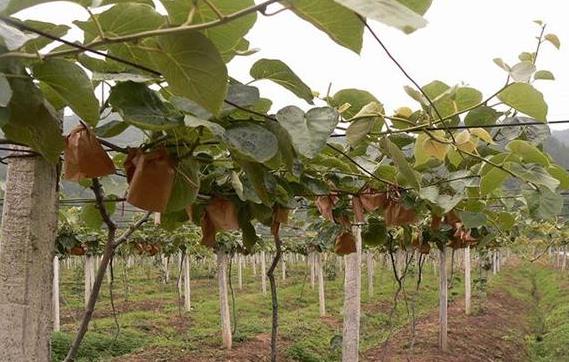
In 2003, Zhou Bin was fortunate enough to enter the Department of Automotive Engineering at Tsinghua University to study used vehicle appraisal, and two years later he graduated and stayed in Beijing, working in used vehicle appraisal with a monthly salary of over 10,000 yuan. Unexpectedly, he gave up his high-paying job of over 10,000 yuan in the capital and resolutely returned home to start a business. On the basis of full investigation and research, Zhou Bin decided to transfer land to develop the kiwifruit industry on a large scale, and set up the Guangyou Kiwifruit Professional Cooperative, expanding the planting scale year by year.
Starting in 2006, he leased 1,000 mu of land in Shijia Neighborhood Committee at a price of 245 yuan/mu with a continuous thirty-year land transfer arrangement to plant red-fleshed kiwifruit. At the same time, the farmers whose land was leased were hired as workers in the planting park to ensure their regular income, so that the farmers lost their land but increased their income. Workers employed in the planting park earned at least 60 yuan a day, providing an effective model for large-scale land transfer and achieving intensive land management.
"Developing the kiwifruit industry is about driving the villagers to increase their income and become prosperous," Zhou Bin said. A few years later, making full use of his own advantages and working hard to learn planting techniques, he became an expert in growing kiwifruit. The road ahead is long and far, yet Zhou Bin is not satisfied with the status quo. He is determined to make the kiwifruit industry bigger and stronger, build a brand, go beyond Qianjiang, reach Chongqing, and become known nationwide.
He said: "I grew up in Qianjiang. The economy here is not developed, and the farmers here are not wealthy either. This place needs more people to discover its highlights, take the lead in using existing resources to invigorate the economy and create wealth, so that our hometown folks can all become prosperous together!" After that, he began vigorously promoting the benefits of growing kiwifruit and its broad market prospects, actively negotiating kiwifruit orders with buyers in Shanghai, Guangzhou, and Chongqing, and providing planting and management techniques and kiwifruit seedlings to the public free of charge.
Every morning at dawn, Zhou Bin arrives at his kiwifruit orchard on time. In order to develop the kiwifruit industry and lead the villagers to prosperity, he carries on almost rain or shine all year round, day after day. Hard work pays off: the kiwifruit at the base grew well, and in 2012 it achieved an output of 380 tons and an output value of 8 million yuan, driving surrounding farmers to increase their income by more than 2,000 yuan.
Although he has already led everyone onto the road to prosperity, Zhou Bin is still thinking about fulfilling another dream: he planted more than 200 mu of purple sweet potatoes for tourists who come here for leisure to experience rural life.
"Is developing agritourism the dream you want to fulfill?" Faced with the question, Zhou Bin gave an answer that surprised everyone: tourists can come and dig and pick purple sweet potatoes for 1 yuan per jin, and all this money will be used to help impoverished left-behind children in the surrounding rural areas.
In order to give the cooperative greater room for operation and further enhance its influence, the cooperative was renamed from the former Guangyou Kiwifruit Planting Professional Cooperative to the Guangyou Agricultural Joint-Stock Cooperative. Relying on Zhufo River Ecological Agriculture Development Co., Ltd., the new cooperative takes the development of ecological agriculture as its starting point, changing from single-crop kiwifruit planting to diversified operations, with the development approach of focusing on vegetables, Chinese medicinal herbs, and fruits, supplemented by other agricultural and sideline products.
In the spring of 2015, the base of the Guangyou Agricultural Joint-Stock Cooperative could absorb 30 laborers locally each year, including 14 impoverished people employed year-round, each with an annual income of 20,000 yuan. At the same time, the cooperative also brought more than 110 farming households from areas such as Groups 3, 5, and 6 of Shijia Neighborhood Committee into the cooperative, including 19 registered impoverished households, with scattered plantings of 350 mu of ginkgo and 150 mu of polygonatum.
While doing a good job in increasing income and prosperity through industry, Zhou Bin does not forget to actively support social public welfare causes and carry out poverty relief and assistance.
"I think making money alone only enriches one person; only when more people make money can everyone become wealthy." This is not only something Zhou Bin often says, but also what he has been quietly working hard to do all along.