Growing fine wine inside bamboo: the price of bamboo increases 50-fold
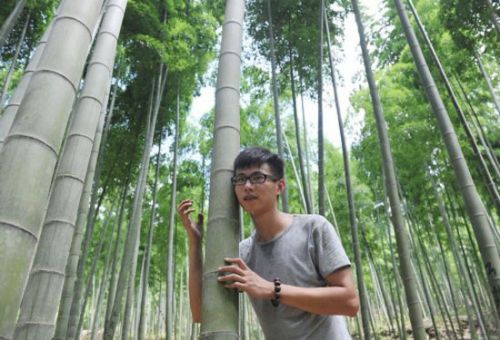
At the "fresh bamboo wine" cultivation base in Baishuijian Village, Lin'an City, Zhejiang Province, workers inject the original liquid of premium liquors such as top-grade sorghum liquor and rice wine into 1 to 2 bamboo culm cavities of each young bamboo, letting the young bamboo grow slowly. After a year and a half of growth, the moso bamboo has grown, and the wine is ready. The aroma of the wine carries a faint fresh bamboo scent, and bamboo that has been "planted" with wine can sell for nearly 500 yuan, increasing the price of a single bamboo by nearly 50-fold.
On July 17, 2016, at the "fresh bamboo wine" cultivation base in Baishuijian Village, Lin'an City, Zhejiang Province, workers used tools to drill holes in the bamboo and extract the wine on site. If a customer needs wine extracted on site, the workers go to the bamboo forest in the wine-"planting" base, tap the moso bamboo by hand, and put their ears close to the culm to identify which bamboo node contains wine.
Once the bamboo node with wine is identified, a tool is used to drill a hole in the bamboo, and after the small hole is drilled, a slightly yellowish liquid flows out from the hole, and the wine aroma carrying a faint fresh bamboo scent quickly spreads around. The wine "grown" from bamboo is made by injecting the original liquid of premium liquors such as top-grade sorghum liquor and rice wine into 1 to 2 bamboo culm cavities of each young bamboo, letting the young bamboo grow slowly.
Every year around Qingming Festival is the best time to inject the wine into the young bamboo. As the young bamboo grows naturally, the wine liquid and bamboo sap undergo a physiological cycle and purify each other; the elements of the wine and the substances contained in the bamboo sap permeate and exchange with each other to produce new nutrients. After a year and a half of growth, the moso bamboo has grown, and the wine is ready. After the moso bamboo is cut down, the node containing wine is sawed off and can be packaged for market.
Every morning, the workers at the base play music in the bamboo forest. The wine inside the bamboo becomes more mellow and more fragrant the longer it is "planted" amid the music.
According to the workers at the wine-"planting" base, it is appropriate to inject 1 to 2 nodes of "planted" wine into one moso bamboo. Injecting too much will cause the entire bamboo to suffer from malnutrition, which is not conducive to the bamboo's own growth and leads to poor quality of the "planted" wine. If there is prolonged rain and snow, it will also hinder the growth and development of the moso bamboo and affect the quality of the wine inside the bamboo.
The wine grown in this way, besides being slightly yellowish in color, has a wine aroma carrying a faint fresh bamboo scent. After growing in the bamboo for years, the wine has gained various trace elements necessary for the human body, such as amino acids, flavonoids and vitamins, and has certain health benefits.
The price of the bamboo itself also doubles by leaps and bounds with "wine planting." Calculated at 10 yuan per bamboo, bamboo that has been "planted" with wine can sell for nearly 500 yuan, increasing the price of a single bamboo by nearly 50-fold.
On July 17, 2016, at the "fresh bamboo wine" cultivation base in Baishuijian Village, Lin'an City, Zhejiang Province, workers used tools to drill holes in the bamboo and extract the wine on site.