Returning home to start a business in 2016: which planting project is more suitable?
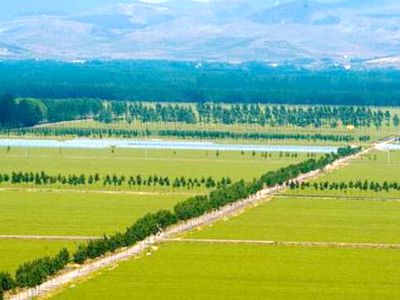
With the rapid development of the rural economy, more and more migrant workers are choosing to return home to start businesses. So what should be planted in 2016? Take a look at the direction of the country's agricultural policy, and it becomes clear at a glance.
Plant wheat and rice with confidence
Although prices of the three major staple grains all declined at the end of 2015, the state absolutely must stabilize the production of these two main food grains. Therefore, plant with confidence! The document says that the primary task of this year's crop farming development is to stabilize grain production, keep grain output basically stable, and prevent a slide. The key tasks are to stabilize the area of wheat and rice and hold the bottom line of "absolute food security." Strengthen policy guidance, implement policies such as the minimum purchase price for wheat and paddy rice, guide farmers in arranging their planting structure properly, and ensure that the area of wheat and rice remains stable at more than 800 million mu. Stabilize winter wheat in the Huang-Huai region and appropriately restore spring wheat in the north. Consolidate and improve japonica rice in the northeast and stabilize double-cropping rice in the south. Actively develop high-quality rice and strong-gluten and weak-gluten wheat to meet consumer demand.
The corn area will definitely shrink
This year's target for corn is to reduce the area by 10 million mu, which means that if you keep planting it, making money will truly be very difficult. What is more, corn will launch price reform this year, with the market having the final say.
Promote light and simplified cotton cultivation; for oil crops, it is best to plant "double-low" varieties
The state will further stabilize the planting area of cotton, oil crops and sugar crops. Therefore, farmer friends who plant cotton, oil crops and sugar crops can confidently continue their planting traditions, and on this basis pay attention to improving agronomy and adopting mechanized production methods. Specifically: for cotton, the focus is on stabilizing the area of ** cotton regions and saline-alkali land along the coast, along rivers and around lakes; for oil crops, the focus is on stabilizing the rapeseed area and developing peanuts and specialty oil crops; for sugar crops, the focus is on stabilizing the sugarcane area in Guangxi and Yunnan. Accelerate the promotion of new cotton, oil crop and sugar crop varieties that are high-yielding, high-quality, multi-resistant and suitable for mechanical operations. Promote the integration of agricultural machinery and agronomy, and integrate and promote high-yield, high-efficiency technical models with machinery as the carrier. For cotton, focus on promoting light and simplified cultivation techniques; for oil crops, focus on promoting "double-low" rapeseed and mechanical planting and harvesting techniques; for sugarcane, focus on promoting healthy seedlings and mechanical cultivation techniques, so as to achieve improvements in quality and efficiency.
Standardization of vegetable cultivation
Anyone who grows vegetables knows that market conditions change constantly: either you plant too much and cannot sell it, or you plant too little and watch helplessly as vegetable prices rise. Overall, the state's goal is to "stabilize the vegetable area." There are two points everyone needs to note. First, the state will continue to stabilize the bases for transporting southern vegetables north and the area of facility vegetables in the north. Second, the state will advance standardized production and increase support for large growers, specialized cooperatives and leading enterprises to develop standardized production, raising the level of standardization, scaling and industrialization of vegetable production. Standardization requires that during vegetable cultivation, pesticides and fertilizers meet green standards; that brand packaging be standardized; that quality control during transportation be standardized; and that market information be standardized. In short, only when every link is standardized will it be conducive to vegetables flowing "smoothly all the way" from planting to sales, reducing as much as possible the occurrence of the phenomenon of "cheap vegetables hurting farmers."
Grow potatoes: choose varieties that can be made into steamed buns
After potatoes were designated as a staple grain, work to promote the development of potatoes as a staple grain has been carried out in an orderly manner. For the vast number of potato growers, the most important thing is to choose the right variety. The varieties currently emphasized by the state have these characteristics: high quality, high yield, stress resistance, excellent comprehensive traits, and specialized varieties suitable for staple food development. In 2016, the state will continue to handle the pilot development of the potato industry in 9 provinces: Hebei, Inner Mongolia, Jiangxi, Hubei, Sichuan, Guizhou, Gansu and Ningxia. Therefore, growers in these provinces can pay more attention to information related to potato industry development. If they can find contract-ordering enterprises, that would be best of all.
Cash crop cultivation: standard orchards and branding are the direction
What about the work arrangements for cultivating cash crops such as fruit and tea? First, it is necessary to advance the creation of standard horticultural crop orchards and promote expansion from "orchard" to "zone," advancing whole townships (towns) and whole counties (cities) according to local conditions. Second, it is necessary to carry out in depth the action to upgrade the "three grades" of horticultural crops. What we should note is that old fruit (tea) orchards will be renovated, and brand creation for fruit and tea will be a key focus of promotion.
For us growers, following the path of industrialization should not be wrong.
The above new policies for agricultural development in 2016 may be worth understanding for the new generation of farmers who want to return home to start businesses, and perhaps they will be of some help to you.