52 agricultural subsidy support policies in 2016, explained in one article
1
Agricultural Support and Protection Subsidy Policy
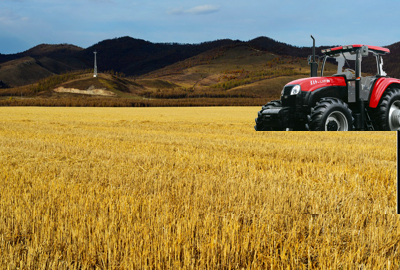
To improve the effectiveness of agricultural subsidy policies, in 2015 the state launched the reform of the agricultural "three subsidies," merging the direct subsidy for grain growing, the comprehensive subsidy for agricultural inputs and the subsidy for improved crop varieties into the "agricultural support and protection subsidy," with the policy objective adjusted to supporting the protection of cultivated land fertility and appropriately scaled grain farming.
The main adjustment measures are: First, 80% of the existing comprehensive subsidy funds for agricultural inputs, plus the funds for direct subsidies to grain farmers and subsidies for improved crop varieties, are to be used for the protection of cultivated land fertility. The subsidy recipients are all farming households that hold contracted rights to cultivated land; farmers receiving the subsidy must ensure that the cultivated land is not left fallow and that its fertility does not decline. Subsidy funds are linked to cultivated land area or sown area. No subsidies will be given to cultivated land already used as livestock and poultry farms, forest land, or contiguous grain fields converted to facility agriculture, or to cultivated land requisitioned (occupied) for non-agricultural purposes and other cultivated land whose use has changed, nor to long-term abandoned land, or land whose "supplemented" area and quality under the balance of occupation and compensation system do not meet farming conditions. Returning straw to the field is encouraged, and straw must not be burned in the open. This portion of subsidy funds is paid directly to households in cash. Second, 20% of the existing comprehensive subsidy funds for agricultural inputs, plus subsidy funds for large grain growers and the incremental funds from the agricultural "three subsidies," support the development of various forms of appropriately scaled grain farming, with priority given to establishing and improving the agricultural credit guarantee system and to favoring new types of business entities such as large grain growers, family farms, farmers' cooperatives and agricultural social service organizations, reflecting the principle that "whoever grows more grain gets priority support."
2
Agricultural Machinery Purchase Subsidy Policy
In 2016, the agricultural machinery purchase subsidy policy was implemented in all agricultural and pastoral counties (farms) nationwide. The subsidy recipients are individuals and agricultural production and operation organizations directly engaged in agricultural production. The subsidized machinery types cover 11 major categories, 43 subcategories and 137 items, and each province may determine the specific types of subsidized machinery from these according to local conditions. The agricultural machinery purchase subsidy policy is implemented through independent machinery purchase, county-level settlement and direct subsidy to card (household). The subsidy standard is determined by the provincial-level agricultural mechanization competent department according to regulations, and differential treatment of similar products produced by enterprises inside and outside the province is not allowed. For general machinery, the central government subsidy per unit does not exceed 50,000 yuan; for milking machines and dryers, the subsidy per unit does not exceed 120,000 yuan; for large tractors of over 100 horsepower, high-performance green fodder harvesters, large no-till seeders, large combine harvesters and large program-controlled rice seed soaking and germination equipment, the subsidy per unit does not exceed 150,000 yuan; for tractors of over 200 horsepower, the subsidy per unit does not exceed 250,000 yuan; for large sugarcane harvesters, the subsidy per unit does not exceed 400,000 yuan; for large cotton pickers, the subsidy per unit does not exceed 600,000 yuan.
3
Pilot Policy on Subsidies for Scrapping and Updating Agricultural Machinery
In 2016, the Ministry of Agriculture and the Ministry of Finance continued to carry out pilot work on subsidies for scrapping and updating agricultural machinery in 17 provinces (municipalities and autonomous regions), including Jiangsu. Provinces that have not yet carried out the pilot may decide independently whether to do so, and non-pilot provinces are encouraged to carry out pilots in light of their local conditions to accelerate the phasing out of old agricultural machinery. The subsidy for scrapping and updating agricultural machinery is linked to the agricultural machinery purchase subsidy and implemented simultaneously. The types of machinery eligible for scrapping subsidies are tractors and combine harvesters that have been registered with an agricultural machinery safety supervision agency and have reached the scrapping standard or exceeded the scrapping age. The subsidy standard for scrapping and updating agricultural machinery is determined by the model and category of the scrapped tractor or combine harvester; for tractors, the subsidy ranges from 500 yuan to 11,000 yuan depending on the horsepower range, and for combine harvesters, it ranges from 3,000 yuan to 18,000 yuan depending on the feed rate (or number of harvesting rows).
4
Minimum Purchase Price Policy for Wheat and Rice
To protect farmers' interests and prevent "cheap grain hurting farmers," in 2016 the state continued to implement the minimum purchase price policy for wheat and rice in major grain-producing areas. The minimum purchase price for wheat (Grade 3) produced in 2016 was 118 yuan per 50 kg, unchanged from the 2015 level. The minimum purchase prices for early indica rice (Grade 3, the same below), mid-to-late indica rice and japonica rice produced in 2016 were 133 yuan, 138 yuan and 155 yuan per 50 kg respectively; the price for early indica rice was lowered by 2 yuan compared with 2015, while those for mid-to-late indica rice and japonica rice remained unchanged from the 2015 level.
5
**Target Price Policy for Cotton and for Soybeans in Northeast China and Inner Mongolia
In order to give fuller play to the role of the market and protect farmers' interests, and to establish and improve an agricultural product price and market regulation mechanism suited to China's national conditions and the development requirements of the current stage, in 2014 the state launched the pilot reform of the target price for **cotton and soybeans in Northeast China, abolishing the temporary purchase and storage policy for cotton and soybeans; when the market price falls below the target price level, the central government provides subsidies to producers in the pilot areas. In 2016 the state continued to advance the pilot reform of the target price for soybeans in Northeast China and Inner Mongolia and for **cotton.
6
Reward Policy for Major Grain (Oilseed) Producing Counties
In order to improve and strengthen the financial situation of major grain-producing counties and mobilize local governments' enthusiasm for emphasizing agriculture and grain production, in 2005 the central government introduced the reward policy for major grain-producing counties. In 2015 the central government allocated 37.1 billion yuan in reward funds for major grain (oilseed) producing counties, and in 2016 the central government will continue to implement the reward policy for major grain (oilseed) producing counties.
In 2015, the reward funds for major grain-producing counties were calculated and allocated to counties by the central government. For regular major grain-producing counties, eligibility is determined mainly on the basis that the five-year average grain output from 2009 to 2013 exceeded 400 million jin and the commercial volume (calculated as grain output minus farmers' ration grain, feed grain and seed grain) exceeded 10 million jin; counties that do not meet the above standards but rank among the top 15 in output or commercial volume in major producing areas, or among the top 5 in non-major producing areas, may also be included in the rewards; in addition to the above two standards, each province may also designate 1 county with great production potential and outstanding contributions to regional grain security for inclusion in the reward scope. On top of the rewards for regular major grain-producing counties, the central government gives key rewards to major grain-producing counties whose five-year average grain output or commercial volume from 2009 to 2013 ranks among the top 100 nationwide, as super major grain-producing counties. Reward funds are allocated using the factor method, with the weights of grain commercial volume, output, sown area and performance evaluation being 60%, 20%, 18% and 2% respectively. The reward funds for regular major grain-producing counties are linked to the provincial fiscal situation, with different regions using different reward coefficients; the reward standard for regular major grain-producing counties is 7 million to 90 million yuan, and the reward funds serve as general transfer payments to be used by county-level people's governments at their discretion; the reward funds for super major grain-producing counties are used to support grain production and industrial development.
The eligibility conditions for rewards to major oilseed-producing counties are determined by provincial-level people's governments in accordance with the principle of "highlighting key varieties and rewarding key counties (cities)," and the reward funds received by eligible counties must not be less than 1 million yuan. In 2015, the allocation of the existing reward funds for major oilseed-producing counties was determined by the central government based on the 2011-2013 output of oilseeds by province and by variety (including oilseed crops, soybeans, cottonseed and camellia seed) and the oil conversion ratio, calculating each province's (region, municipality's) three-year average oil output as the reward factor. The reward coefficient for rapeseed is increased by 20%; soybeans already included in the rewards for major grain-producing counties continue to receive rewards, and all reward funds are used to support oilseed production and industrial development.
7
Reward Policy for Major Hog (Cattle and Sheep) Outflow Counties
In order to mobilize local governments' enthusiasm for developing hog (cattle and sheep) breeding, promote hog (cattle and sheep) production and circulation, guide effective linkage between production and sales, and ensure market supply, in 2015 the central government allocated 3.5 billion yuan in reward funds for major hog (cattle and sheep) outflow counties. The management of reward funds adheres to the principles of "guiding production, rewarding more for more outflow, matching responsibility and rights, and emphasizing performance." The reward funds for major hog (cattle and sheep) outflow counties consist of three parts: reward funds for major hog outflow counties, funds for major cattle and sheep outflow counties, and provincial-level coordinated reward funds. The reward funds for major hog (cattle and sheep) outflow counties are allocated to counties using the factor method, with the allocation factors including the average annual hog (cattle and sheep) outflow, slaughter and inventory over the past three years, with weights of 50%, 25% and 25% respectively; the reward funds support the top 500 major hog outflow counties and the top 100 major cattle and sheep outflow counties. The reward funds are arranged by county-level people's governments at their discretion to support hog (cattle and sheep) production, circulation and industrial development in their counties, with the scope of support including: pen renovation, introduction of improved breeds, manure treatment, epidemic prevention and insurance in the hog (cattle and sheep) production stage, and the construction of cattle and sheep forage and feed bases, as well as expenditures on cold-chain logistics, storage, processing facilities and equipment in the circulation and processing stage. The provincial-level coordinated reward funds are allocated in blocks to provinces (regions, municipalities) using the factor method, with allocation factors including each province's (region, municipality's) hog (cattle and sheep) production and consumption. The coordinated reward funds are arranged by provincial-level people's governments at their discretion to support hog (cattle and sheep) production, circulation and industrial development in their provinces (regions, municipalities). In 2016, the reward policy for major hog (cattle and sheep) outflow counties will continue to be implemented.
8
Support Policy for Deepening the High-Yield Creation of Grain, Cotton, Oilseed and Sugar Crops and Research on Green Grain Yield-Increasing Models
In 2016, the central government allocated 1.5 billion yuan to support the establishment of green, high-yield and efficient grain creation and model research. More than 100 counties with a good production foundation, prominent advantages, distinctive features and strong industrial driving capacity were selected for whole-county creation. In terms of implementation content, the focus is on tackling technical bottlenecks and on integrating and promoting high-yield, high-efficiency, resource-saving and eco-friendly technical models. In terms of crops, the focus is on grain crops, with appropriate consideration given to advantageous crops in some regions. In terms of creation content, first, demonstration and promotion of regional, standardized high-yield and high-efficiency technical models centering on green ecology and environmental protection, efficient resource utilization and improved production efficiency. Second, organizing trials, pilots and joint research targeting resource bottlenecks, technical bottlenecks and benefit bottlenecks by region and crop. Third, relying on new agricultural business entities and service entities to innovate agricultural social service methods and promote the integrated development of the primary, secondary and tertiary industries.
9
Subsidy Policy for Deep Loosening and Land Preparation Operations with Agricultural Machinery
Provinces included in the National Implementation Plan for Deep Loosening and Land Preparation Operations with Agricultural Machinery (2016-2020) may, in light of local conditions, carry out pilot projects for subsidies for deep loosening and land preparation operations with agricultural machinery in suitable areas, with the required funds arranged as a whole from the agricultural machinery purchase subsidy funds allocated by the central government to each province (reclamation area) in 2016. The subsidy recipients are farmers (including farm workers) within the project area who voluntarily carry out deep loosening and land preparation with agricultural machinery, or agricultural machinery service organizations (agricultural machinery households) that carry out such operations. Those outside the project area do not enjoy the subsidy policy for the time being. The subsidy standard is determined independently by each relevant province (reclamation area) after comprehensively considering factors such as the local technical model for deep loosening and land preparation with agricultural machinery, costs and expenses, farmers' willingness and planned tasks. The method of "operation first, subsidy later; publicity first, payment later" is adopted to issue subsidies for deep loosening and land preparation operations with agricultural machinery to farmers or agricultural machinery households.
10
Subsidy Policy for Soil Testing and Formulated Fertilization
In 2016, the central government allocated 700 million yuan in special funds for soil testing and formulated fertilization to further advance soil testing and formulated fertilization, and, in conjunction with the "Action Plan for Zero Growth in Chemical Fertilizer Use by 2020," selected a number of key counties to carry out pilots for fertilizer reduction and efficiency improvement. Implementation methods were innovated, relying on new types of business entities and specialized agrochemical service organizations to carry out concentrated, contiguous and integrated implementation, promoting fertilizer reduction and efficiency improvement and quality and efficiency improvement, and focusing on raising the level of scientific fertilization. In 2016, the coverage rate of soil testing and formulated fertilization technology in the project areas reached over 90%, the return rate of nutrients from livestock and poultry manure and crop straw to the field increased significantly, the area and quantity of formulated fertilizer promotion achieved "double growth," and the fertilization structure and methods for major crops were further optimized.
11
Pilot Policy on Crop Rotation and Fallow of Cultivated Land
The recommendations of the Fifth Plenary Session of the 18th Central Committee proposed exploring the implementation of a pilot system for crop rotation and fallow of cultivated land. On the basis of on-site investigations and in-depth research organized with experts, the Ministry of Agriculture drafted the Pilot Plan for the Crop Rotation and Fallow System of Cultivated Land, setting out the guiding principles, objectives and tasks, technical paths, key regions, subsidy standards and safeguard measures for the crop rotation and fallow pilot over the next 5 years. The overall consideration is to adhere to the policy of giving priority to ecology, focusing on crop rotation, supplementing with fallow and relying on natural restoration, and, on the premise of ensuring national food security and not affecting farmers' income, to highlight key regions, increase policy support and strengthen scientific and technological support, so as to accelerate the building of a farming system that combines land use with land nurturing. For crop rotation, the pilot is focused on the "sickle bend" area, exploring the establishment of rotation systems such as grain-bean, grain-oilseed and grain-forage. For fallow, areas with groundwater funnels, heavy metal pollution and severe ecological degradation are selected to explore the establishment of seasonal and annual fallow models, promoting the sustainable use of resources and the sustainable development of agriculture. In accordance with the requirement put forward in the explanatory notes on the recommendations of the Fifth Plenary Session that "necessary grain or cash subsidies be given to fallow farmers," the Ministry of Agriculture, together with relevant departments, while integrating existing project funds, supports the pilot system for crop rotation and fallow of cultivated land in conjunction with the pilot project for comprehensive treatment of heavy metal pollution areas in Hunan and the pilot project for comprehensive treatment of groundwater overexploitation in Hebei.
12
Support Policy for Standardized Creation of Vegetables, Fruits and Tea
At present, the focus of standardized creation for horticultural crops is on strengthening the foundation and improving quality, further expanding scale and raising the grade, and advancing in concentrated and contiguous areas in advantageous regions for vegetables, fruits and tea. In the process of creating standardized horticultural crop gardens, close integration is maintained with the implementation of projects such as the renovation of old fruit (tea) gardens, comprehensive agricultural development, specialized unified pest control by plant protection organizations, and the action for zero growth in pesticide and chemical fertilizer use, focusing closely on improving product quality and industrial quality, to create a number of high-standard, high-level standardized vegetable, fruit and tea gardens and standardized demonstration areas featuring large-scale planting, standardized production, commercialized processing, branded sales and industrialized operation.
In order to solve the problem of balanced year-round vegetable supply, starting in 2013 the Ministry of Agriculture launched a pilot for winter facility vegetable development in northern cities within the support policy for standardized creation of horticultural crops, striving to form a production layout that coordinates the construction of vegetable production bases in the south with the development of facility vegetables in northern cities, and that complements the supply windows of summer and autumn vegetables in the Loess Plateau, Yunnan-Guizhou Plateau and northern high-latitude areas, winter and spring vegetables in South China, the southwest and the Yangtze River basin, and key facility vegetables in the Huang-Huai-Hai and Bohai Rim areas. In the future, in the fund arrangements for the standardized creation project for horticultural crops, support will be increased for large growers, specialized cooperatives and leading enterprises to develop appropriately scaled production, further advancing the standardization, scaling and industrialization of horticultural crop production.
13
Support Policy for Zero Growth in Chemical Fertilizer and Pesticide Use
In 2016, in accordance with the requirements of the Action Plan for Zero Growth in Chemical Fertilizer Use by 2020, with crops that use large amounts of fertilizer such as corn, vegetables and fruits as the focus, a number of key counties were selected to carry out pilots for fertilizer reduction and efficiency improvement. First, vigorously promote fertilizer reduction and efficiency improvement technologies; second, vigorously promote the delivery of formulated fertilizer to the field; third, vigorously advance social services.
In 2016, in accordance with the Action Plan for Zero Growth in Pesticide Use by 2020, great efforts were made to advance unified pest control, green prevention and control and scientific pesticide use, reduce pesticide use and improve the utilization rate. First, promote the integration of unified pest control and green prevention and control; second, carry out integrated demonstration of bee pollination and green pest and disease prevention and control technologies; third, implement the pilot subsidy for low-toxicity biological pesticides. In 2016, a special fiscal allocation of 9.96 million yuan was made to continue carrying out pilot subsidies for low-toxicity biological pesticides in 48 major vegetable, fruit, tea and other horticultural crop producing counties in 17 provinces (municipalities), including Beijing, subsidizing the increased pesticide expenditure incurred by farmers in adopting low-toxicity biological pesticides, and encouraging and driving the promotion and application of low-toxicity biological pesticides.
14
Subsidy Policy for Cultivated Land Protection and Quality Improvement
In 2016, the central government allocated 800 million yuan in special funds to carry out pilots for cultivated land quality construction in some counties (farms, units) nationwide. In accordance with the principles of adapting measures to local conditions, providing classified guidance and adopting comprehensive measures, technical models such as returning straw to the field, increasing the application of organic fertilizer and planting green manure crops were promoted and applied. First, comprehensive treatment of degraded cultivated land. The focus is on the comprehensive treatment of soil acidification (including gleyization) in the south and soil salinization in the north. Lime and soil conditioners are applied, and straw is returned to the field or green manure crops are planted. Second, blocking and remediation of polluted cultivated land. The focus is on the remediation of soil heavy metal pollution and the prevention and control of white (residual film) pollution. Lime and soil conditioners are applied to neutralize acid and passivate heavy metals, and straw is returned to the field or green manure crops are planted. Third, protection and improvement of soil fertility. The focus is on returning straw to the field, increasing the application of organic fertilizer and planting green manure crops. In addition, the central government allocated 500 million yuan in special funds to continue carrying out pilots for the protection and utilization of black soil in 17 counties (farms) in the four provinces and regions of Northeast China, comprehensively applying composite agronomic measures to curb the trend of black soil degradation and explore technical models and working mechanisms for the protection and utilization of black soil.