The life-saving tree of the rural past, why do farmers no longer love it today?
[Heluo Countryside Toutiao original first release, contact for reprinting]
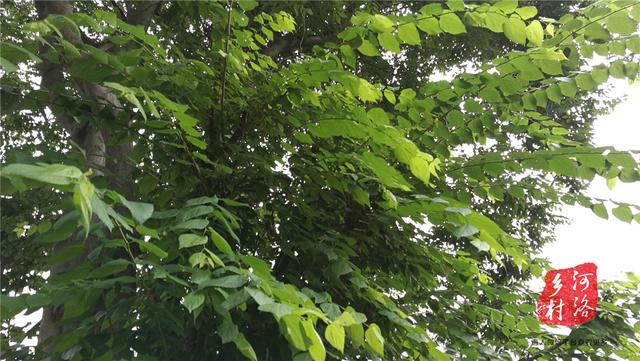 In the rural mountain areas of western Luoyang, many families have a tree like this in front of or behind their house. It was the life-saving tree for mountain farmers from the 1950s to the 1980s.
These trees are actually wingceltis (Pteroceltis tatarinowii), used to make xuan paper. What farmers collected in large quantities were the leaves of the wingceltis tree - celtis leaves. Every year in the third lunar month, not long after the celtis tree sprouts, the leaves are tender, glossy and bright. Grab a handful, rinse in clean water, put them into corn grit soup, and the soup boils out sweet and delicious, filling the air with a delicate fragrance.
In that era of "half a year's grain from a year's tree leaves," every household had three to five bins woven from chaste tree twigs, and most of these bins were used to hold these tree leaves.
Now these chaste tree bins have become works of art, but in those days, farmers in poor mountain areas had no such leisure and mood; they used them to store vegetables to save their lives.
Father said that back then, when spring came and the celtis trees sprouted, the laborers in the village would go in groups of three to five, carrying dry rations, to the deep mountains 30 li from home to pick celtis leaves. Tender celtis leaves were not so easy to find, because too many people were picking them. After finally finding a celtis tree, only a few lone old leaves remained, and perhaps half a day of picking would not yield much. The lucky ones could pick a dan in a day, carry the celtis leaves home, remove the impurities, spread them outside the house to dry, and then store them in chaste tree bins.
Families with many people had to pick several dan a year and dry several bins, eating them from spring all the way to winter. Later, for convenience, everyone planted celtis trees in front of and behind their own houses.
In a flash, several decades passed, and the celtis trees also grew up. The celtis tree outside my yard is the largest in the village, and because it is right at the village entrance, it is even more a great place for the whole village to cool off. Now, farmers' living standards have undergone tremendous changes, and there is no need to use celtis leaves as food anymore. The celtis tree, with its luxuriant branches and leaves, has unexpectedly become a scenery.
Last year someone came to the mountains to buy trees, saying they would be planted in the city, and asked whether we would sell ours for 1000 yuan. Father simply would not sell. Father said: "It is a scenery, a place for the whole village to cool off, and even more, a kind of remembrance!"