Rural entrepreneurship is timely right now: solve the three major problems and you can become a farm owner
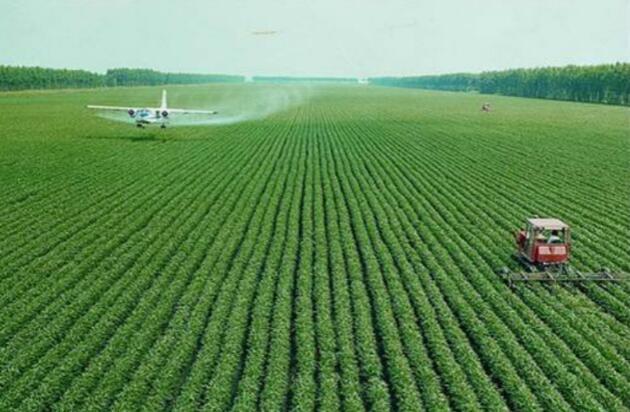 Entrepreneurshipis timely right now. If you can solve the following three major problems, the title of farm owner will be yours!"
>
At present, one third of the rural land nationwide has already been transferred. Of the 230 million farming households with contracted land nationwide, 66 million have transferred their land to a greater or lesser extent.
Land transfer has only been going on for a few years, and unexpectedly one third of rural land has already been transferred.
The importance of land to farmers is self-evident, but unexpectedly, 66 million farming households have chosen to transfer their land and no longer farm it. What has happened to them? Have they gone crazy?
In fact, the farmers have not gone crazy; they have thought it through very clearly.
These farmers who transfer their land generally have three major reasons for transferring land!
Entrepreneurshipis timely right now. If you can solve the following three major problems, the title of farm owner will be yours!" >
1. What is the use of farming?
The farmers who transfer their land out first clearly understand, ideologically, that relying only on their own small-scale cultivation makes it fundamentally impossible to make money from farming.
Farming one mu of land at home is not as good as giving up that one mu of land and working elsewhere with peace of mind.
The money earned from working is far more than the money earned from farming.
Therefore, these farmers never wanted to farm in the first place and felt that farming had no future at all. As soon as land transfer became available, they transferred their land out.
Not only do they no longer have to toil for the land, but they can also receive the land's "rent" every year.
For them, this is economically the maximization of benefit.
2. Give transfer a try
Encouraged by the relevant local departments, farmers in many places transfer their land with a try-it-and-see attitude.
The term of this type of land transfer is generally not too long.
Farmers choose land transfer simply because they think the policy is very good and the profits obtained from land transfer are very high, so they transfer land to give it a try.
Generally, the transfer term is one year, and the transfer rent is also paid once a year.
These farmers believe that land transfer is just renting land out and collecting rent. Transferring land out is not the same as selling the land, and if there is money to be made, they might as well do it first and see.
So they transferred the land.
3. There is really no one left to farm
Rural population aging is currently very serious. In plain areas, no matter whether the land is good or bad, at least someone comes to farm it.
But in some mountainous areas, abandoned land has already appeared.
Most of this abandoned land may previously have been used to grow fruit trees, but in recent years the domestic fruit market has been sluggish, leaving many fruit growers without confidence.
In addition, rural labor is becoming scarcer and scarcer, fruit tree cultivation in mountainous areas requires greater labor intensity, and cultivation profits are hard to guarantee. These reasons have completely led to some rural land having no one willing to farm it at all.
Therefore, transferring the land out is the most correct choice. When farmers transfer their own land out, most of them are also considering their own actual interests. On this point, we should respect every rural person's choice!
As China's urbanization intensifies and the urban population rises sharply, it has brought rural China changes unseen in thousands of years, bringing both challenges and opportunities. Due to influences such as the state ownership policy for land, rising land transfer costs, and relatively high production costs, many large enterprises have turned their gaze overseas, forming transnational farming.
So for the farmers who stay behind, are there business opportunities that benefit them, and where should the land beneath their feet go? Young people all go out to the cities, and even if they return to the village, they do not want to farm and do not know how to farm. Therefore, the issue of land cultivation has become a problem that the state and ordinary people must face.
But quite a few people also see business opportunities in this. Rural land is seriously idle, and much land is no longer cultivated. Every time I return home, half of the village's fields are idle. Farmers cultivate only some of the better fields (easy to irrigate, fertile soil), while the somewhat poorer fields are overgrown with weeds. So this year the state also issued documents on land transfer to reduce the cost of land transfer and facilitate large-scale contracting of land. Large-scale contracted land cultivation, breeding, and other development have already become a trend. Western developed countries provide us with a very good example. Take the United States: its farming population accounts for about 2% of the total population and feeds the entire U.S. population, and every year it also exports large quantities of grain to earn foreign exchange. This is the effect brought by modern agriculture, and it is also the goal of China's agriculture in the future.
But if you want to return to the countryside to contract land for cultivation and get rich, you still need to face the following major problems?
1: Which cash crops to grow, and how to use the land rationally?
You need to comprehensively consider your local market conditions and weather and climate, and grow according to local conditions. Which land is suitable for growing essential vegetables, and which is suitable for growing fruits and other seasonal fruits? How can you improve the land utilization rate and increase benefits? If local conditions allow, you can combine it with local leisure tourism, fully mobilize the resources around you, and build an agricultural eco-tourism park.
2: Where is your market?
No matter what you grow, the market is an important factor for us to consider. Have we fully studied the market beforehand? Where will good products be sold? How can we build our own agricultural brand and increase visibility and added value?
3: Do you have any agricultural technical reserves?
Agriculture is not as simple as we think. Your small-scale cultivation may not require the above techniques, but once you cultivate on a large scale, agricultural techniques become indispensable. How do you prevent insects on fruits and vegetables? If there are insects, what method do you use to kill them? Without agricultural techniques, failure may result.
Judging from the current situation, exactly how to better develop modern agriculture requires generations of farmers to explore and practice. Practice is the only criterion for testing truth, and without practice there is no right to speak. If you have better ideas, you can also add WeChat [yzw898899888] to exchange views with the editor.