Artificial Breeding and Farming Techniques for the New Changfeng Crucian Carp Variety
Reported by China Aquaculture Channel,
 Farming Techniques"
>
I. Variety Overview
(1) Breeding Background
Silver crucian carp (Carassius auratus gibelio) is taxonomically classified as a subspecies of the genus Carassius in the family Cyprinidae, and is widely distributed across Eurasia. Over the past decade or more, the scale and potential of crucian carp farming in China have grown increasingly large; in 2014 total output reached 2.59 million tons, making it one of the freshwater farmed fish species with steady and continuous production growth and giving it a very important position in freshwater aquaculture. Since 1996, 12 crucian carp varieties have passed national approval, and the promotion and application of new varieties have played a huge role in driving up crucian carp yield and quality. However, the new varieties currently promoted and applied are all diploid or triploid crucian carp, and no new tetraploid crucian carp variety with an obvious growth advantage has yet been applied.
As a fellow cyprinid, crucian carp grows more slowly than common carp. Production trials have shown that carp-crucian hybrids such as Furong carp-crucian and Xiangyun crucian grow far faster than crucian carp, displaying clear heterosis. Likewise, when silver crucian carp is induced to develop gynogenetically using common carp sperm, the carp chromosomes integrate into the egg under specific conditions and are stably expressed, and such individuals theoretically grow faster than ordinary silver crucian carp. Gui Jianfang (1993) confirmed that the probability of allogynogenetic silver crucian carp integrating heterologous sperm chromosomes is 0.1%-0.3%, and that tetraploid silver crucian carp incorporating carp chromosomes grow more than 38% faster than ordinary triploid crucian carp, showing a tremendous growth advantage. Studies by Gui Jianfang et al. (1997, 2010) found that triploid allogynogenetic silver crucian carp normally reproduces by gynogenesis, and that under specific conditions a small number of eggs not only have the ability to maintain all their own chromosomes through gynogenesis but can also fuse with foreign sperm and incorporate and co-develop with the sperm's chromosomes. Tetraploid silver crucian carp differs markedly from ordinary biparental hybrids: it can break through the barrier of intermediate hybrid sterility through the reproductive mode of gynogenesis with heterologous sperm, and can also overcome the phenomenon of offspring segregation seen in biparental species. The phenomenon in which triploid allogynogenetic silver crucian carp integrates heterologous chromosomes and transmits them stably provides new ideas and directions for introducing heterologous chromosomes into silver crucian carp ploidy breeding and thereby exploiting heterosis.
Breeding tetraploid allogynogenetic silver crucian carp with an obvious growth advantage would be a major supplement for production application, specifically as follows: First, it is an important supplement to the need for richness in variety germplasm resources, as a new crucian carp variety integrating heterologous chromosomes can effectively reduce the potential hidden risks caused by a single germplasm resource; second, it meets the need for yield, as a selected crucian carp with an obvious growth advantage can effectively raise yield per unit area and increase returns; third, it meets the need of farming models, as successfully breeding a faster-growing variety can change the farming model from marketing two-year-old market fish to raising fry in the same year to market size, reducing the risk of a long farming cycle; fourth, it meets the need for quality improvement, as a new crucian carp variety integrating heterologous chromosomes has finer muscle quality and better nutrition. Therefore, breeding a new crucian carp variety with an obvious growth advantage and excellent quality is necessary.
(2) Variety Characteristics
(1) Chromosome observation of Changfeng crucian carp shows a modal number of 208, containing 3 sets of crucian carp chromosomes and 1 set of common carp chromosomes, making it a composite tetraploid crucian carp.
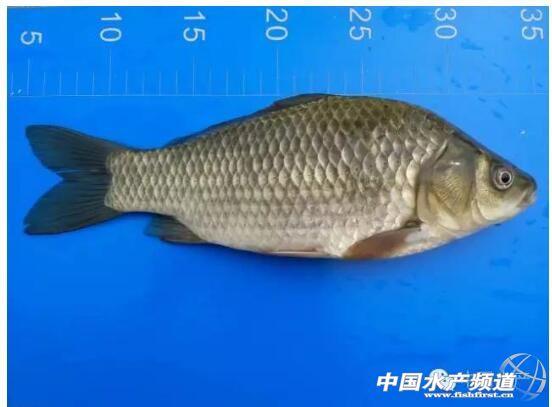
(2) The appearance of Changfeng crucian carp is consistent with that of ordinary silver crucian carp. Changfeng crucian carp has a spindle-shaped appearance, with no obvious difference in countable and measurable traits from ordinary allogynogenetic silver crucian carp.
(3) Under the same farming conditions, it grows faster. The average body weight gain of one-year-old Changfeng crucian carp is 25.06%-42.02% faster than that of the D strain of allogynogenetic silver crucian carp, and that of two-year-old fish is 16.77%-32.1% faster.
(4) The flesh is tender. The number of muscle fibers per unit area in Changfeng crucian carp is 23% and 37% lower than in Pengze crucian carp and ordinary silver crucian carp, respectively.
(5) It is more nutritious and has a higher content of beneficial fatty acids. The highly unsaturated fatty acids (n>=3) of Changfeng crucian carp are 115.16% higher than those of the D strain of allogynogenetic silver crucian carp, and the DHA content is 255.17% higher than that of the D strain of allogynogenetic silver crucian carp.
(6) The scales are tight and not easily shed. Changfeng crucian carp has tight scales, so sales are unaffected.
(7) Genetic traits are stable, making germplasm conservation easy. Changfeng crucian carp reproduces by heterologous gynogenesis, and the offspring traits do not segregate.
(8) Strong stress resistance. Because it contains foreign carp genetic material, Changfeng crucian carp shows greater resistance to disease than silver crucian carp.
II. Artificial Breeding Techniques
(1) Selection and Rearing of Parent Fish
1. Selection of breeding parent fishParent fish of Changfeng crucian carp are provided by the variety breeding unit or an authorized propagation unit; offspring that have been self-propagated by a fry production farm and have not been tested must not be used as parent fish.
For breeding parent fish, choose individuals that are intact with no wounds on the body surface, robust in constitution, and spindle-shaped; female fish should be 1-3 years old, preferably not over 4 years old, and weigh more than 0.4 kg; male fish should be 2-4 years old and weigh more than 1 kg. Changfeng crucian carp is a fish that spawns in batches, and maturity varies greatly among individuals in a farmed population. Therefore, each induced spawning must strictly select highly mature parent fish to ensure the spawning induction rate, fertilization rate, hatching rate, and fry survival rate. The criteria for good parent fish maturity are: the female's abdomen is distended, the ovarian outline is obvious, the abdomen is soft and elastic, and the urogenital pore is slightly protruding and pinkish; the male's pectoral and pelvic fins have nuptial tubercles, feel rough to the touch, and milky white semen flows out when the abdomen near the urogenital pore is gently pressed, dispersing immediately in water.
2. Parent fish rearing
(1) Selection of rearing ponds:The area should preferably be 0.1-0.4 ha, with convenient water filling and drainage; the pond bottom should be flat with no silt or a silt thickness of less than 15 cm; water depth should be 1.2-2.5 m; the water should be fairly fertile; the pond should be sunny and oriented east-west or north-south; and there should be no weeds in the water at the pond edge. After disinfecting the pond with quicklime, fill with fresh water 2 days later, and after aeration wait for the parent fish to be stocked.
(2) Feeding and management:Feeding and management of parent fish should focus on feeding concentrated feed and regulating water quality so that the fish develop well and can produce a large quantity of good-quality eggs the following year.
Rational feeding.In northern regions, after the fish are taken out of the pond in spring, feeding can begin once the water temperature rises above 10°C; the feed given should be concentrated feed, and the protein content for pre-spawning rearing should be above 30%. For post-spawning rearing, the protein content should be 28%-35%; during the pre-spawning and post-spawning periods and one month before overwintering, feed a compound feed with a protein content of 30%-35%; a pellet size of about 5 mm is suitable, and the feeding amount should be 2%-4% of body weight; during the one-month pre-spawning and post-spawning periods, the feeding amount should be 3%-4% of body weight; during normal rearing from July to August, the feeding amount should be 2%-2.5%, adjusted according to water temperature and the fish's feeding intensity.
Regulating water quality.A good water quality environment is crucial to the development and spawning of parent fish; flushing water can improve water quality and meet the parent fish's requirement for water flow, providing a good ecological environment for the development of the gonads. Frequently adding fresh water can meet the fish's oxygen demand and increase feeding intensity. Dissolved oxygen should be above 4 mg/L, and on sunny days at noon the pond water transparency should be kept at 20-25 cm.
(2) Artificial Breeding
The spawning season of Changfeng crucian carp is spring; spawning begins when the water temperature rises to 16°C-18°C, and the suitable water temperature for induced spawning is 18°C-20°C.
Select mature male Xingguo red carp parent fish with rough scales. After gently pressing the rear abdomen of the male parent fish, milky white semen flows from the urogenital pore and disperses rapidly in water, which is considered good. When using artificial insemination, the ratio of female to male fish is 50-100:2; in actual practice, this should be flexibly controlled according to the female's egg output and the male's semen volume.
1. Cleaning and management of spawning ponds and hatching pondsThe induced spawning ponds used for artificial insemination are mostly square or round; there is no fixed shape requirement, and an area of 3-5 sq m is suitable for convenient operation, with a certain exchange water volume. Hatching buckets, hatching ponds, or circular hatching channels require specially built facilities, and production can be scaled according to water volume and the number of fry needed per batch. Hatching buckets range in diameter from 0.2 to 1.0 m; hatching ponds are cement ponds or water tanks welded from iron plates, rectangular in shape, preferably 16-32 sq m in area; circular hatching channels are similar to silver carp and bighead carp hatching facilities, preferably 6-10 m in diameter. Hatching water must be clean, with an oxygen content above 5 mg/L. All spawning ponds and hatching ponds must be thoroughly cleaned and disinfected before use.
2. Artificial induced spawningUse HCG+LRH-A2: (400IU+1μg)/kg; or Ovulation-Inducing Agent No. 1+LRH-A2: (400μ+1μg)/kg; mixing the two drugs gives good results. The dose for male fish is halved. Use one or two injections; generally two injections are used (injected at the base of the pectoral fin). The first injection is 1/8-1/6 of the total dose, and the second injection is the remainder. The injection water should not exceed 5-16 mL of solution per parent fish. The interval between the two injections is generally 8-10 hours.
3. Artificial inseminationAfter the parent fish are injected with the drug, female and male fish are placed separately into different spawning ponds and subjected to flowing water stimulation to assist the parent fish in coming into heat and spawning. When the water temperature is 16°C-24°C, spawning can begin once the effective time reaches 8-10 hours. After induced spawning, the parent fish are kept separately; 2-3 hours before the effective time, observe the parent fish closely, and as soon as eggs flow out when the female's abdomen is gently pressed, strip the eggs and inseminate immediately. Wipe the body surface water of the female parent fish dry with a dry towel, squeeze the eggs into a dry basin or bowl, squeeze the male's semen into the basin, stir evenly, add an appropriate amount of water and stir gently to allow full fertilization, then immediately transfer the fertilized eggs into yellow mud slurry water for 1-2 minutes of de-adhesion, and randomly transfer them to a hatching pond or hatching bucket for incubation. Avoid direct sunlight when transporting fertilized eggs.
4. Fry hatchingChangfeng crucian carp eggs are demersal eggs; they sink to the bottom in still water and are lifted in flowing water, so the hatching method is flowing water incubation. Before the fertilized eggs enter incubation, they should be soaked and disinfected in a methylene blue solution at a concentration of 1100.00 mg/L for 10-15 minutes. During the egg incubation process, apply the drug 1-2 more times to ensure prevention and control of water mold on the eggs. The hatching water must be filtered to prevent harm from predators such as cyclops.
Hatching water must be fresh and clean, with sufficient dissolved oxygen (dissolved oxygen above 5 mg/L), pH 7-8; it must be non-toxic and harmless, and the water must be filtered through 70-80 mesh nylon sieve cloth to prevent predatory organisms. The hatching water temperature is 18°C-25°C.
During flowing water incubation, the water flow can be somewhat stronger at the start of incubation so that the eggs turn up and down in the water; at hatching, the flow can be slightly reduced, and after the larvae hatch it can be turned down further. The fry can leave the pond only when the waist spot (swim bladder) appears and they can swim horizontally.
When the fry can swim horizontally, they should be sold or stocked into ponds for rearing in a timely manner. If weather changes suddenly and they cannot be stocked into ponds in time, feed a boiled egg yolk suspension, twice a day; for 1 million fry, feed 2 egg yolk suspensions per feeding.
(3) Fry and Fingerling Rearing
1. Rearing of tiny fry and summer fry
(1) Rearing ponds:The pond bottom is flat, with moderate silt 10-15 cm thick, and convenient water filling and drainage; the pond area should preferably be 0.15-0.4 ha. 5-10 days before the fry are stocked, thoroughly clear and disinfect the pond with 1125-1500 kg/ha quicklime or 375-450 kg/ha bleaching powder. After pond clearing, apply base fertilizer, 2250-3000 kg/ha of fermented manure; after fertilizing, the pond water gradually turns tea-brown or light green as fertile water, the purpose being to cultivate rotifers and other small zooplankton as biological feed for the fry after stocking.
(2) Fry stocking:After the fry can swim horizontally and begin feeding, they enter the pond for rearing. When stocking, note that the temperature difference between the hatching pond (container) water and the pond water must not exceed 3°C, and choose the leeward side of the pond for stocking; in windy weather, postpone stocking or place artificial spawning nests or straw curtains in the leeward area so that the fry can attach and avoid wind and waves. The stocking density is 7.5 million-22.5 million fry/ha, adjusted appropriately according to pond conditions. The fry stocked in each pond should be from the same batch of propagation and should be stocked all at once. In addition, before stocking the fry, use a fry net to check by seining or thoroughly remove harmful organisms such as aquatic insects and wild fish from the pond.
(3) Feeding and management:3-5 days after the fry are stocked, apply additional fertilizer in a timely manner, or splash soybean milk; for a pond 1 m deep, use 15-75 kg/ha of soybeans daily, soak and grind into slurry, and splash over the whole pond, feeding 1-2 times per day; apply additional fertilizer every 3-5 days according to water quality to keep the pond water brownish green or oily green. Alternatively, use Lierduo 1.5-2.4 kg/ha together with aquatic yeast attractant 1.5 kg/ha, splashing twice a day. After 10 days, as the fish grow, adjust the feeding amount appropriately or increase feeding of microparticulate feed, and at the same time fill water in stages. When the fry are stocked, the pond water is generally about 50-70 cm; afterward fill water once every 5 days, 15-20 cm each time, to improve water quality, promote the reproduction of biological feed, and promote fry growth. When filling water, install a fine mesh net at the water inlet to prevent wild fish and other predators from entering with the water. Persist in patrolling the pond morning, noon, and evening every day to observe changes in water color and fry activity so as to decide on fertilization and feeding amounts. Remove weeds, debris, and frog eggs at the pond edge at any time.
After 15-25 days of rearing, when the fry reach a total length of about 1.5-3 cm, they can be divided into other ponds or sold. To improve survival rate at harvest, train the fish. The method is: choose a sunny morning around 10 o'clock to seine and crowd the fish for training; stop feeding 2 days before seining, operate carefully, and as soon as the fry show slight gasping at the surface, immediately return them to the original pond.
2. Pond fingerling rearing
(1) Fingerling rearing ponds:The conditions for fingerling rearing ponds are basically the same as those required for fry rearing ponds. The area should preferably be 0.4-0.8 ha, and the water depth 1.5-2 m. Before summer fry are stocked, carefully clean and thoroughly disinfect the pond, using a method similar to that of the fry rearing stage.
(2) Summer fry stocking:Summer fry should be stocked as early as possible to extend the fingerling growth period. The fry should be robust and uniform in size. Stocking density varies greatly depending on the climate, production conditions, farming methods, and technical level of different regions, as well as the expected fingerling size; in northern regions the stocking density is 45,000-75,000 fry/ha, adjusted appropriately according to actual farming conditions, with an appropriate number of silver carp and bighead carp fry added.
(3) Feeding and management:3-5 days after the summer fry enter the pond, start domesticated farming and feed pellet feed containing more than 35% protein; the pellet size must be gradually adjusted as the fish grow and develop so as to be palatable. Feeding should adhere to the "four fixed" principles: (1) Fixed location: feeding should have a fixed location, the feeding point; concentrated feed should be placed on feeding platforms. After summer fry are stocked, first splash feed around the feeding platform, then gradually narrow the range to guide the fish to feed on the platform; each feeding platform should be about 1-2 sq m, with one set up for every 5,000 fingerlings; green feed should be placed in feeding frames. (2) Fixed time: when the weather is normal, daily feeding times should be fixed; concentrated feed should be fed twice daily at 8-10 a.m. and 2-4 p.m.; green feed should be fed once daily, generally 1-2 hours earlier than concentrated feed. (3) Fixed quantity: feed should be given in an appropriate and even amount, avoiding too much or too little; it is preferable that concentrated feed is finished within 2-3 hours after each feeding and green feed within 4-5 hours. On cloudy and rainy days and during fish disease epidemics, the feeding amount should be reduced as appropriate. (4) Fixed quality: the feed given must be fresh; do not feed spoiled feed to avoid fish disease; green feed should be fresh, tender, and palatable; concentrated feed must not be moldy or deteriorated and should be made into pellet feed according to the nutritional needs of each fish species. The daily feeding amount is 5%-12% of body weight, but should be flexibly adjusted according to weather, water temperature, and fish feeding conditions.
Regularly add fresh water; during the peak growth period from July to September, change the water 2-15 times according to water quality conditions, 20-30 cm each time, first to replenish water lost to seepage and evaporation and second to regulate pond water quality, ensuring a good living environment for the fish and promoting fish growth. This stage lasts several months, and it is very important to prevent gasping at the surface, pond turnovers, and other accidents. Use aerators for mechanical aeration; for ponds with higher density, use multifunctional wave-making machines or paddlewheel aerators on sunny days at noon for 2-3 hours per session to exchange water layers and improve water quality. Persist in patrolling the pond morning and evening every day, paying attention to water color, water quality, and fish feeding conditions, and promptly regulate water quality and feeding amount; especially in muggy weather, take extra care to avoid fish gasping at the surface and causing unnecessary economic losses.
(4) Pond overwintering management techniques:In northern regions, from late September to early October, fingerling rearing should be intensified and more concentrated feed given to strengthen the fish's constitution, which is the internal material basis for ensuring safe overwintering of fingerlings. In late autumn and early winter, when the water temperature drops to 8°C-10°C, the fish rarely feed. For ease of management, combine ponds and keep the fingerlings in farming ponds with deeper water and good water retention, or overwinter them in the original pond.
Overwintering ponds should be chosen with a flat bottom, good water retention, little silt, a sunny and leeward location, convenient water filling and drainage, and no seepage; the area should be 0.4-2.0 ha, the water depth should reach 2.5-3.5 m, and the water depth under the thickest ice should be kept above 1.5 m. Drain the pond 10 days before stocking fish, remove debris and weeds from the pond, and expose it to the sun for 1-3 days; fill with 10-20 cm of fresh water for pond clearing. For acidic water bodies, splash quicklime slaked into slurry over the whole pond at 1200 kg/ha; for alkaline water bodies, use bleaching powder with 30% chlorine at 225 kg/ha. After 24 hours, fill with fresh water; after 3-5 days, when the water depth reaches about 1 m, fish can be stocked, and the water level should gradually be raised to the maximum. You may also use a deep-water pond with good water retention for overwintering in the original pond: drain 1/3 or 2/3 of the old water, splash trichlorfon over the whole pond at 0.5-0.7 g per cubic meter to kill zooplankton and fish parasites, and one week later splash bleaching powder over the whole pond at 1.0 g per cubic meter, then fill with fresh water to the maximum level.
Determine stocking density according to the bottom conditions of the overwintering pond and water replenishment conditions. For overwintering ponds with good bottom water retention, little silt, good water quality, and convenient water replenishment, stock 0.75-1 kg per cubic meter; for ordinary overwintering ponds, the stocking density is 0.5 kg per cubic meter.
In northern regions, winter temperatures are low, and in some places the ice-covered period lasts several months, with ice thickness ranging from 20 to 100 cm. Management during overwintering is especially important. (1) Assign a dedicated person and check overwintering conditions in a timely manner: regularly check water quality, water color, and the activity of indicator fish, and in particular regularly measure and analyze dissolved oxygen in the water; generally check once a week, and when oxygen levels drop rapidly, check once a day. When dissolved oxygen drops to 4 mg/L, take aeration measures. (2) Pond ice cover and dissolved oxygen measurement: whether an overwintering pond can form clear ice is key to the quality of overwintering and directly affects how much oxygen phytoplankton in the overwintering pond produce. When rain or snow seals the pond, take measures and use an aerator to stir the water so that it does not freeze, then let it refreeze on a sunny day; if the ice is too thick to break with an aerator, use an ice-breaking machine to break the ice and then let it refreeze, with the broken ice area no less than 40% of the pond area, to facilitate photosynthesis by phytoplankton under the ice and increase dissolved oxygen in the water. Measure dissolved oxygen regularly; in the early period dissolved oxygen changes little, so it can be measured once every 10-15 days; from late December to the end of February, when pond dissolved oxygen changes greatly, measure once every 3-5 days; if the daily decrease in dissolved oxygen reaches more than 1 mg/L, measure once a day. When dissolved oxygen drops to about 4 mg/L, use measures such as circulating water within the pond to supplement oxygen and ensure safe overwintering of the fish. During overwintering, also frequently observe water color and fish activity under the ice, and promptly prevent and treat fish diseases. (3) Clearing snow from the ice surface: after ice forms for overwintering, when the ice surface can bear the weight of people and snow-clearing machinery, clear snow in a timely manner; snow greatly affects the penetration of sunlight, and the snow-cleared area should reach about 80% of the pond ice surface; when the overwintering quantity is relatively small, the area to be cleared can be appropriately reduced from the normal amount so as to improve light conditions, increase phytoplankton photosynthesis, and increase dissolved oxygen in the water. (4) Regularly add fresh water: frequently replenish water to keep the overwintering pond at a relatively high water level, generally once every 10-20 days, and appropriately adjust the watering interval and amount according to the degree of water level drop, dissolved oxygen, and water quality.
III. Healthy Farming Techniques
(1) Suitable Farming Conditions
1. Selection of farming siteThere should be sufficient water sources, water-retentive soil, and no pollution. Convenient transportation is conducive to the transport of fingerlings, feed, fertilizer, and fish products; a reliable power supply is needed to ensure the normal operation of irrigation and drainage equipment, feed processing machinery, aerators, feeding machines, and so on, so as to guarantee production needs.
2. Pond conditionsDepending on the situation of each farm, the fish pond area should preferably be more than 0.4 ha, but more than 2 ha is inconvenient to manage. The water depth should be 1.0-2.5 m, water sources should be sufficient, water quality should be good, the water body pH should be 6.5-8.5, the suitable water temperature should be 18°C-28°C, and dissolved oxygen should be above 4 mg/L. The pond embankments should be firm, without leakage or collapse; before stocking fingerlings, clean and disinfect the pond.
(2) Supporting Farming Techniques
1. Pond main-culture model. The size and quantity of fingerlings stocked should be determined according to the expected adult fish yield target, the size of market fish, and the actual conditions of the pond and production. Early stocking of fingerlings is one of the important production measures. The fingerlings stocked should be robust; those stocked in the same pond should be of the same variety, uniform in size, and stocked all at once. In northern regions the stocking density is 35,000-50,000 fingerlings/ha, adjusted appropriately according to actual pond farming conditions; the stocking size is 10-50 g per fish, with an additional 10%-30% of filter-feeding fingerlings such as silver carp and bighead carp.
2. Pond polyculture model with Changfeng crucian carpFor the low-density rapid-growth model, polyculture of summer fry at 1000 fish per mu, with individuals reaching more than 300 g in the same year; polyculture of summer fry at 2000-3000 fish per mu, with individuals reaching 80-130 g in the same year.
3. Daily managementPatrol the pond once each morning and evening every day, observing weather, water quality changes, and fish activity and feeding to determine corresponding feeding and management measures. If gasping at the surface is predicted, start the aerator in advance or add fresh water. Every day, remove feed residues, debris, and dead or diseased fish from the pond.
Establish farming records.In accordance with Order No. [31] of 2003 of the Ministry of Agriculture of the People's Republic of China, the "Provisions on the Safety and Quality Management of Aquaculture," carefully keep records of the entire aquaculture process and production and medication records to allow traceability. Establish aquaculture technical archives; each pond should have a card to reflect this. In addition to recording the "Aquaculture Production Record" and "Aquaculture Medication Record" as required by the "Provisions on the Safety and Quality Management of Aquaculture," also record pond environmental conditions, water source, water quality, bottom conditions, and farming model, and keep detailed records one by one of important technical measures such as pond clearing, water filling, fertilization, fingerling stocking, feeding, gasping at the surface, aeration, fish diseases and their prevention and treatment, drainage and water replenishment, water quality measurement results, seining, and fish harvest, and file them at the end of the year.
(3) Main Disease Prevention and Treatment Methods
Diseases that may occur during Changfeng crucian carp farming include water mold, bacterial septicemia, trichodiniasis, and anchor worm disease; disease control should focus on prevention.
1. Preventive measuresFish diseases are mostly caused by a poor aquaculture water environment, poor feeding management, and fish body injuries that allow pathogens to invade. Therefore, comprehensive prevention should start from the following aspects:
(1) Thorough cleaning and disinfection of farming ponds. Whether rearing fry, fingerlings, or food fish, ponds should be cleared and disinfected before fry and fingerlings are stocked.
(2) The fingerlings stocked should meet the quality standards for the corresponding types of fingerlings, and purchased fry and fingerlings should pass quarantine.
(3) Before fry and fingerlings enter the pond, disinfect the fish body by soaking in 3%-5% salt water for 5 minutes; where vaccine conditions permit, grass carp fingerlings should be immunized by injection.
(4) Half a month after fry and fingerlings are stocked, splash bleaching powder (28% effective chlorine) once at 1-2 g per cubic meter of water.
(5) In hot seasons, mix 5 g of garlic or 0.47 g of allicin per kg of fish body weight into the feed daily, along with an appropriate amount of salt, and feed continuously for 6 days.
(6) In March-April, splash a crystal trichlorfon (90%) aqueous solution over the whole pond once, so that the pond water contains 0.3-0.5 mg/L of the drug; in May-June, splash quicklime aqueous solution over the whole pond 1-2 times, so that the pond water contains 25-30 mg/L of the drug.
(7) Disinfection of feeding grounds. Methods include: first, disinfect with bleaching powder 1-2 times a month, using 250 g of bleaching powder each time, dissolved in 12.5 g of clean water, and splashed at the feeding ground; second, during fish disease epidemic seasons, use medicated hanging bags or baskets for prevention. Each feeding ground can have 3-6 baskets (bags) hung, each containing 100-150 g of bleaching powder. From April to June, twice a month; after July, once a month, each time for 3 consecutive days. A mixture of copper sulfate and ferrous sulfate can also be used in hanging bags, with 3-6 hung at each feeding ground, each containing 100 g of copper sulfate and 40 g of ferrous sulfate. From April to June, twice a month, each time for 3 consecutive days.
(8) Adhere to "four fixed" feeding; disinfect feed properly; aquatic green feed such as water plants and duckweed should be soaked in 8-10 mg/L bleaching powder solution for 5-10 minutes before being placed in the feeding ground.
(9) Strengthen pond patrols, frequently remove weeds and residual feed around the pond, keep the pond clean and sanitary, and promptly remove and deeply bury dead fish when found.
(10) During seining for training, pond division, harvesting, sorting, and transportation, operate carefully to prevent injury to the fish body.
(11) Do a good job of disease handling. Once an infectious disease occurs in farmed fish, isolate them, and their water body must not be discharged casually to avoid further spread of the disease. Treat with drugs in the original pond or carry out disinfection properly. Diseased and dead fish must not be discarded casually but must be subjected to harmless treatment.
(12) Fishing gear used in diseased fish ponds must be soaked and disinfected; this can be done by soaking in 2%-4% salt water for 5 minutes, or in 20 mg/L (20°C) potassium permanganate solution for 20-30 minutes, or in 30 mg/L povidone-iodine solution (1% effective iodine) for 5 minutes, or by exposing to sunlight, to prevent the spread of pathogenic organisms.
As long as prevention work is done carefully, fish disease outbreaks can be controlled, and at the same time the use of fishery drugs can be avoided or reduced, which is beneficial to improving the quality of farmed fish.
2. Disease treatment
(1) Water mold:This disease is mainly caused by careless operations during seining and transport, which cause scales to fall off and skin damage, allowing water mold to invade. With the naked eye, large amounts of hyphae can be seen growing on the body surface of diseased fish, growing in clumps like old cotton wadding, white or grayish white, hence the name "white hair disease." Fish suffering from this disease first swim restlessly and move abnormally; later, as the body burden becomes too heavy, they swim slowly, lose appetite, and finally die from weakness.
Prevention and treatment methods:Soak in 1% salt solution for 20 minutes, or soak in 3% salt solution for 5 minutes.
(2) Bacterial septicemia: This disease is also called explosive infectious disease and is caused by bacteria. The head and body surface of diseased fish are congested or hemorrhagic; some have red and swollen anus; some diseased fish also have protruding and congested eyes and orbits, and the muscles also show hemorrhage. When the body cavity is opened, there is ascites; the intestine is empty and slightly red, and the fat has bleeding points. There are also cases with no obvious symptoms. According to investigations, this disease has acute and chronic types; the acute type is severe and explosive, with a peak mortality period; the chronic type has slow mortality and no peak mortality period.
The epidemic season is generally April-October, with a peak from June to August, at a water temperature of 25°C-35°C. The fish species harmed include silver carp, bighead carp, and many other freshwater fish. The disease can occur from fingerlings to adult fish, but mainly harms adult fish.
Prevention and treatment methods:?Thoroughly clean the fish pond, remove silt, and disinfect with quicklime.?Disinfect fingerlings well; the stocking density and polyculture ratio of fingerlings should be reasonable, not too dense.?Carry out regular drug prevention; splash quicklime over the whole pond once a month at 20-25 mg/L. (4) For treatment after onset, splash quicklime over the whole pond once, and feed Scutellaria baicalensis mixed into the feed at 2-4 g per kg of body weight for 4-6 consecutive days. When feeding, it should be used together with rhubarb and Phellodendron amurense (the ratio of the three is 2:5:3). (5) When complicated by bacterial gill rot, splash trichloroisocyanuric acid over the whole pond on the first day at 0.2-0.5 mg/L. From the second day, feed Scutellaria baicalensis mixed into the feed as above.
(3) Anchor worm disease:This disease is also called needle worm disease, iron anchor worm disease, or straw-raincoat disease, and is caused by anchor worms invading the fish body; the worms can be seen with the naked eye on the body surface of diseased fish. The tissue around where the worm parasitizes is often red, swollen, and inflamed, and at the same time the scales near the wound are dissolved by the secretions of the anchor worm, corroded into notches. When the fish body is first invaded by the worm, it appears restless and has a poor appetite; subsequently the body becomes thin and weak and swims slowly.
This worm can invade the body surface of Changfeng crucian carp and other fish, and is especially harmful to young fish, causing death (for larger fish it mainly affects growth). This disease is widespread, found in fish-farming areas throughout the country, and can be seen year-round; in summer and autumn it can cause serious epidemics.
Prevention and treatment methods:?Clear the pond with quicklime in water at 200-250 mg/L.?When stocking fingerlings, soak in potassium permanganate at 10-20 mg/L for 15-30 minutes.?During the worm's breeding season, splash trichlorfon (90%) over the whole pond at 0.5 mg/L, once every two weeks, for 2-3 consecutive times. (4) Under poor-water conditions, apply 400 kg of decomposed pig manure or cow manure per 667 sq m of water surface when the water depth is 1 m, to change the ecological environment and achieve prevention and treatment of the disease.
(4) Trichodiniasis:Because Trichodina parasitizes the skin and gill tissue of fish and absorbs nutrients, it stimulates the tissue to secrete excessive mucus, seriously affecting respiration. It mainly harms larval fish and fingerlings; when heavily infected, the fish body becomes thin and black, and swimming becomes slow until death.
Prevention and treatment methods:(1) Before stocking fish, thoroughly clear the pond with quicklime. (2) Soak in 2% salt water for 2-10 minutes to disinfect the fish body; splash 0.5 g of chelunjiang per cubic meter over the whole pond.
IV. Breeding and Seed Supply Units
(1) Breeding unit
1. Yangtze River Fisheries Research Institute, Chinese Academy of Fishery Sciences
Address and postal code: No. 8 Wudayuan 1st Road, East Lake High-tech Development Zone, Wuhan, Hubei Province, 430223
Contact: Li Zhong
Telephone: 18717166312
Email:[email protected]
2. Institute of Hydrobiology, Chinese Academy of Sciences
Address and postal code: No. 7 Donghu South Road, Wuchang, Wuhan, Hubei Province, 430071
(2) Seedling supply units
Yangtze River Fisheries Research Institute, Chinese Academy of Fishery Sciences
[Keywords]: silver crucian carp, aquaculture, freshwater, diploid crucian carp, yieldAquaculture Network