The three kinds of livestock in rural areas all have a spirit; people never eat the meat of animals they raised themselves
In rural areas, every household has a big courtyard, and living there is truly spacious and comfortable. It would be a waste to leave such a large space empty, so people generally raise some livestock, and most of the livestock are kept to sell for money or to slaughter for meat. But there are three kinds of livestock that rural people never easily slaughter; they really cannot bear to, and after raising them for a long time they become attuned to human nature. Only when these livestock grow old, and for the sake of the family's livelihood, do people tearfully sell them, and some even put up gravestones after these animals die. The meat of these livestock is never eaten; their conscience would not allow it.
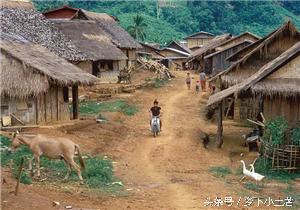
The first kind: rural people do not eat beef
Rural industrialization was once underdeveloped, and every household raised cattle to plow the fields. Cattle were extremely important to rural people; as the main labor force in the countryside, every household treated its own plowing cattle well. When I was little I often went to herd cattle; the cattle we raised ourselves were very gentle, and one would even come nuzzle you to show friendliness. I often stared blankly at the cattle grazing nearby, and sometimes my own mouth would unconsciously chew along with them. Later, when the cattle grew old and truly could no longer plow, my father wanted to sell them. At that time I was small, and I hugged the cattle and cried, refusing to let them be sold no matter what, and my father cried too. Rural people who have been through this never eat beef; they cannot get past the hurdle in their hearts.
Rural people do not eat horse meat
Rural people relied on horse-drawn carts to haul the grain from the fields back home; horses have strong carrying capacity and are fast. For long journeys they also drove horse carts. In rural areas, generally only families with means could afford to raise horses. As the first of the six domestic animals, the horse has too many legends. If any family raised a horse, it truly made people envious, no less than owning a car today. Such a spirited animal, able to help people work and also carry them when traveling, who could bear to kill it for meat? There would not even be enough time to cherish it. Now fewer people in rural areas raise horses, and you can no longer hear the jingling of horse bells on the streets.
Rural people do not eat dog meat
In rural areas dogs are used to watch the house and guard the yard; a dog does not disdain a poor home, and even in poverty a dog never leaves or abandons you. Rural people treat dogs more like family. I loved dogs from childhood; at that time our family kept a big yellow dog that was especially sensible and never barked at its own people. It would even visit relatives on its own, running off to my grandmother's house for a few days when there was nothing to do. There was once a time when rural areas did not allow dogs, and any family that kept one would have it beaten to death. How could anyone bear to let it be beaten to death? So the dog was sent somewhere very far away, hoping it could escape disaster. Who knew that three days later it ran back by itself, and we were all worried sick and cried. On the day the dog catchers came, we had no choice but to put it under the bed and tell it not to make a sound, and the big yellow dog really lived up to expectations and did not bark even once when the dog catchers came. Later, after the dog-catching campaign passed, the big yellow dog was poisoned and stolen by a dog dealer on a motorcycle. I chased him on a bike through two villages but could not catch up; the dog dealer had long since gotten far away. After going home I was seriously ill for a long time, and I will never eat dog meat in this life.
Rural people all know how to be grateful; these livestock that helped rural people get through the hardest days, who would be willing to eat them, who could bear to eat them!
This article is original by the author of the Toutiao account. Without authorization, it may not be reproduced.