Turning barren seas into mulberry fields drives efficient rural prosperity
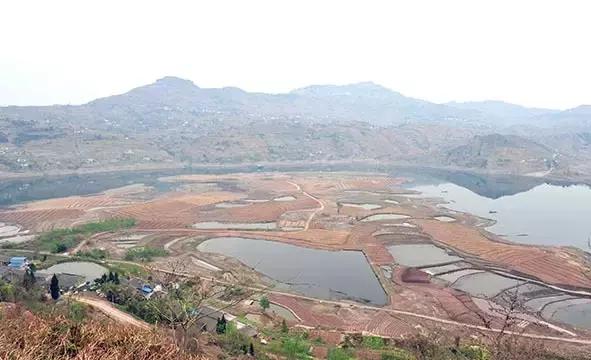
In Kaixian, Chongqing, the "Three Gorges Reservoir Area Mulberry Industry Demonstration Park" has now built a 3,000-mu experimental and demonstration base with excellent ecological, economic and social benefits, and on 1,200 mu of the water-level fluctuation zone has successfully built the "barren seas into mulberry fields" ecological and economic project with the landscape of "water fills to make a sea in autumn and winter, water recedes to reveal mulberries in spring and summer."
 Fodder mulberry trees drive prosperity
A report by the Food and Agriculture Organization of the United Nations and the Animal Production and Health Division (AGAP) of the Ministry of Agriculture once pointed out that mulberry leaves are more nutritious than most traditional feeds and enjoy the reputation of "woody grain." Zoologists also believe that mulberry leaves are a huge untapped potential animal feed resource. Therefore, in recent years the use of mulberry leaves as livestock and poultry feed has attracted the attention of livestock producers in many countries. The development of mulberry leaf feed resources will be a promising new field. In addition to ecological functions, local farmers use the mulberry trees they plant as feed, harvesting three or four times a year, with fresh feed yield of nearly 3 tonnes per mu per year and output value of nearly 2,000 yuan per mu. The key is that it is simple to plant, and once planted it needs no further care.
The "barren seas into mulberry fields" project is being promoted
The planting, harvesting and processing of fodder mulberry trees and the raising of livestock and poultry have driven a large number of resettlers into employment, and many farming households participating in the project can increase their income by tens of thousands of yuan each year. In recent years, the "barren seas into mulberry fields" project has been booming in the use of mulberry leaves for breeding, and raising chickens, pigs, sheep, cattle and fish with mulberry leaves has gradually spread in Kaixian, with particularly good breeding results.
The editor on getting rich:We often say, "Live off the mountain if you live by one, live off the water if you live by that," but the people of Kaixian, Chongqing, live off the water by growing trees, and do so with such creativity that it is truly worth learning from. What we should learn is their way of thinking and their vision! In addition to the primary industry, in recent years the area has also actively developed sightseeing tourism, holding a picking festival during the summer mulberry ripening season to welcome guests from all directions. This way of achieving both ecological and economic benefits is worth all of us learning from and drawing on.
Intern editor: Du Wenqing
Editor: Meng Ran
Executive editor: Wang Hui
*Find us*: Both our Weibo and WeChat names are "Zhi Fu Bang"
"Zhi Fu Qing Nian Bang" radio program listening: Medium wave listening: AM720 (parts of North China and East China)
Online listening: CNR (www.cnr.cn or county.cnr.cn)
Zhi Fu Bang helps you open the door to wealth and light up your life's dreams!