Why is the poppy called the incarnation of both angel and devil
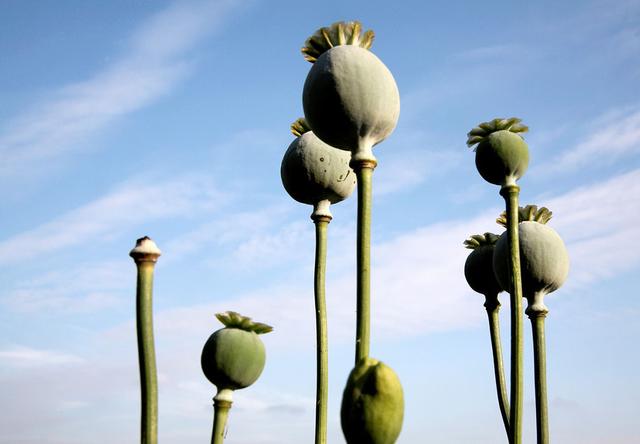
In the Flora of China, "poppy" specifically refers to the opium poppy, also known as opium, big smoke, rice husk flower, poppy seed, imperial rice, elephant valley, rice bag, bag seed, and afuyong. It is the main raw material for producing opium, and its extract is also the source of a variety of sedatives, such as morphine, thebaine, codeine, papaverine, and noscapine.
Opium is formed from the juice of the fruit of the poppy, a plant of the Papaveraceae family, which coagulates. Usually, when the fruit has fully grown but is not yet ripe, and the rind is still green or slightly yellow (at this time the morphine content in the latex is at its highest), a sharp knife or a specially made serrated scoring tool is used to make a shallow cut in the rind (either a straight cut or a diagonal cut) on a clear evening, cutting the latex vessels scattered in the tissue of the rind, and the white latex seeps out from the cut in drops, gradually changing in the air from slightly red to brown, and gradually coagulating into a sticky substance. The next morning, it is scraped off with an oiled bamboo comb or bamboo knife. Each fruit can be scraped for opium 3 to 4 times.
The opium scraped off is raw opium, black or brown in color; it has an ammonia smell or a stale urine smell, tastes bitter, and has a strong odor. Through boiling and fermentation, it can be made into refined opium, which is brown or golden yellow. It contains 10% morphine and other alkaloids, can relieve spasms of smooth muscle, especially vascular smooth muscle, and can inhibit the myocardium. It is mainly used for conditions such as angina pectoris and arterial embolism. When smoked, it gives off a sweet fragrance. Opium was originally used as medicine, and it is still used in medicines today, such as opium powder, opium tablets, compound Platycodon powder, Dover's powder, and compound opium tablets, mainly for cough suppression and diarrhea relief.
Opium
[Nature and flavor]Bitter; warm; toxic
[Meridian entry]Lung; kidney; large intestine meridians
[Functions and indications]Astringes the lung, stops coughing, secures the intestines, and relieves pain. Treats chronic cough, chronic diarrhea, chronic dysentery, rectal prolapse, and various pains of the heart, abdomen, tendons, and bones
[Cautions and contraindications]It is addictive and should not be used continuously for a long time. It is contraindicated for those with severe impairment of liver function, cor pulmonale, bronchial asthma, and diseases of damp-heat accumulation, as well as for infants and nursing women.
So how did opium evolve from being as miraculous as a god at curing disease into being as deadly as a sword?
Human ancestors knew the poppy very early on. Archaeologists say that the poppy was accidentally discovered by Neolithic people while traveling in the mountains on the eastern coast of the Mediterranean. More than 5,000 years ago, the Sumerians reverently called it the "plant of joy" and believed it was a gift from the gods. The ancient Egyptians also regarded it as a miracle drug for treating infants' night crying and called it the "divine flower." In the 3rd century BC, detailed descriptions of opium appeared in ancient Greek and Roman books. To express their praise for the poppy, the ancient Greeks had the goddess of grain, who presided over agriculture, hold a poppy flower. The story of the poppy also circulated in ancient Greek mythology. There was a demon god who governed death named Hypnos, and his son Morpheus held a poppy capsule in his hand, guarding his sleeping father so that he would not be awakened. The great poet Homer called it the "herb of forgetfulness," and Virgil called it the "sleep-inducing drug."
Thomas Sydenham, a 17th-century English physician and founder of clinical medicine, said: "Whether we consider the number of diseases it can control or the efficiency with which it can eliminate them, no medicine is as valuable as opium. Without opium, medicine would be nothing but a cripple." This master of medicine thus also earned the elegant title of "opium philosopher."
The poppy flower is filled with meanings of hypnosis, rest, and forgetfulness
The Latin name of morphine is named after Morpheus, the god of dreams and sleep in Greek mythology
In the early 6th century, the poppy spread eastward to Persia. With the external expansion of the Arab Empire, the opium trade expanded into China. The Eastern Roman Empire sent envoys to present "theriac" to the Tang court, and its main ingredient was opium. The Tang dynasty's Newly Revised Materia Medica records: "Theriac, pungent in taste, bitter, neutral, non-toxic. It treats a hundred diseases... It comes from the western barbarians, and is red-black. When the Hu people bring it here, it is also very precious, and trials have shown it to be effective." At that time, it was the Arabs who studied opium more deeply. In the 9th century, Arab scholars had already begun publishing books on opium and its preparations. Slightly later, the Song dynasty's Kaibao Materia Medica had a record of "poppy seed," with an extremely detailed description of the poppy, and its use was to treat diarrhea, dysentery, and incessant rectal prolapse, indicating that by this time the poppy was already used medicinally.
Although the poppy was already used medicinally in the Song dynasty, the ancients were very cautious about its medicinal use. Zhu Zhenheng of the Yuan dynasty also pointed out in The Golden Casket Hooked to the Mysteries that "although opium's power to stop disease is urgent, it kills people like a sword, and one should deeply guard against it." Gong Tingxian, a physician of the Ming dynasty, in his Rhymed Materia Medica in Four Hundred Flavors, summarized it even more as: "The poppy shell is astringent in nature, treats diarrhea and dysentery and removes cough, cures disease like a god, kills people like a sword," meaning that its medicinal effect is strong and its toxicity is great. Because opium had definite medicinal effects as a medicine, it also became one of the goods that foreign merchants frequently imported into China. During the Ming dynasty, it was already listed under medicinal materials for import tax. But the import volume was very small. By the early Qing dynasty, the opium imported each year was still less than 200 chests (each chest 100 jin).
In the first half of the 17th century, the Sumatrans in Southeast Asia first invented the method of eating prepared opium. Soon, some areas along China's southeastern coast, especially Xiamen, Taiwan, China, and other areas with relatively developed overseas trade, also began to use the smoking method to consume opium. By the Qianlong period, smoking opium had already become popular in China. At this time, opium gradually changed from its nature as a medicine into a drug. At that time, smoking opium was not only regarded as a fashion, but opium also became an indispensable thing in daily life and interpersonal interactions. "Entertaining guests with big smoke has become an unbreakable habit." At the same time, opium imports increased sharply, such as reaching 1,000 chests in the 32nd year of Qianlong and 4,000 chests in the 5th year of Jiaqing.
During the Daoguang period, after extensive discussion among all social strata, the Qing government finally decided to implement a anti-opium policy, adopting measures such as controlling the source of opium and prohibiting domestic opium smoking and trafficking. But these measures fundamentally touched the interests of the imperialist powers led by Britain. With the two Opium Wars and the signing of a series of unequal treaties, the opium trade changed from smuggling to legal, and its harm further increased. For this reason, the original position of prohibiting domestic opium cultivation was gradually replaced by the proposal of Li Hongzhang, a representative figure of the Self-Strengthening Movement, to promote domestic opium cultivation to resist foreign opium with native opium. But the widespread cultivation of opium competed with grain for land, which in turn triggered a great famine like the Ding-Wu Strange Famine, making the disasters of the broad masses even more severe and further reducing national strength.
In 1909, the International Opium Commission was held in Shanghai. The greatest achievement of the conference was that the relevant countries initially reached a consensus on the issues of opium and morphine and determined the principles of joint anti-drug and anti-narcotics efforts. It opened the prelude to international joint drug control and laid the foundation for the later Hague Conference to formulate international anti-drug conventions. People discovered that the poppy was actually a sword of Damocles hanging over humanity. While it treats people's diseases and lets people forget pain and fear, it can also cause human life to wither in anesthesia and be destroyed in illusion.
Corn poppy
Opium poppy
In the eyes of Chinese people deeply afflicted by the disasters brought by the Opium War, the poppy flower is the flower of the devil and a painful memory. This year, residents in Beijing, Hangzhou, and many other places reported that large numbers of poppy flowers appeared in public green spaces. Investigation found that most were corn poppies, which belong to the same family as the opium poppy. The Papaveraceae family has a total of 28 genera and more than 250 varieties (among them only the opium poppy and Papaver bracteatum can produce opium). The corn poppy and the opium poppy belong to the same family, and in appearance the two are very similar. The corn poppy is a common ornamental flower. Its posture is elegant and graceful, swaying lightly, dancing in the wind like a colorful butterfly spreading its wings, highly evocative and truly a fine specimen among flowers, so it is widely planted. Three differences between the two are now summarized so that everyone can correctly distinguish the corn poppy from the opium poppy.
The whole corn poppy plant has obvious fine hairs, has latex, and its stem is slender, with many branches that are fine and delicate; while the whole opium poppy plant is covered with white powder, and its stem is thick and strong, with few branches.
The petals of the corn poppy are mostly four thin petals, two large and two small. The flower colors include deep red, purple-red, carmine, pink, white, and sometimes bicolor. The flowers are small, with a flower diameter of 5-6 cm; while the petals of the opium poppy are thicker and mostly semi-double or double. The flower color is mostly red, and the flowers are larger, with a flower diameter of about 10 cm.
The capsule of the corn poppy is truncate-spherical, and the seeds are kidney-shaped; while the capsule of the opium poppy is spherical or oval.
It must be noted: the whole corn poppy plant is toxic and contains toxic alkaloids. Ingestion by mistake can cause central nervous system poisoning, and in severe cases can be life-threatening.
If opium poppies are indeed found, be sure to report them to the public security department. According to Article 71 of the Law of the People's Republic of China on Public Security Administration Punishments, anyone who commits one of the following acts shall be detained for more than 10 days and less than 15 days, and may also be fined not more than 3,000 yuan; if the circumstances are relatively minor, shall be detained for not more than 5 days or fined not more than 500 yuan:
(1) Illegally cultivating fewer than 500 opium poppies or other small quantities of the original plants of narcotic drugs;
(2) Illegally buying, selling, transporting, carrying, or possessing a small quantity of seeds or seedlings of the original plants of narcotic drugs such as opium poppies that have not been rendered inactive;
(3) Illegally transporting, buying, selling, storing, or using a small quantity of poppy shells.
If a person commits the act in item 1 of the preceding paragraph and voluntarily eradicates the plants before they mature, no punishment shall be imposed.
Morphine
But as the subjective inner sensation experienced earliest and most in everyone's life - "pain" - it is a problem we encounter frequently. Because for a long time people's understanding of pain has been rather one-sided, believing that pain is only a symptom of disease and that as long as the disease is cured, the pain will disappear, many patients are still enduring the torment of pain to this day. The World Health Organization proposed as early as 2000 that "chronic pain is a type of disease." According to authoritative statistics, 35% of people in Europe and America suffer from chronic pain, while in China the figure is only higher than this; about 5.5 million people in the world endure the torment of cancer pain every day, and about 57% of urban residents in China have experienced headaches of varying degrees.
The International Association for the Study of Pain decided that starting in 2004, October 11 of each year would be designated as "World Spine Day." Wait, that should be "World Pain Day." Morphine, as an important component of opium-type drugs, and its derivative morphine hydrochloride in various preparations, has always been a commonly used anesthetic in clinical practice, with an extremely strong analgesic effect. It is mostly used for severe pain caused by trauma, surgery, burns, etc., and is also used for angina pectoris caused by myocardial infarction. It can also be used as an analgesic, antitussive, and antidiarrheal agent. Everyone needs to correctly understand and use analgesics.
Part One of the Pharmacopoeia of the People's Republic of China includes poppy shell, with aliases: imperial rice shell, chestnut shell, pipe bowl, opium fruit. It is harvested after "cutting the smoke" in summer, with the stem ends and seeds removed, sun-dried, stir-fried with vinegar, or honey-roasted for later use.
Nature, flavor, and meridian entry: Neutral; sour, astringent; enters the lung, large intestine, and kidney meridians; toxic.
Functions and indications: Astringes the lung, secures the intestines, and relieves pain. Used for chronic cough, chronic diarrhea, rectal prolapse, and abdominal pain.
Usage and dosage: Oral administration: decocted in soup, 3-10 g; or made into pills or powder.
Contraindications: Use with caution in the early stages of cough, diarrhea, or dysentery, or when chronic dysentery has accumulation that has not been resolved. This product is habit-forming and should not be taken regularly; forbidden for children.
Compared with opium and heroin, although the "toxic substances" in poppy shell are not high in content or purity, their components also include more than 30 alkaloids such as morphine, codeine, noscapine, and papaverine. For "addicts," eating poppy shell has little effect, but for the vast majority of people who have never been exposed to drugs, especially those highly sensitive to drugs, its "power" should not be underestimated. After these people eat it, they will more or less experience a sense of lightness. Physiologically, some people may have slightly red faces, some may have a faster heartbeat, some may easily become drowsy, and some may find it hard to fall asleep.
Even for people who are not sensitive to drugs, if they eat food with added poppy shell for a long time, they will definitely develop a certain dependence. People who eat this kind of food for a long time may experience symptoms such as feeling cold, sweating profusely, fatigue, and sallow complexion with emaciation; in severe cases, it may cause damage to the nervous system and digestive system, and may even cause symptoms such as endocrine disorders, ultimately leading to addiction, with a potential tendency to use drugs, causing extremely bad social effects.
In the 2009 national "List of Non-edible Substances That May Be Illegally Added to Food and Food Additives That Are Prone to Abuse," poppy shell was included, and the main food categories in which it may be added were noted: hot pot, hot pot base, and snack foods, and it may also be used in braised products and even beverages. Long-term consumption of food containing poppy shell may cause chronic poisoning.
National law has clear provisions on the use of poppy shell, prohibiting illegal supply, transportation, and use. But some food processors still disregard national laws, regulations, and people's health and mix poppy shell into food to attract repeat customers. In 2011, the state again stated in the "Emergency Notice on Strengthening the Supervision and Management of Food Condiments and Food Additives" that food safety regulatory departments at all levels should, in accordance with the requirements of the Food Safety Law and its implementing regulations, severely crack down on such acts.
On January 20, 2016, the State Food and Drug Administration announced that in carrying out law enforcement actions against illegal addition to food, it found that food operated by 35 catering service units contained poppy shell components such as papaverine, morphine, codeine, noscapine, and thebaine, and there was suspected illegal addition. Among them, 5 had been transferred to public security organs and public prosecutions had been initiated, 20 had been transferred to public security organs for investigation, and 10 were under investigation by food and drug regulatory departments.
Poppy seeds are the seeds of the poppy. The Great Dictionary of Chinese Medicine states that poppy seeds are also called imperial rice, sweet and neutral in nature and non-toxic, and treat nausea, abdominal pain, diarrhea, dysentery, and rectal prolapse. It is a seasoning widely used around the world. The general method of use is to add the whole seeds or ground seeds to baked goods or sauces to increase the flavor of the food. In Europe and the Middle East, poppy seeds are used in bread, cakes, filled buns, biscuits, etc.; in Turkey, they are usually ground and used in desserts; in India, they are also ground and mixed into sauces; in Germany and among Slavic peoples, they are usually used in pasta, vegetable, and fish dishes. The commonly seen poppy seeds are dark blue-gray (looking very much like black, even smaller than sesame seeds), hard and round, with a faint nutty taste. Poppy seeds used for baking, after drying and baking, are no longer toxic. The compounds related to the pungent aroma of poppy seeds mainly include aldehydes, furanones, pyrazines, limonene, and butyl isobutyrate.
In 1991, in China's published standard "Names of Spices and Condiments and Determination of Their Contents," the "Table of Names of Spices and Condiments" also clearly indicated: poppy, usable parts, such as seeds. In addition, the United States Federal Government Manual and the Encyclopaedia Britannica both record poppy seeds as a safe edible substance.
Due to the influence of modern drugs, the state prohibits any institution from developing poppy seed products. China's criminal law stipulates that privately cultivating 7 or more poppies violates the law. And these poppy seeds used as seasoning raw materials, if untreated, are very likely to take root and grow. Poppy cultivation sites are managed uniformly by the state. China's only legal poppy cultivation base is in Gansu, blocked by a million-li electric wire and steel net, with armed police soldiers on full alert guarding it 24 hours a day. The poppies are extracted for use by state-designated pharmaceutical factories, and their by-products are burned and deeply buried.
Cihai records that poppy seeds contain 50% oil and can be pressed for oil. The oil pressed is called poppy seed oil or imperial rice oil. During the Sui and Tang dynasties, after the poppy was introduced to China, it was cultivated in Gansu, Yunnan, and other places. Poppy seeds were mainly used to cook porridge and rice dishes, and later oil was pressed from them to serve as edible oil. Over time, farmers in the cultivation areas discovered that poppy seed oil had many magical effects on health. Local officials regarded it as a rare precious product and used it as a court tribute for the emperor's use. Many imperial physicians in the palace even treated it as a panacea, and thus the name "imperial rice oil" arose. Imperial rice oil contains nutrients such as oleic acid, linoleic acid, vitamin E, and trace elements. It is easily absorbed by the human body and is very beneficial to health, and is widely used in salads around the world.
On September 4, 2005, the Ministry of Health, the Ministry of Agriculture, the State Food and Drug Administration, the State Administration for Industry and Commerce, and the General Administration of Quality Supervision, Inspection and Quarantine jointly approved that "poppy seeds may only be pressed for oil for consumption"; on June 6, 2006, the Ministry of Health approved imperial rice oil (poppy seed oil) as a new resource food. Imperial rice oil (poppy seed oil), this natural green and rare vegetable oil with great nutritional value, was finally "unbanned."
On June 26, 1987, the 42nd United Nations General Assembly adopted a resolution formally designating June 26 of each year as "International Day Against Drug Abuse and Illicit Trafficking." At this time every year, the public reckons with the evils of opium. The increasingly serious drug problem has become a global disaster. But the poppy flower is beautiful, and proper use will bring beauty and health to humanity. We hope everyone cherishes life and stays away from drugs. Let the poppy continue to move forward along the path of benefiting humanity.
To learn more information about pharmaceutical resources, welcome to follow the official account: Pharmacist 360.
This article is an original work by the author of a Toutiao account. Without authorization, it may not be reproduced.