Seven points to note when castrating young male pigs; only when farmers master them well can they make money quickly
Castration of young male pigs is also common. In order to make male pigs grow quickly, farmers castrate them because castration promotes growth, reduces fighting and improves pork quality. So farmers choose to castrate them very early, but the technical method of castration is crucial. Today Nini will explain to everyone some points to note when castrating young male pigs.
1. Young male pigs should ideally be castrated one week after birth
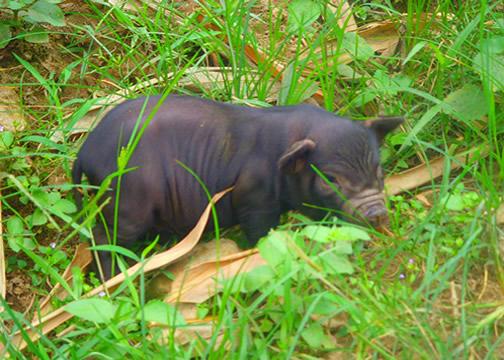
If castrated too early, the testicles are small and fragile, making the operation difficult. If castrated too late, not only is there more bleeding, but the wound also heals easily and the pig shows symptoms of pain, with a severe stress response, which affects the young male pig's normal feeding and growth.
2. Castration is not advisable during an epidemic
Castration of young male pigs is itself a strong stressor, which affects the piglet's immunity. Pathogens in the surrounding environment can easily invade the body through the wound, causing disease. Therefore, castration is not advisable when there is an epidemic.
3. Vaccination cannot be carried out on the same day as castration
Injecting vaccines into young male pigs often causes a very strong stress response, increasing the stress on the young male pig and triggering illness. Vaccination also fails to achieve the expected effect and is very likely to lead to vaccination failure. Therefore, immunization and castration cannot be carried out on the same day, and conflicts between the two should be avoided.
4. Do not castrate on rainy days
A damp environment is favorable for bacterial reproduction. If castration is performed on a rainy day, bacteria can easily invade the body through the incision, leading to wound infection and inflammation, a decline in the body's resistance, and triggering disease.
5. Postpone castration for weak young male pigs
Weak and sick young male pigs have poor resistance and poor stress tolerance, so castration should be postponed. This not only helps them quickly recover their strength, but also avoids triggering disease or death due to castration stress combined with their poor physical condition.
6. Pay attention to disinfection
One day before castration, the pig house should be thoroughly disinfected to reduce the number of pathogenic microorganisms in the environment and reduce the chances of contact between pathogenic microorganisms and the incision.
7. Operating technique
After disinfecting the skin with iodine tincture, cut up and down. Near the bottom of the scrotum, make a longitudinal (up and down) incision of 1 to 2 cm, and the testicle can then be squeezed out smoothly. At the same time, pay attention to stopping bleeding and to postoperative observation. When the testicle is squeezed out, twisting and rubbing the spermatic cord and blood vessels with the fingers has a certain hemostatic effect. After the operation is completed, carefully check whether there is intestinal protrusion caused by a hidden inguinal hernia, so that measures can be taken in time.
Finally, I believe Nini has explained everything clearly to everyone, and I hope these points to note are helpful to farmers.If you like it, you can subscribe to Nini's Toutiao account at any time. If you have other questions to consult, you can follow and add Nini's WeChat ID (muyicaotang), Nini has a big gift waiting for you to claim.