Everyone loves to say "eat tea," so how exactly can tea be eaten?
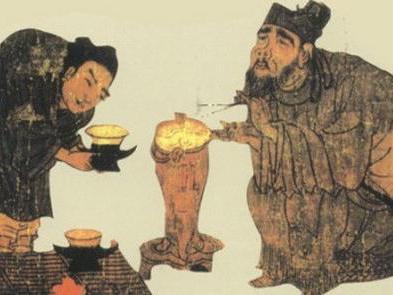
When it comes to "eating tea," the most straightforward explanation today is to chew the tea leaves in your mouth and swallow them. But before the Tang Dynasty, people eating tea was probably much like me desperately eating instant noodles today, paired with sesame, salt, melon seeds, peach kernels and various other precious condiments, either steeped in water or cooked before eating.
Although Lu Yu later proposed that tea leaves should be boiled in pure water to bring out their own mellow taste, the folk culture of eating tea has still been passed down to this day.
When using tea to cook food, respecting the characteristics of the chosen tea leaves is crucial. Strongly flavored seasonings such as scallion, ginger, garlic and five-spice powder easily overpower the tea's aroma, so traditional tea dishes are generally found only in Cantonese cuisine and Huaiyang cuisine. The most classic tea dish in Chinese cuisine is none other than "Longjing shrimp" from Huaiyang cuisine.
The fresh fragrance of Longjing tea neutralizes the fishiness of the shrimp and also enhances its freshness, while the "spirit" of this dish is somewhat "only conceivable, not expressible in words."
In Jiujiang, there is also a famous snack known as "tea cake," accompanied by various exquisite ingredients and paired with tea oil, giving off a faint tea fragrance. It not only has a unique taste but is also a fine gift for relatives and friends.
Although white tea has almost no flavor, as long as you taste it attentively you can find that this kind of tea is used to cook fruits and vegetables with a distinctive flavor, and white tea tofu is also a good choice.
Tea leaves taste bitter and astringent when eaten, so when using them for cooking, generally only the tea infusion is used. Because different varieties of tea have different tea fragrances, which tea to pair should be decided according to the main ingredient of the dish.
For example, Tieguanyin gives off a rich orchid fragrance after brewing, and its tea nature is light, making it suitable for brewing into tea infusion for dumplings; while cooking shrimp and steaming fish are suitable for green tea infusion; Pu'er tea is suitable for making braising liquid; Biluochun is suitable for crushing the tea leaves and mixing them together to make soup.
Using tea leaves in cooking is not limited to Chinese cuisine; Japanese cuisine also has traces of tea dishes, mostly using matcha to make various pastries -- now matcha is also widely used in Western-style cakes, with a slight bitterness paired with understated sweetness, a typical Oriental aesthetic, restrained elegance.
Europeans were even more thorough: from the moment tea entered their lives, they ate it. When Chinese tea first entered the upper class of Europe, gentlemen and ladies had already been enjoying the tea leaves after brewing, paired separately with black pepper and sea salt.
The forms and types of tea are diverse, and the ways of eating it each have their own merits. After seeing so many ways to eat tea, don't you want to give it a try too?
[This is the Tiandao Literature Society, happy to share with you literature, culture, art and strange anecdotes from ancient and modern times, China and abroad. Welcome to subscribe to us:tdwenxuehui (long-press to copy)]