Builder switches to chicken farming, cooperative sells 30 million yuan a year and drives farmers to prosperity
As an outsider raising chickens, he ran into setback after setback. Through painstaking effort, ten thousand chickens were finally ready for market, but what it brought was not a surprise, but a nightmare. Finding business opportunities amid his troubles, he kept coming up with clever tricks. Every three months he moved his free-range chickens, the roads were hard to travel and the chickens ran wild, yet this chaotic scene hid his little secret to making money. See how Hu Jun from Sichuan rose rapidly in just over three years, with annual chicken sales reaching more than 30 million yuan.
Hu Jun: We have four people standing behind, one on each side, all driving them that way.
On the morning of May 20, 2016, Hu Jun was busy moving his more than 4,000 chickens. Many animals have a leader, but chickens do not. At the scene, these leaderless chickens were like a pile of loose sand, each going its own way, and getting them to move in one direction was no easy task.
Hu Jun: It is best if there is grain leading the way in front. If they are hungry, scatter a circle of grain, and they will slowly peck, slowly peck, and slowly follow along.
Hu Jun planned to move these chickens from the pen above to another pen more than 200 m away at the foot of the hillside. The distance was not far, but it was very laborious. Still, Hu Jun insisted on moving the chickens to a new free-range area every three months, in order to protect the vegetation and benefit the chickens' growth.
Hu Jun: Because in some places the grass in the free-range area has already been pecked away by the chickens, and in order to let them still have green grass to eat, we have to move them to the next place that already has green grass. If there is still grass, the meat quality the chickens develop, or the air quality of the free-range environment, will be better.
While driving the chickens, Hu Jun had another important task. This hillside was very steep, with ditches and ridges everywhere. For us people, walking it made it easy to fall, and for Hu Jun's chickens it was also a test. Near the pen there was a ridge, and the slope was close to ninety degrees. When they reached this spot, some of the chickens moved with nimble steps.
Hu Jun: These chickens just went straight up without turning back.
Some were clumsy and silly.
Hu Jun: It bumped into it. This is a stupid chicken. Very impressive, it can get up.
There were also those that failed again and again and took a detour to find a place with a gentler slope.
Hu Jun: No good, you are a deserter.
In Hu Jun's eyes, these hard-to-travel places were exactly the best places to test the chickens.
Hu Jun: The slightly inferior ones will show up when the pen is moved. Any that get bullied, the kind of chickens that want to run away.
Catch them out and raise them separately, so that later other chickens will not fight with them and beat them to death.
Driving chickens and releasing chickens, today's Hu Jun is an expert at all of it, but three years ago Hu Jun was still in the construction contracting business. In just over three years, Hu Jun's annual chicken sales reached more than 30 million yuan. From small-scale trial farming to quickly becoming a leading agricultural enterprise in Chengdu. How did Hu Jun rise so rapidly?
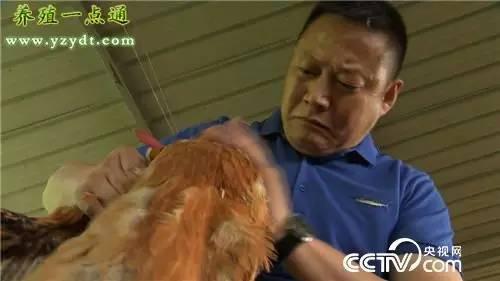
Hu Jun, 44 years old this year, started out as a carpenter, and later founded a construction contracting company with annual sales of several tens of millions of yuan. In 2009, Hu Jun was attracted by one advantage of agriculture and set his heart on doing agriculture.
Hu Jun: In construction, sometimes you cannot get paid for three years or two years, and that happens most often. What I most wanted to do was cash transactions, which are best, because that makes planning a bit easier for the company.
In 2011, Hu Jun and three shareholders founded an agricultural company. Hu Jun investigated more than a dozen specialty projects and finally told the shareholders he wanted to raise chickens. The shareholders were very puzzled by this.
Fan Zujian: Raising chickens has no highlights or anything. Because there are too many, everyone is raising chickens, and at the time I thought there might be no prospects.
In order to convince the shareholders, Hu Jun decided to run a trial first. In July 2012, Hu Jun bought back 1,500 chicks for trial farming. Six months later the chickens were ready for market, and because the volume was small, they sold out quickly. Hu Jun did the accounts and secretly rejoiced: 1,500 chickens earned 20,000 yuan.
Hu Jun: They are quite easy to raise, and the cost is not high. By my conservative estimate, earning ten yuan per chicken, then if I raise 100,000 I will have one million yuan, and if I raise one million that would be amazing, ten million yuan. That is much better than doing engineering.
With this trial, Hu Jun won the shareholders' support in one stroke. In December 2012, to raise chickens on a large scale, Hu Jun found a good place. He transferred the land rights to three mountains in Minji Village, Dayi County, full of ambition to do something big. But the treasure land in Hu Jun's eyes brought him trouble. Only a few days after construction of the chicken house began, someone came to his door.
Hu Jun: The land bureau staff came by car, and the law enforcement department said, you absolutely cannot use this, and we will immediately issue you a stop-work order on this issue, and then you must restore this land. I was stunned all at once.
Once work stopped, Hu Jun's investment of more than 100,000 yuan would be wasted. Hu Jun quickly looked into it and learned that the land use nature of this plot was basic farmland, and no chicken house could be built there. He had just entered agriculture and already took a fall, and Hu Jun felt very depressed.
Hu Jun: Once I set my sights on a goal, no matter if I get my head bloodied, I must charge forward. You can make backup plans, but you must never do things that mean turning back. You must charge forward without hesitation.
In February 2013, in Gushi Village, Dayi County, near Xiling Snow Mountain, Hu Jun transferred nearly 1,000 mu of forest land as a free-range area, invested more than 10 million yuan, built a breeding farm, and began raising improved local free-range chickens. Next, however, he was badly hurt by a customary practice from the construction industry.
In the first batch, Hu Jun raised more than ten thousand chickens. Hu Jun and the shareholders called friends and invited everyone to come to the farm to have fun. Seeing everyone excited, Hu Jun and the shareholders were also very happy.
Hu Jun: Show off the scale of my own site, let them come and see, and help us spread word of mouth. I thought this was good.
Shareholder Xu Yong: They said it was very good, very good, amazing, amazing. At the time I had that kind of pride.
The arrival of relatives and friends made the farm bustling. But problems soon appeared. During the interview, Hu Jun went into the chicken house early in the morning and found that some chickens had died. He told the reporter that on such a large chicken farm, a few chickens dying in a day was not surprising, it was normal. But in April 2013, not long after he started farming, the first time he found dozens of dead chickens, far exceeding the normal situation, he was terrified.
Hu Jun: If it continued uncontrolled, I estimated that the money I invested early on would basically be thrown away, and I would lose everything. Not only losing money, it was possible I would lose my entire fortune.
One pen held 4,000 chickens, and the cost was more than 200,000 yuan. According to the situation at the time, within a month Hu Jun's chickens would all be dead. Only then did Hu Jun realize that in the construction industry it was common to lead visitors around and explain things when people came, but for the farming industry, bringing relatives and friends into the chicken house was actually a major taboo.
Hu Jun: Crowds are the biggest carriers of bacteria. When they enter, they can eat poultry anywhere outside, or go to other places for inspections, and they carry bacteria on them. So later we did not let them into the pens.
Not allowing irrelevant personnel to enter, this measure had an effect. The chickens' diseases were controlled, and the mortality rate dropped greatly. But Hu Jun still had worries. If he wanted to reach a market rate of more than 90%, the roosters' aggressive nature was an obstacle. Based on the eating habits of Sichuan people, Hu Jun mainly raised roosters. When roosters gather together, fighting is a common occurrence.
Hu Jun: These two chickens are clearly not in the same league. That chicken is bigger, but that chicken is aggressive. Look at its feathers. Once this chicken is bloodied, the other chickens will all peck at it. It cannot stand the sight of blood, and will quickly peck it to death.
Aggressive chickens fight, chickens from different flocks fight over territory when together, and some chickens even fight in groups. Quite a few chickens died from fighting every day. Hu Jun learned breeding experience from experts and tried putting blinders on the chickens.
Hu Jun: Put the blinder on the nose, cover this eye, and it just covers the eye so it cannot see the other's expression, but it can still see the grain below and eat it. If it looks at the other, it cannot see it, so it is not easy for them to fight.
After that, Hu Jun successfully raised the chickens' market rate to more than 90%. After six months of farming, more than ten thousand chickens were about to be ready for market. Finally came the time to harvest, and Hu Jun was both expectant and nervous. He calculated that if all went smoothly, this batch would earn more than 200,000 yuan without a problem.
Hu Jun priced his chickens at two or three yuan per jin more than free-range chickens on the market. These chickens, both expensive and unfamiliar, were not recognized by wholesalers. Hu Jun also had a large volume of chickens coming to market at one time, and for a while he could not find sales channels.
Hu Jun: You have to explain to every single person. After listening, they say you have no brand, I cannot sell yours, it is not that I will not buy, it is because when I take it and the distributor takes it to sell, customers do not recognize it, so what is he supposed to do.
Hu Jun felt very wronged. He had poured his heart into raising the chickens, yet they could not gain market recognition. What tormented Hu Jun even more was that if these more than ten thousand chickens were not sold for a day, he would lose ten thousand yuan a day just on feed. At that time Hu Jun desperately looked for sales channels.
Hu Jun: During that period I thought about it the most. Every day I hoped a customer would call and say how many chickens I want to order, how many chickens I want to order. What I most wanted to hear was that sentence. So what I least wanted to hear was an employee say, today nothing sold again, sales are zero again. That was what I feared most.
After two months, Hu Jun's sales still had not made much progress. Under enormous pressure, Hu Jun decided to slaughter all the chickens and process them into cooked food for sale. And at this time Hu Jun found that he might have found a gap in the cooked chicken market. He put whole chickens into water to boil, adding only ginger slices and salt, and a light-flavored chicken was ready.
Hu Jun: Around here, people make numbing-spicy, fragrant-spicy, and five-spice flavors, which are everywhere. I wanted to make something different. I think people nowadays are all about the original ecology and like to eat lighter.
Hu Jun believed that light-flavored original braised chicken was a market gap. But as soon as the original-flavor braised chicken was launched, it met with a cold reception. In Sichuan Province, people are used to numbing-spicy flavors and were not interested in light-flavored braised chicken. As a result, three tons of braised chicken sat unsold in the warehouse. Others advised Hu Jun to sell it off at a low price, but Hu Jun refused.
Hu Jun: If we give too much away, we are embarrassed to give more, so we can only pour it out.
Reporter: Could you not sell it at a low price?
Hu Jun: Because if you sell it at a low price, you have to build up your brand. If people bought it before and this chicken is just that cheap chicken, then our brand is ruined. You definitely have to protect your brand.
In order to keep the chicken farm going, Hu Jun first sold his house, then moved money from the construction company's profits to continue investing in chicken farming. In October 2013, Hu Jun's second batch of red-label chickens began to be raised. This time, Hu Jun learned his lesson and not only opened up sales channels in advance, but also thought of a marketing method.
This came from a time when Hu Jun went to a villager's home for a meal and saw the villager using a local traditional method to cook free-range chicken: a big firewood pot, free-range chicken, and numbing-spicy seasoning. Together, these let Hu Jun taste the flavor of his childhood. Hu Jun was inspired. In May 2014, Hu Jun's firewood chicken experience restaurant opened. This time, Hu Jun used the numbing-spicy flavor that Sichuan people love most.
Hu Jun: I cannot change customers' demands. I can only change myself to follow customers' demands. If your product is to take root and sprout in that place, you definitely have to consider adapting to the local people there.
After the firewood chicken experience restaurant's business became hot, Hu Jun invited wholesalers to the shop to taste it. Facing the distributors' distrust, Hu Jun not only was in no hurry to argue, but also welcomed wholesalers to bring a chicken from outside that they thought tasted good to the experience restaurant, while Hu Jun would also prepare a chicken raised by his own farm, to have a taste contest between the two chickens.
Hu Jun: Made by the same chef, you taste and tell which chicken is yours and which is mine, which chicken is good and which is bad. Because they could not distinguish, and could only go by the feet, I swapped my chicken with his. In the end he could not tell, and he said my chicken was better.
After comparative tasting, the wholesalers were completely convinced and wanted to stock some of Hu Jun's chickens to try selling. However, because of worry about chickens getting infected with disease, Hu Jun did not allow outsiders to enter the chicken house, and even more so did not allow wholesalers who came to buy chickens, which made many wholesalers unhappy.
Wholesaler Lan Kun: When buying goods you do not look at them, tell me how to buy. I am afraid that after buying them back they will not sell well, and also afraid the goods are not good.
Wholesaler Yi Guoquan: Because when we used to go to rural areas to purchase, we always saw them on the spot. Only when I saw they were good would I take them, and if they were not good I did not want them. If I have not seen the chickens, I do not dare place an order with you.
For this reason, Hu Jun specially set up a display area, using some chickens to show the wholesalers. Hu Jun also gave a promise guaranteeing on price that they would not lose money. Only then did the wholesalers feel reassured and sign purchase and sales contracts.
Hu Jun: You must let them have profit, only then can your product go out. You must give up profit to the wholesalers. I think being willing to give is the best key to opening the market.
Hu Jun's approach won the wholesalers' praise and gradually opened up the market. As his fame grew, more and more wholesalers came to his door.
Wholesaler Lan Kun: Look at this foot pad, it has calluses, the chicken has been free-range. If the foot pad is very clean, that proves the chicken has not been free-range. This chicken has a large amount of activity, and it is easier to sell.
Wholesaler Lin Zedong: It is very famous in Chengdu. In our market there, buyers and hotels are relatively willing to accept it.
However, although the wholesale business moved volume, the price was not high and profits were low, so Hu Jun always wanted to expand into the higher-profit retail market. At this time, an opportunity came to his door, letting Hu Jun discover a new business opportunity in a troublesome matter, and profits increased threefold.
In early 2015, Hu Jun's firewood chicken experience restaurant was doing booming business. Because it was very popular with diners, gradually there were more and more imitating restaurants, and Hu Jun's business became much slower. Her name is Wang Sha. She opened a farmhouse restaurant near Chengdu. After eating firewood chicken at Hu Jun's experience restaurant, she took the initiative to find Hu Jun.
Farmhouse restaurant owner Wang Sha: This kind of firewood chicken is quite distinctive, because there are many places around here making roast chicken, and competition is fierce. We used to all make roast chicken, and after eating this, I decisively changed.
Hu Jun considered that since he could not stop others from borrowing and imitating, why not cooperate with them? Hu Jun took the opportunity to propose supplying Wang Sha's farmhouse restaurant. When Wang Sha heard this, she was especially happy, because it also solved a problem that had long worried her.
Farmhouse restaurant owner Wang Sha: I used to use local free-range chickens, but those are all farmhouse free-range, and there are very few. If I sell out today, tomorrow I may not necessarily be able to buy them. His scale here is relatively large, there are chickens at any time, as many as you want.
The price at which Hu Jun supplied Wang Sha was 17 yuan per jin, about three yuan more than the wholesale price, and Hu Jun was very satisfied with this profit margin. After that, Hu Jun also actively expanded the hotel and farmhouse restaurant market.
Hu Jun: In the earliest days it was 90% wholesale volume, with about 10% retail market. Step by step I want to increase the retail share, at least get retail to 30%-40%.
Wholesale covered costs, retail increased profits, and with the two strategies working together, both the market volume and profits of Hu Jun's farm rose. At this time, Hu Jun attracted the attention of a relatively poor village 60 km away. His name is Zhang Hongxing, and he was the village Party secretary of Dahe Village, Huanglongxi Town, Chengdu. In June 2015, he found Hu Jun.
Dahe Village Party secretary Zhang Hongxing: A lot of the forest land in our village is empty, and the common people have not increased their income. We just want to introduce a better variety to give play to the economic value of under-forest farming and returning farmland to forest.
The ancient town of Huanglongxi, where Dahe Village is located, is a famous scenic area, and factories cannot be built near the scenic area either. When they heard that raising Hu Jun's chickens could make money, the farmers were all very happy. Hu Jun also proposed a contract-raising method, with the company providing chicks, and after the farmers raised the chickens to maturity, the company would buy them back and sell them uniformly. At first the farmers were very enthusiastic about raising chickens, but after the first batch of chickens was ready for market, the farmers lost interest.
Farmer Deng Longtian: The buyback process had relatively low prices. For example, if we feed one hundred chickens, at a few yuan per chicken, we earn two thousand yuan, which cannot compare with working outside. Later I lost confidence.
Farmer Chen Hongwen: I felt the profit might not be that high, and enthusiasm was somewhat affected.
The farmers raised small volumes, and Hu Jun bought them back at wholesale prices as a floor, so the farmers could not make much money. So how could this situation be changed? After investigating, Hu Jun found that Dahe Village had a uniquely favorable advantage. The ancient town of Huanglongxi, where Dahe Village is located, is the ancient town closest to Chengdu, with a large flow of people. That being the case, Hu Jun thought, why not sell the chickens locally in Huanglongxi Town?
Hu Jun: If the villagers sell them themselves, they are equivalent to retailers, and then they also promote our products, maximizing their interests. They have enthusiasm, and our sales pressure is a bit lighter.
But there is also some distance from the Huanglongxi ancient town scenic area to Dahe Village. How could city tourists be attracted to come to the countryside to catch and buy chickens? Hu Jun found a chef to discuss it together and made the chicken into several dishes with different flavors. Then, tasting points were set up in the scenic area, giving tourists free tastes. Hu Jun believed that as long as the chicken's flavor could leave a deep impression on tourists, then tourists would not fear the distance. Sure enough, after each tasting event, many tourists came attracted by its reputation, finding farmers' homes to catch and buy chickens.
Tourist: Anyway, this chicken is a specialty here. I thought it was delicious, so I brought some specialty back for everyone to try.
Tourist: It has a relatively strong wild nature and is not easy to catch. We ate it once, thought it was quite delicious, and came again to buy.
There were more and more repeat customers, and gradually farmhouse-raised chickens became one of the specialties of Huanglongxi ancient town. Selling chickens directly to tourists also brought considerable profit, and the farmers all made money.
Farmer Zhu Qunxian: Now I do not worry about sales. This is more convenient than going out to work. I do everything at home and also make money.
Farmer Chen Hongwen: Sold that way, one chicken can reach more than 50 yuan. If the profit per chicken reaches more than 50 yuan, that mood is extremely happy, and the drive is even greater. Every batch is being raised.
Around Dahe Village, Hu Jun drove more than 400 farming households to raise chickens and become rich together. Next, Hu Jun is also considering developing cooked food and snack food for the tourism market.
Village Party secretary Zhang Hongxing: In our whole village of more than 3,000 people with red-label chickens, per capita income increased by five or six hundred yuan from this one project alone.
Not only that, today Hu Jun is also using targeted poverty alleviation methods to drive farming households to raise chickens and become rich in 5 poor villages in Ya'an, Yibin, and Bazhong. In 2015, Hu Jun's chicken farming reached more than 800,000 chickens marketed annually, with annual sales reaching more than 30 million yuan.