This plant can bring in over 10,000 yuan per mu, yet just 3 to 6 grams can cause death
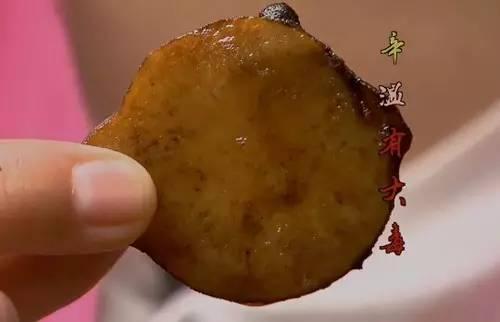
Since ancient times, Fuzi (Aconitum carmichaelii) has been known as the number one herb for restoring yang and rescuing those in collapse. Together with ginseng, prepared rehmannia and rhubarb, it is hailed as one of the four pillars of traditional Chinese medicine. In Chinese folk tradition, there has long been a saying: "The world's Fuzi is in China, China's Fuzi is in Sichuan, and Sichuan's Fuzi is in Jiangyou."
In March 2006, the General Administration of Quality Supervision, Inspection and Quarantine approved geographical indication product protection for Jiangyou Fuzi. Jiangyou Fuzi is of excellent quality. Although it sells at a high price on the market, it is still in short supply, and farmers' enthusiasm for growing Fuzi has never been higher. Last year, the average purchase price of fresh Fuzi reached 25 yuan per kilogram, and growers earned quite well.
Growing It Takes Know-How
Just after the summer solstice, it is exactly the season for harvesting Fuzi. When the reporter arrived in Jiangyou, Sichuan, a famous production area for Fuzi, they were puzzled by the scene before them, because in this Fuzi field two completely different plants were intercropped, one being rice and the other Fuzi, which looks like mugwort. Why grow them mixed together like this?
To find out, the reporter specially invited Professor Hou from Southwest University of Science and Technology to discuss the secrets of Fuzi.
The plant in the picture above is Fuzi. Its leaves are relatively large, and its stems are fairly thick, about as thick as a little finger. Its leaves look a bit like those of mugwort. So why is Fuzi planted together with rice?
According to Professor Hou, Fuzi, like other crops, has a continuous cropping obstacle. After being planted each year, its pathogens accumulate, leading to a decline in quality. In recent years, a new planting model has been adopted, intercropping rice into the fields so that paddy cultivation and dryland cultivation alternate, thereby controlling the continuous cropping obstacle.
One Plant, Two Medicines
In Jiangyou, Fuzi is generally planted at the winter solstice of the previous year and harvested at the summer solstice of the following year, with the harvest period generally from late June to early July.
The tool in the picture is used for digging Fuzi. It has only two prongs and was specially designed for digging Fuzi.
A complete Fuzi has very dense and numerous fibrous roots, and its ability to grip the soil is especially strong. The root has two parts: one is the mother root, and from it grow two daughter roots, which are the Fuzi.
The first daughter root and the second daughter root together account for more than 50 percent of the total weight of the daughter roots. If we snap off the daughter roots and turn them over, we can see the "Wutou." This woody root is also a medicinal material and can be used as an antispasmodic to treat wind-dampness and rheumatic neuralgia.
3 to 6 Grams Can Cause Death
When the reporter dug up a Fuzi and wanted to taste it, Professor Hou was greatly alarmed and hurriedly stopped them.
It is understood that the entire Fuzi plant is toxic, with the root being the most toxic part. Its toxic components are mainly aconitine-type alkaloids. For this toxic substance, an oral dose of 0.2 mg is the poisoning dose and produces poisoning reactions, and eating 3 to 6 grams can cause death.
Aconitine is both a toxic substance and an important substance that gives Fuzi its medicinal properties, enabling Fuzi to restore yang and rescue those in collapse, supplement fire and assist yang, and expel wind, cold and dampness. So how can the toxic substances in Fuzi be removed while preserving its medicinal efficacy?
After the Fuzi is cleaned and graded, it must first be placed in a bilirubin-like liquid for preservation. After 15 days, we take it out for processing.
The first step of processing is boiling it, which is also a detoxification process. Two aspects of boiling are very important: first, the water must cover the medicinal material; second, after the water comes to a boil, it must be boiled for more than one hour.
After boiling at high temperature, it is taken out and rinsed, ready for the next step -- peeling.
After peeling, the Fuzi is sliced, steamed and dried to become white sliced Fuzi. Depending on different processing methods, Fuzi can be made into different traditional Chinese medicine decoction pieces. Besides white sliced Fuzi, there are also black sliced Fuzi, prepared Fuzi slices, light Fuzi slices, raw Fuzi slices, cooked Fuzi slices, steamed Fuzi slices, stir-fried Fuzi slices, Chuang Fuzi slices, prepared Tianxiong and more than a dozen other varieties.
It is used in our clinical emergency treatment, to treat heart failure. In traditional Chinese medicine, this is called restoring yang and rescuing those in collapse. It is a very important emergency medicine, suitable for different indications.
Favorable Timing, Geographical Advantage and Human Effort Are All Indispensable
Jiangyou Fuzi differs from the planting models of other production areas and is famous for intensive and meticulous cultivation, so the Fuzi grown there is large in size and good in quality. In addition to the careful management of growers, Jiangyou's exceptional natural conditions also give Fuzi its unique quality.
Jiangyou is located in the southwest of our country, with a mild climate, warm winters and early springs, long summers and short autumns, and a long frost-free period, making it very suitable for growing Fuzi. It seems that to produce high-quality Fuzi, favorable timing, geographical advantage and human effort are all indispensable.
One Mu and Four Tenths of Land, Earned Nearly 20,000
When the reporter asked local growers about their profits, the growers beamed with joy: "Growing Fuzi on one mu and four tenths of land cost more than 8,000, and it sold for about 27,000 yuan, earning more than 17,000 yuan."
According to Director Li of the Jiangyou Agriculture and Animal Husbandry Bureau, Jiangyou's Fuzi acreage has long remained at around 5,000 mu, with a yield of more than 1,300 jin per mu. Jiangyou's total Fuzi output is more than 6.5 million jin, and farmers earn more than 10,000 yuan per mu.
Interested friends might as well go to the local area to learn a thing or two and conduct an on-site inspection. It may just be a good path to make money and become wealthy.