They are all the same pot-bottom soot, so why is it treated as a treasure by farmers?
If we talk about the biggest difference between the city and the countryside, it must be the different ways of cooking. Nowadays, cooking in the city is mainly done with natural gas or coal gas, while in the countryside the tradition of "big-pot meals" has continued.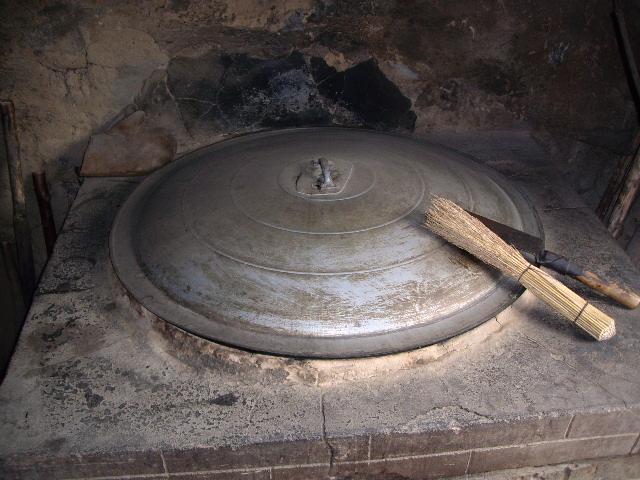 In rural areas, whether stir-frying or cooking rice, people like to use a huge iron wok. In rural areas of northern China, the stove is generally connected to a kang (heated brick bed). Putting the firewood and grass commonly found in rural areas into the stove not only makes the stir-fried dishes taste more rustic, but also provides heat to help villagers get through the cold winter.
The plant ash that continuously accumulates under the pot needs to be cleaned out from time to time to ensure there is enough space in the stove chamber. This kind of plant ash is often used by farmers as fertilizer and applied to fields or their own vegetable plots. However, there is another kind of plant ash that is treated as a treasure by farmers, and it is very hard to obtain. It only forms under an iron wok that has been used for many years over a long period of time, and it is truly worthy of the name "pot-bottom soot."
This kind of pot-bottom soot attaches to the bottom of the iron wok, and in traditional Chinese medicine it is called "Baicaoshuang". It has three major effects: relieving pain, stopping bleeding, and stopping diarrhea.
In spring and autumn, the climate is dry, and nosebleeds are very likely to occur. If the bleeding does not stop for a long time, its powder can be gently blown into the nose, and the bleeding will stop instantly. In summer, if rural children eat unclean melons, fruits, or vegetables and end up with diarrhea, the women at home will also casually take out a handful of ash from the bottom of the pot, mix it evenly with liquor, and apply it to the child's navel, which can quickly stop the diarrhea.
In addition, pot-bottom soot combined with other rural Chinese medicinal materials can treat various gynecological problems that are difficult to speak about, such as postpartum hemorrhage and uterine bleeding in women.
This article is original by the author of the Toutiao account. Without authorization, it may not be reproduced.