What are the cultivation techniques for the yellow rosewood tree?
The wood of the yellow rosewood tree has interlocking grain, forms naturally, and has beautiful patterns. Furniture made from rosewood is simple and bright, magnificent, and has a deep and gorgeous color, elegant and noble, firm and durable, and does not rot for a hundred years. The yellow rosewood tree is an extremely precious tree species, distributed in hilly or plain areas at low altitude. Generally, the center of the tree is brownish-red, and over time, under the action of air and the environment, it will turn dark red.
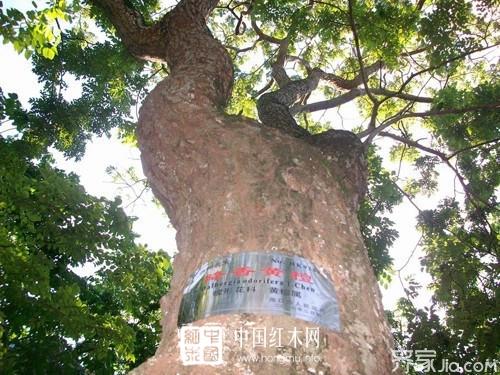
I. What is the yellow rosewood tree
The yellow rosewood tree, also known as Hainan rosewood and Hainan yellow rosewood, is mainly distributed in the low-altitude plains and hilly areas of Jianfengling in Diaoluo Mountain on Hainan Island, China. It was the main material for Ming and Qing hardwood furniture, and the best is the one whose heartwood is yellowish-brown. Yellow rosewood furniture stands out from the crowd. Whether from the perspective of artistic aesthetics or ergonomics, it is impeccable and can be called a treasure in the world's furniture art. It can reach up to 20 m in height, and the diameter at breast height can reach 0.8 m. It is one of the 34 species of rosewood in 5 genera and 8 categories under international standards. It has a wide range of uses, and its wood value is quite high. It is a unique and precious tree species, distributed in hilly areas or plains and platform areas at low altitude on the island.
II. Uses of the yellow rosewood tree
The yellow rosewood is actually a yellowish-brown "rosewood" or "rosewood." It was the main material for Ming and Qing hardwood furniture, and the best is the one whose heartwood is yellowish-brown. In the Ming and Qing dynasties, exquisite wooden furniture was all made from "yellow rosewood." Its grain is either hidden or visible, and its color is neither quiet nor noisy. It is regarded as a superior fine product and was favored by Ming and Qing craftsmen. In particular, the aesthetic taste in furniture of the literati and official class during the prosperous periods of the Ming and Qing dynasties made the yellow rosewood furniture of this period stand out from the crowd. Whether from the perspective of artistic aesthetics or ergonomics, it is impeccable and can be called a treasure in the world's furniture art.
III. Cultivation of the yellow rosewood tree
1. Cultivation selection
Before cultivation, we should choose suitable seeds as the basis for propagation. Generally, harvesting is carried out when the pods turn yellowish-brown, and screening should be done well. After that, the selected pods are sun-dried and the pod skins are rubbed and broken, and the seeds inside are taken out. In this way, the seed screening work is completed. Before sowing, first soak the seeds in clean water for about 24 hours. After soaking is completed, evenly broadcast the seeds on the seedbed. The seeds will generally germinate within half a month. After germination, observe at any time and pay attention to timely maintenance, watering, and supplemental lighting. When the seeds germinate and grow true leaves, the initial saplings can be moved into nutrient bags or transplanted into separate beds. For afforestation, 1-year-old seedlings are generally selected for outplanting for afforestation, and half-year-old nutrient bag seedlings can also be used for afforestation work. The altitude of the afforestation site must be below 500 m, and the terrain should be a sunny slope or semi-sunny slope of a mountain.
2. Techniques related to afforestation
Before afforestation, we should choose a suitable season and time. Taking Guangdong Province as an example, it is best to choose spring from March to May for afforestation work. The weather conditions must also satisfy sufficient rain and sunlight, and the climate must be warm. During afforestation, the plant spacing of the trees should be 2 x 3 m or 2.5 x 3 m, and the optimal number is 110--88 trees per mu, and it is best to use container seedlings for afforestation. In addition, during afforestation and within three months after afforestation, in order to ensure rapid and healthy development of the saplings, fertilizer must be applied to the saplings. Fertilization must not be excessive and needs to be carried out according to appropriate standards. At the same time, loosening the soil, pruning, and weeding must also be done regularly to reduce adverse factors that interfere with the development of the saplings.
After the afforestation work is completed, note that tending and fertilization should be carried out 2 times each every year. Because young plants are relatively soft, have thick side branches, low branching, and often have curved trunks, in the 3rd year after afforestation, combine the specific tending situation to prune the branches and remove buds. As a precious timber and medicinal tree species, it is often used as a material for making high-grade furniture, and it basically must be cultivated until the diameter at breast height can reach 30CM to be considered successfully cultivated. When carrying out felling work, the cutting point should be as close to the root base as possible, which can be beneficial to the growth of sprouts.
In short, as a precious timber, the yellow rosewood tree requires great care during its cultivation, and only with meticulous care can high-quality timber raw materials be cultivated.
365 Home Expo -- Internet Home Observation
www.365jiabo.com