If chicken manure is used incorrectly, it can harm greenhouse vegetables; mastering the correct usage is key
Chicken manure, a "disaster" for greenhouse vegetables? Not at all, that's because you didn't use it correctly!
"The soil relies on manure for nourishment, the seedlings rely on manure for growth." Chicken manure is an excellent fertilizer. During the chicken's feeding process, the feed it consumes is not completely digested and absorbed - about 40%-70% of the nutrients are excreted. Among all poultry and livestock manures, chicken manure has the highest nutrient content.
But many people also say chicken manure is not good, especially when applied in greenhouses. Some even say that for vegetables, chicken manure is simply a disaster - using it causes root burn, seedling burn, plant fumigation, dead plants, and also triggers various root-zone diseases, viral diseases, and breeds root-knot nematodes, etc.
Don't blame the chicken manure - these problems arise because you didn't use it correctly!
If chicken manure is not used properly, the consequences are serious
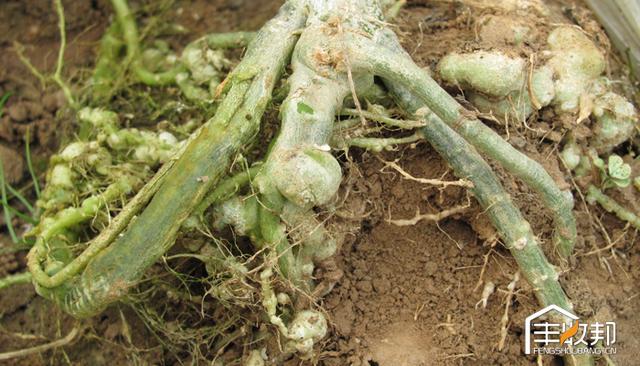
1. Spread of diseases and pests
Manure contains coliform bacteria, nematodes and other pathogens and pests. Using it directly will lead to the spread of diseases and pests. For example, an outbreak of root-knot nematodes "hijacks" the nutrients at the roots, hindering the transport of water and nutrients, causing crops to go from strong seedlings to weak seedlings, and finally to death.
2. Seedling burn
After chicken manure is applied to the soil, when temperature and humidity are suitable, it will ferment under microbial activity, and fermentation generates a certain amount of heat. When the fermentation zone is close to the roots and the crop plant is still small, it will affect crop growth, burn the crop root system, and in severe cases cause plant death - this is seedling burn.
3. Harmful gas damage
During decomposition, chicken manure produces methane, ammonia and other harmful gases, causing acid damage to the soil and crops and damaging the root system. This is especially serious in greenhouses.
4. Oxygen deficiency
During decomposition, chicken manure consumes oxygen in the soil, temporarily putting the soil in an oxygen-deficient state, which leads to oxygen deficiency at the plant roots and inhibits crop growth.
Actually, in the process of use, the reason chicken manure causes so many problems is mainly that it has not been fully decomposed. As long as this problem is solved, the others will naturally be resolved.
Therefore, farmer friends who use chicken manure should take note: before application, chicken manure must first undergo harmless treatment and complete decomposition before it can be applied to crops, so as to improve fertilizer efficiency and reduce unnecessary losses.
Decomposition methods
Before application, chicken manure must undergo full decomposition. The parasites and their eggs, as well as some infectious pathogens present in chicken manure, are inactivated through the decomposition (composting) process. After full decomposition, chicken manure becomes a high-quality base fertilizer for growing crops.
According to the composting method, it can be divided into:Windrow composting, trough composting, reactor composting, and covered windrow composting - four types. In general industrial production, trough composting is the most popular.However, when we farmers grow crops ourselves, windrow composting is still used more often.
According to oxygen requirements, chicken manure decomposition can be divided into anaerobic fermentation and aerobic fermentation.
The traditional method is to seal chicken manure in a pile for composting, carrying out anaerobic fermentation, which takes a long time - generally 3~4 months to decompose. Now, through biotechnology, aerobic fermentation can be used, and the decomposition speed can be 10~20 times faster than the traditional method. Moreover, it can break down proteins and other macromolecules in chicken manure into small molecules, facilitating direct absorption by crops.
Windrow composting is a type of aerobic composting, and it is also currently the most widely used one. Here is a detailed introduction:
1. Prepare the fermentation materials
The moisture of the fermentation materials should be controlled between 60%~65%. How to judge: tightly grab a handful of material - water marks appear between the fingers but no water drips, and it disperses when dropped to the ground - that is suitable.
2. Dilute the bacterial agent
Because the amount of fermentation agent used per ton of chicken manure is relatively small, in order to mix it thoroughly with the chicken manure it needs to be diluted first. Mix the fertilizer fermentation agent with rice bran, corn flour, or wheat bran at a ratio of 1:5~10, mixing as evenly as possible, and set aside after mixing.
3. Build the material pile
While sprinkling the bacterial agent, build the prepared materials into a pile. The pile height and volume should not be too low or too small - the required pile height is 1.2~1.5m, not lower than 80cm, width about 2m. The length of the pile can be adjusted according to the amount of fermentation material; a length of 2~4m or more gives better fermentation results. During pile building, if the material feels dry, you can appropriately add some more water.
4. Mix well and aerate
The fertilizer fermentation agent is a living bacterial culture, and oxygen is needed during the manure fermentation process. Therefore, during fermentation, turn the pile frequently to ensure good ventilation; otherwise, anaerobic fermentation will affect the fermentation results. Both large-scale mechanical operation and manual turning are fine.
Generally, after the materials have been piled for 48 hours, the temperature will rise to 50~60°C, and by the third day it can reach above 65°C. Turn the pile once at this high temperature. Under normal circumstances, 2~3 high-temperature periods above 65°C will occur during fermentation, and turning 2~3 times completes the fermentation.
5. Fermentation complete
Under normal conditions, fermentation can be completed in one week. The finished material has lost its odor, is dark brown, and the temperature has begun to drop to normal - indicating fermentation is complete.
These key points need attention:
1.Decomposition
Chicken manure compost must be fully decomposed. So what is the standard for judging that chicken manure is fully decomposed?
Fully decomposed chicken manure basically has no foul smell, has white mycelium, and is loose in texture. Meeting all three of these criteria basically indicates that the chicken manure has been fermented well.
The decomposition time is roughly: under natural conditions, it generally takes about 3 months. If a fermentation bacterial agent is added, this process will be greatly accelerated - depending on environmental temperature, generally 20~30 days are needed, and under industrial production conditions it can be completed in 7~10 days.
2.Moisture
Before fermenting chicken manure, the water content must be adjusted. In the process of fermenting organic fertilizer, whether the water content is appropriate is very important. Because the decomposition agent contains living bacterial cultures, if it is too dry or too wet it will affect the microbial fermentation, so it should generally be maintained at 60%~65%.
How to judge: tightly grab a handful of material - water marks appear between the fingers but no water drips, and it disperses when dropped to the ground - that is suitable.
How to control moisture?
(1) Dry chicken manure
Just spray water on it. It is also fine if the moisture is slightly lower in the early stage; later you can appropriately add a little water, but the moisture should not be too high. If the moisture is too high, adding more bulking material becomes rather troublesome.
(2) Wet chicken manure
The moisture is on the high side, so the key is to control moisture. When fresh chicken manure is fermented, various auxiliary materials need to be added to absorb the moisture. The auxiliary materials generally chosen are: sawdust, straw, plant ash, etc. The addition ratio is about 70% chicken manure and 30% auxiliary materials; the specifics can be adjusted according to the local soil conditions.
3.Carbon-to-nitrogen ratio
Carbon and nitrogen are the two most important elements in plants. To make a comparison with us humans, carbon is like the skeleton and nitrogen is like the muscle. A moderate carbon-to-nitrogen ratio is conducive to crop growth, promotes strong plants, and also helps microbial fermentation and decomposition.
If the carbon-to-nitrogen ratio in the soil is too low, crops tend to absorb more nitrogen, causing overly rapid vegetative growth and an imbalance between vegetative growth and reproductive growth. If the carbon-to-nitrogen ratio is too high, soil microorganisms will compete with crops for nitrogen, causing poor plant growth and overall yellowing, etc.
Chicken manure has a small carbon-to-nitrogen ratio, meaning that in chicken manure the nitrogen content is relatively high while the carbon content is relatively low. If the fermentation material is pure chicken manure, the carbon-to-nitrogen ratio is normally less than 20, while theoretically a carbon-to-nitrogen ratio of 25~35:1 is required for good fermentation results. Therefore, before fermenting chicken manure, an appropriate amount of straw, sawdust and other materials with a high carbon-to-nitrogen ratio should be added. Specifically, about 10~20% by weight of straw can be added to adjust the carbon-to-nitrogen ratio.
Adding straw and other materials can adjust the carbon-to-nitrogen ratio, absorb moisture from fresh chicken manure, and also enhance the looseness and air permeability of the chicken manure, making fermentation easier. Before decomposing chicken manure, 5% calcium superphosphate can also be added to balance nutrients and improve fertilizer efficiency.
4.Do not disinfect
The composting process is a process of decomposing plant residues and poultry and livestock manure. The decomposition agent or fermentation agent is composed of billions of fermentation bacteria (fungi, bacteria), living microorganisms that decompose various organic substances, thereby accelerating fertilizer fermentation.
When decomposing manure, many people habitually disinfect it. Here, a reminder to everyone: this must absolutely not be done.Disinfection is meant to kill bacteria, and in the process of disinfecting it, the bacteria in the decomposition agent will also be killed, so it will not achieve the effect of accelerating decomposition.
Having said all this, is chicken manure good or not? It is clear at a glance. So before using chicken manure, we must pay attention tofull decomposition, to avoid seedling burn and seedling destruction.
(Image from the internet)
Article is original; if reproduced, please indicate the source.
Focused on plant protection technology, interpreting hot topics in the agricultural materials industry. For more practical content, follow [WeChat public accountfengshoubang] Long-press to copy~