Ecological pig farming with WeChat sales delivers considerable profits and is eco-friendly
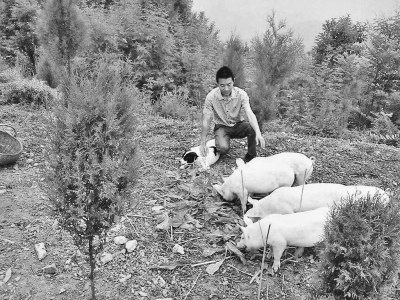
In the photo, Liu Debin is feeding his own pigs
Inventory numbers and slaughter rates are the two figures that large-scale pig farmers value most, but in Liangshui Village, Futian Town, Wushan County, Chongqing, university-graduate pig farmer Liu Debin has his own ideas.
He does not raise many pigs, but he insists on green feeding and lets the pigs roam freely on the hillside. Although each pig takes a year to raise, Liu Debin believes the economic returns of this kind of ecological pig are more considerable than those of feed-fed pigs.
Green feed + free-range activity
So-called ecological pig farming means not feeding them commercial feed, raising the pigs outdoors in the wild, and combining domestic raising with free-range raising.
Through market research, Liu Debin found that green food is gradually gaining popularity in the market; people are no longer satisfied with just having enough to eat and hope even more to eat healthily.
So Liu Debin invested more than 600,000 yuan to build a new pig farm and bought 80 piglets, feeding the piglets on pig feed made from platycodon stems, corn and sweet potato starch. Each pen also has a small door, so the piglets can freely run out to the hillside to move around, and when hungry return to the pen to look for food.
To make the pork even greener and more eco-friendly, Liu Debin also taught himself traditional Chinese medicine to treat the pigs. "Rhubarb, plantain leaves and so on all have the effects of clearing heat, detoxifying and sterilising. Usually, when the pigs have minor ailments such as a cold or fever, I add the brewed herbal medicine to their feed for the pigs to take, which is not
only low in side effects but can also boost the pigs' immunity."
Applying for certification + WeChat sales
Ordinary feed-fed pigs can be sent to slaughter once every 4 months, whereas Liu Debin's "eco-friendly pigs" must be raised for a year before they can be sold.
Even so, Liu Debin is not at all worried about losing money. He explains: "Feed-fed live pig prices follow the market; once there are too many farmers, the market easily collapses. But the pigs I raise focus on the ecological and healthy label, and each jin sells for 18 yuan. Right now supply basically falls short of demand, so I do not need to worry about the market collapsing and prices being forced down."
Last year, Liu Debin successfully applied for a "pollution-free pork" certificate. Then he set up his own WeChat official account, wrote sales information with both pictures and text, and posted it on his WeChat Moments.
Through word of mouth on WeChat Moments, Liu Debin's WeChat official account now has more than 6,000 followers.
He also plans to open a physical store in nearby Fengjie County town: "Combining online sales with a physical store gives credibility more protection. This year, my live pig inventory has reached more than 200 head, and sales will be even better."
Pig manure fermentation + self-supplied feed
Not long ago, Liu Debin renovated the pig pens again, digging a deep septic tank beneath the pens to ferment and treat the pig manure.
The pig manure is processed into biogas residue, biogas slurry and biogas. The biogas slurry flows through pipes into the fields to provide fertiliser for the growth of more than 1,000 mu of citrus trees in the village; the biogas residue is used to produce organic fertiliser; and the biogas can be used to light a fire for cooking. Nowadays, walking into the pig farm you cannot smell any stench. Liu Debin is very satisfied with this eco-friendly treatment system.
Within the year, Liu Debin also plans to transfer several dozen mu of land to grow cash crops such as corn and sweet potato. "After growing corn and sweet potato myself next year, I will apply only farmyard manure, which not only solves the pig manure problem but can also further ensure the pigs eat green and healthy food," Liu Debin says.