A female PhD gives up an annual salary of 2 million yuan - what is the reason behind it?
She is a female PhD in Management Science and Engineering, and her highest daily fee for giving lectures reached 60,000 yuan. But she gave up all of this and went to the countryside to raise earthworms with cow dung and waste. Her actions were met with all kinds of doubts and criticism. However, in her eyes, earthworms are treasures that can bring enormous wealth. What business opportunity did this female PhD actually see, and how does she plan to realize her dream of wealth through earthworms?
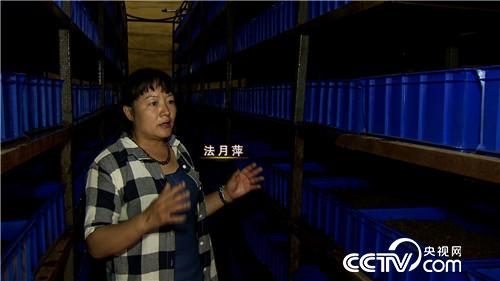
At the end of 2013, this originally quiet village became restless because of the arrival of a female PhD.
Liu Lei, a villager from Dawang District, Gaocheng Town, Gaoqing County, Zibo City, Shandong Province: Someone like Teacher Fa suddenly transferred land from two villages, more than 400 mu in total from the two villages, which is very rare.
Zhang Shanping, a villager from Zhifang Village, Gaocheng Town, Gaoqing County, Zibo City, Shandong Province: The common people did not believe her, saying that Dr. Fa came to swindle national subsidies.
The female PhD who aroused everyone's doubts is Fa Yueping. She is a PhD in Management Science and Engineering from Nanjing University. Before coming to this small village, she had always worked in Nanjing. Through training lectures and consulting for enterprises, she earned more than 2 million yuan a year. Fa Yueping's highest lecture fee reached 60,000 yuan a day. Once, she lectured continuously for 9 days in Suzhou, earning more than 200,000 yuan in 9 days.
When Fa Yueping proposed going to Gaoqing County, Shandong Province, to contract more than 400 mu of land for agriculture, her family and friends could not understand it.
Fa Yueping's mother Sun Kun: Fa Yueping, you were doing so well, your lectures were good, your income was so high, why go into agriculture? Most people think this way, because in the countryside everyone feels that within a few years she would have no income at all.
Fa Yueping's employee Wang Xiaojing: She had been so successful before. It is not that she was just an ordinary office worker before; rather, she had already achieved so much in this field. Why would you give up all of this? This is something everyone finds hard to understand.
What kind of person is Fa Yueping exactly? When the reporter interviewed her, it happened to coincide with Fa Yueping receiving a truckload of cow dung. To the reporter's surprise, when Fa Yueping saw the cow dung, it was as if she had seen a treasure. She immediately became excited, showed no disgust at all, put on gloves, and went to dig through the cow dung, even smelling it again and again.
Fa Yueping: This dung has very good air permeability, because it is still mainly based on roughage. So in fact, when added now it is very loose, and when it rains, it is also relatively easy for water and air to pass through.
A PhD who studied project management and had never been involved in agriculture before could, merely by smelling with her nose and touching with her hands, analyze cow dung so clearly and systematically.
Fa Yueping: Look at the dung on this side. The dung coming out on this side is a bit thinner. A bit thinner. Look, this is very thin. Actually, it just has the smell of cow urine, not especially foul. But this one has a very high gum content, and its moisture content is relatively large. So once you cover it, it will form something like this. Look, just like a lid. This place is very hard. You see, once it is very hard, it is neither air-permeable nor water-permeable. This part is actually wasted.
In the end, Fa Yueping bought 10 tons of cow dung at 30 yuan per ton. This made the owner very happy, since he did not have to spend money to clean up the cow dung and also gained extra income.
Zhang Xiaoming, manager of a cattle farm in Gaocheng Town, Gaoqing County, Zibo City, Shandong Province: It is convenient when they come to collect it. You do not have to worry about it. They come as soon as you call, ready whenever called.
Reporter: What about selling it yourself?
Zhang Xiaoming, manager of a cattle farm in Gaocheng Town, Gaoqing County, Zibo City, Shandong Province: Selling it yourself, if someone wants it, you still have to be responsible for loading and transport. This step is quite troublesome.
Why did Fa Yueping spend money to buy cow dung that others did not want? The reporter followed Fa Yueping to her breeding base. She said her wealth was buried beneath this ground.
Fa Yueping: Just stick your hand in. I will show you from above, because you have to dig a little deeper from above. Look.
Reporter: With one turn, there is a pile of earthworms.
Fa Yueping: Right. The earthworm variety here uses many of these earthworms as parent stock. The main one is Eisenia fetida, the red earthworm.
Reporter: What characteristics do these earthworms have?
Fa Yueping: First, they reproduce very, very quickly. Then, they can eat especially well, and their ability to decompose waste is especially strong.
Reporter: How strong can it be?
Fa Yueping: Under the best conditions, in one day they can eat an amount equivalent to their own body weight, close to their body weight. However much they weigh, they can eat roughly that much.
These earthworms are Fa Yueping's wealth. She began raising earthworms in March 2014, and by June 2016, sales had reached more than 2 million yuan. However, many people still could not understand why Fa Yueping, who had previously enjoyed a booming life in Nanjing, would give all of it up and go to the countryside to raise earthworms. What business opportunity in earthworms had she truly set her eyes on?
Today Fa Yueping is going to harvest a batch of earthworms for Linyi City, Shandong Province. The customer wants to buy breeder earthworms to take back and breed. Fa Yueping and her workers are looking for earthworms that meet the requirements.
Fa Yueping: The earthworms over there are too small. If they are too small, then after about another 15 to 20 days when harvested, that size would be just right. So what is relatively difficult now is finding ones that are neither too big nor too small, just those that have developed a clitellum.
Earthworms that have grown a reproductive clitellum have entered sexual maturity and can reproduce.
Fa Yueping: This earthworm here has a widened reproductive clitellum at this place, here. See it? This segment.
Reporter: Just this place.
Fa Yueping: Right.
Reporter: The color here is lighter than the rest.
Fa Yueping: Right, lighter than the rest. This earthworm is hermaphroditic, but it cross-fertilizes. Breeding density actually greatly affects its reproductive efficiency. It finds a nearby earthworm and will pass through it. One earthworm passes through another earthworm's reproductive clitellum. When they are mating, they cannot be separated, and then it directly passes through.
When earthworms mate, they generally interlace head to tail, with their abdomens pressed together, and then exchange semen. This mating process lasts about two to three hours. At this time, there is no way to separate the two earthworms. Only after mutual insemination is complete will they each move backward in opposite directions until they are completely separated. Usually, earthworms cross-fertilize, but there are also special cases.
Fa Yueping: But in certain populations, there also exists this kind of unisexual reproduction, fertilizing itself. This is called virgin reproduction, virgin birth.
Under normal circumstances, one earthworm can lay about 50 to 70 eggs a year. An egg like this can hatch 1 to 7 young earthworms in more than 20 days.
In appearance, the two ends of an earthworm's body look very similar, with no obvious difference. Some people say that whichever direction an earthworm moves, the end facing that direction is the head. But when touched, both ends respond and both can move. So how do you tell an earthworm's head from its tail? At this point you still have to rely on the reproductive clitellum. The end closer to the clitellum is the earthworm's head, and the end farther away is its tail.
Earthworms are afraid of light and like dark, damp places. When earthworms are turned out, they will soon burrow back into the soil. This habit of earthworms can be used to harvest them. Scrape away the surface mud layer by layer, and what is left in the end is a pile of clean earthworms.
Before raising earthworms, Fa Yueping had done no research on earthworms at all. So how did she become connected with earthworms? In 2011, Fa Yueping went to Shandong University for postdoctoral study. During this period, she took on a consulting project to help a client plan a mountainous area in Jinan and develop eco-tourism. When discussing how to handle waste, someone mentioned earthworms, which made Fa Yueping curious about earthworms. She began using a computer to learn about them.
Through computer searches, Fa Yueping bought back all the books online related to earthworms. She also downloaded more than 600 papers on earthworm research from home and abroad. The more information she learned, the more Fa Yueping felt that earthworms were treasures from head to tail.
She learned that earthworms can be used as medicine and are a traditional Chinese medicinal material. In Chinese medicine they are called Dilong. More than 40 medicinal formulas in the Compendium of Materia Medica use Dilong. In daily life, earthworms can not only serve as feed for chickens, ducks, fish, and shrimp, but are also very popular as fishing bait. Cow dung decomposed by earthworms becomes vermicompost, and vermicompost is a very good organic fertilizer.
Once, Fa Yueping used a computer to find a foreign paper. The paper mentioned that mixing 10% vermicompost into soil could increase grape yield by 50%, increase sugar content by 30%, and significantly improve economic benefits. The information collected through the computer gave Fa Yueping a great deal of help and confidence.
Fa Yueping: I think this is even more important than earning a degree, because earning a degree may only mean doing a series of studies in one direction. But through this computer, we can gather all the information. The excellent papers I am reading now are still mainly research from our country. On their foundation, we can quickly systematize and synthesize. Someone may study for three years just to research these things, but like this, I have in one go, as it were, read hundreds of degrees.
Before formally raising earthworms, Fa Yueping also used a computer to buy a batch of earthworm eggs online from places such as Hebei and Guangxi. She bought them back to observe their survival rate and their reproduction after crossbreeding with local earthworms. Through observation, Fa Yueping found that these earthworms had very good adaptability, which also dispelled the last trace of doubt in her heart.
In March 2014, Fa Yueping took out 2 million yuan in savings and raised another 3 million yuan. She contracted more than 400 mu of land in Gaoqing County and began raising earthworms. This action of hers was questioned by many people.
Fa Yueping's employee Wang Xiaojing: How much developmental value does the earthworm industry you are doing actually have? They may still have certain doubts.
Ruan Zhiyong, a villager from Changjia Town, Gaoqing County, Shandong Province: What exactly are they being raised for? The villagers do not know. Let alone making money, how would they make money? There are plenty of earthworms. Look, if you dig in this soil, there are earthworms.
Fa Yueping's personality is such that once she is set on something, no one can shake her. And she had another purpose in raising earthworms.
Fa Yueping: You lecture every day, others praise you highly, and then are the things you understand actually correct? Can they withstand practical testing? In fact, my inner restlessness comes from the fact that I have always been unable to hold back. I want to start an enterprise myself, really make it big, build it up, build up this industry, to prove that my many years of thinking about management are meaningful.
In the eyes of local villagers, earthworms are very common. You can see field earthworms like these everywhere. But despite their large size, these earthworms are very afraid of ants. Faced with attacks from ants, they have no way to defend themselves. After being attacked by ants, the vitality of field earthworms clearly declines, and the bitten places immediately swell up.
Fa Yueping: Such a tiny ant, such a large wild earthworm. Because inside here, I just looked, there were about a dozen ants attacking it. Look, its body is already injured and starting to seep fluid. Its bodily reaction is clearly weakening. But even so, if no more ants follow up, it should not be a big problem, meaning its body can still repair itself. Because the self-repair function of earthworm body fluid is very strong. You also know that after being cut in the middle, it can still self-clone.
This is Fa Yueping's earthworm breeding base. Besides raising earthworms, she also grows crops such as wheat, corn, and peach trees here. The earthworms here are all raised in open fields.
Fa Yueping: This is open-field breeding, that is, we do it this way, raising earthworms row by row. This side has already been mostly decomposed. This half is vermicompost, and then cow dung is added on this side. Now this part has also mostly decomposed. So most of the earthworms are on this half. This half may have relatively small young earthworms, while the large earthworms will stay on that half.
Earthworms are diligent underground workers. Their digestive systems can secrete multiple enzymes that can quickly decompose the organic waste they eat and convert it into nutrients that are easy to utilize. After excretion, it becomes vermicompost, and vermicompost is a very good organic fertilizer.
Fa Yueping: What this hand is holding is cow dung, and what this hand is holding is vermicompost. Look, after cow dung dries, it becomes very hard. Look, there is a large amount of grass inside. This is grass that was not fully decomposed in the cow's stomach. Look, there are earthworms inside, decomposing it. Look at this place. The upper layer has already been decomposed. Look, even if it is very dry, even if you squeeze it as tightly as you can, with a gentle rub it is again this kind of loose soil structure.
Under normal circumstances, earthworms can decompose cow dung into vermicompost in about 20 days. Through the processing of earthworms, the price of cow dung also changes dramatically. The reporter learned that locally, one ton of cow dung costs between 30 yuan and 45 yuan, while the market price of one ton of vermicompost is 1,500 yuan. After processing by earthworms, the price of cow dung can increase by up to about 50 times.
Many people who grow flowers, nursery stock, and greenhouse vegetables approached Fa Yueping, wanting to buy her vermicompost. This person named Zhao Shuitao runs a nursery stock company. In his base he grows more than 50 mu of kiwifruit and more than 1,000 mu of large-fruited hazelnut. Last year he bought 100 tons of vermicompost from Fa Yueping, and this year he bought another 100 tons.
Zhao Shuitao, manager of an agricultural company in Zibo City, Shandong Province: 100 tons is 150,000 yuan. Haul it to a dedicated warehouse. Previously 100 tons of organic fertilizer was hauled over, and it was used last year. I am very interested in this thing, because if you want to grow good crops, farming without manure is just muddling along. Only with good fertilizer can you grow good products.
At present in the domestic market, the most important use of earthworms is as fishing bait. This year in Shandong's fishing market, the retail price of one jin of fresh earthworms can reach 30 yuan per jin, and demand exceeds supply. The market for earthworms is so tight, yet Fa Yueping does not sell the earthworms she raises.
The person standing next to Fa Yueping is named Zhang Shanping, and he is Fa Yueping's employee. Seeing that the earthworms in the field were growing well, Zhang Shanping became anxious on Fa Yueping's behalf and contacted a local beef cattle farmer. This person wanted to use cow dung to raise earthworms. Zhang Shanping brought the person to the field. The person was also very satisfied with the earthworms, but Fa Yueping refused to sell no matter what.
Fa Yueping's employee Zhang Shanping: I was a bit angry, of course. You only spend money outward and do not take in income, so what do you do? Why are you still not selling? She said not selling, not selling, breeding.
Ruan Zhiyong, a villager from Changjia Town, Gaoqing County, Shandong Province: I feel it should be sold. As for me, this is a small-economy mentality. I feel it should be sold. Sell, then breed, and after breeding, sell again. That is also a kind of economic cycle.
Not selling earthworms means losing an important source of income. Sometimes when there was really no way to pay the workers' wages, Fa Yueping would go out and lecture for two days, then bring back lecture fees to pay the wages. Even so, Fa Yueping insisted on not selling earthworms. So what exactly was she raising earthworms for?
During the interview, Fa Yueping took the reporter to Linyi City, Shandong Province. This is an earthworm breeding base she built with a partner. The earthworms here are raised using mushroom residue. When Fa Yueping was using a computer to look up information, she learned that mushroom residue could be used to raise earthworms.
Fa Yueping: The earthworms we moved over at that time were a little bigger than these. Now, look, this place is already full of earthworm eggs. Look, this, this place, see it? This, this whitish one, like a little wheat grain, tiny. Look here, look. Look, if you open each layer, inside here, this is an earthworm, this is an egg, look. Based on the number of cocoons, I now estimate that its reproduction rate should be about 20% higher than breeding with pure cow dung.
In order to find enough mushroom residue to raise earthworms, Fa Yueping spent more than half a year and visited more than 20 enterprises, but not one was satisfactory. It was not until April 2016, through a friend's introduction, that she met this person named Sun Xiaofeng.
Sun Xiaofeng has a king oyster mushroom production and processing factory in Linyi City, Shandong Province, with an annual output value of more than 40 million yuan. This factory produces more than 20 tons of mushroom residue every day, and handling this mushroom residue is a headache. As soon as he heard that mushroom residue could be used to raise earthworms and turn waste into treasure, Sun Xiaofeng became very interested. What attracted him even more was that Fa Yueping proposed using vermicompost to replace part of the original ingredients of the mushroom sticks, reducing costs and increasing yield.
Sun Xiaofeng, chairman of a king oyster mushroom production and processing enterprise in Linyi City, Shandong Province: We replaced the previous soybean meal and bran with vermicompost. Those were relatively expensive, one to two thousand yuan per ton. We replaced those things with vermicompost, so we reduced costs by about 30% and increased yield by about 10%. We think this is a new breakthrough point and a big business opportunity for us.
Fa Yueping and Sun Xiaofeng hit it off immediately. Sun Xiaofeng spent 2 million yuan to buy earthworms from Fa Yueping, and Fa Yueping provided the technology. The two built an earthworm breeding base in Linyi City, Shandong Province, specifically using mushroom residue to raise earthworms. This 2 million yuan also eased Fa Yueping's financial difficulties.
In July 2016, when the reporter interviewed them, Fa Yueping and Sun Xiaofeng had reached another cooperation agreement. They were going to carry out three-dimensional earthworm farming.
Fa Yueping: In this way, by using three-dimensional farming methods, it is very space-saving and land-saving. A factory building of 200 sq m would be roughly 50 to 100 times the efficiency of entire open-field farming.
Using factory-style methods like this to raise earthworms can ensure stable earthworm yield and quality and is conducive to deep processing of earthworms, such as extracting active substances from earthworm bodies, like lumbrokinase, unsaturated fatty acids, collagen, and so on, increasing the added value of earthworms.
Sun Zhenjun, professor in the Department of Ecology and Engineering at China Agricultural University: If I further develop these active proteins I mentioned from earthworms, then it is no longer calculated by the ton, but by the kilogram. Take lumbrokinase, for example. If your purity reaches more than 99%, then one kilogram is more than 50,000 yuan. If it is superoxide dismutase, then it has to be calculated by the gram, how much per gram. Think about its value, right? So the application prospects in this area are still very broad.
Therefore, Fa Yueping does not refuse to sell earthworms; rather, she cares more about to whom she sells them. She hopes her customers will be people like Sun Xiaofeng, with whom both sides can reach deep cooperation and increase the added value of earthworms, rather than simply buying and selling earthworms.
Fa Yueping: Through President Sun's platform, our overall development speed may increase greatly. Now everything is readily available. We integrate resources. I have earthworms here, he has equipment there, and then we use the mushroom residue and land here, and use my technology. We can quickly get it done all at once. Everyone takes fewer detours and wastes much less money.
Fa Yueping plans to raise 5 million yuan by the end of 2016 to establish an earthworm deep-processing production line to produce earthworm active enzyme foliar fertilizer. These are the products Fa Yueping will promote to the market next, all produced and processed using earthworms, including cosmetics and protease animal feed additives.
Fa Yueping: Here there are some products with a certain technical content that can be industrialized. So on this point, this is what I, a PhD, am really after in raising earthworms. Behind it is actually a huge industrial chain. This is also the reason I exclaimed in amazement earlier when I was doing planning.
Along the way, although Fa Yueping faced constant doubts, she responded to everything with action and proved herself.