What is the significance of building modern agriculture?
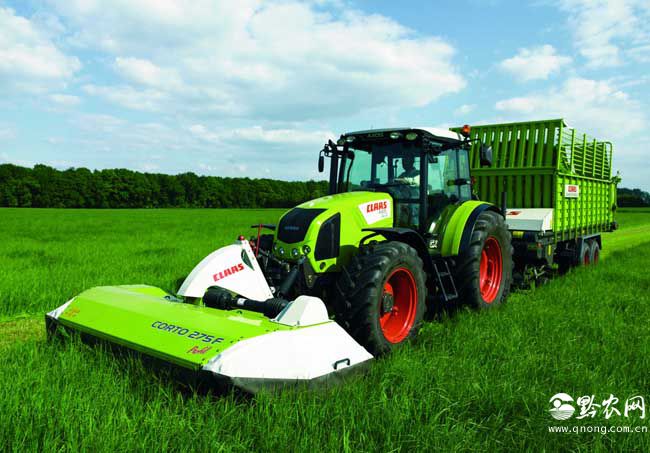
Modern agriculture is defined as socialized agriculture that widely applies modern science and technology, the means of production provided by modern industry, and scientific management methods. In the history of agricultural development divided according to the nature and state of agricultural productivity, it is agriculture at the most recent stage of development, mainly referring to agriculture in economically developed countries and regions after World War II.
The main characteristics of modern agriculture
1. It has a relatively high overall productivity, including a relatively high land output rate and labor productivity. Agriculture has become an industry with relatively high economic benefits and market competitiveness, and this is the most important indicator for measuring the level of modern agricultural development.
2. Agriculture has become a sustainably developing industry. Agricultural development itself is sustainable and is accompanied by a good regional ecological environment. Production technologies and production models such as ecological agriculture, organic agriculture, and green agriculture are widely adopted to realize the sustainable use of agricultural resources such as fresh water and land, achieve a virtuous cycle of regional ecology, and make agriculture itself a sound recyclable ecosystem.
3. Agriculture has become a highly commercialized industry. Agriculture mainly produces for the market, has a very high commodity rate, and allocates resources through market mechanisms. Commercialization is based on a market system, and modern agriculture requires the establishment of a very complete market system, including a modern circulation system for agricultural products. Without a developed market system, there can be no true modern agriculture. In countries with a relatively high level of agricultural modernization, the commodity rate of agricultural products is generally above 90%, and in some industries the commodity rate can reach 100%.
4. It realizes the modernization of the material conditions of agricultural production. Based on relatively complete production conditions, infrastructure, and modern material equipment, it uses various modern production input factors intensively and efficiently, including material inputs such as water, electricity, agricultural film, fertilizer, pesticides, improved seeds, and agricultural machinery, as well as agricultural labor input, thereby achieving the goal of raising agricultural productivity.
5. It realizes the modernization of agricultural science and technology. Advanced and applicable agricultural science and technology, biotechnology, and production models are widely adopted to improve the quality of agricultural products and reduce production costs, so as to adapt to the development trend of market demand for agricultural products toward higher quality, diversification, and standardization. The development process of modern agriculture is in essence the process of widely applying advanced science and technology in agriculture and transforming traditional agriculture with modern science and technology.
6. It realizes the modernization of management methods. Advanced business methods, management technologies, and management means are widely adopted to form a relatively complete industrial chain with close links and organic connections from the pre-production, mid-production, and post-production stages of agricultural production, with a very high degree of organization. There are relatively stable and efficient channels for the sale and processing transformation of agricultural products, an organizational system that efficiently organizes dispersed farmers, and an efficient modern agricultural management system.
7. It realizes the modernization of farmers' quality. Agricultural management talents and laborers with relatively high quality are the prerequisite for building modern agriculture and are also a prominent characteristic of modern agriculture.
8. It realizes the scale-up, specialization, and regionalization of production. By realizing the scale-up, specialization, and regionalization of agricultural production and operation, public costs and external costs are reduced, and the efficiency and competitiveness of agriculture are improved.
9. It establishes a government macro-control mechanism compatible with modern agriculture. It establishes a complete agricultural support and protection system, including a legal system and a policy system.
The significance of building modern agriculture
Accelerating the pace of modern agriculture construction is conducive to liberating and developing rural productivity, improving comprehensive agricultural production capacity and efficiency, and promoting the comprehensive development of the rural economy and society; it is conducive to introducing industrial technological achievements, improving the quality of agricultural development, enhancing exchanges and interaction between urban and rural areas and between industry and agriculture, and realizing coordinated urban-rural development; and it is conducive to rationally utilizing resources, protecting and improving the ecological environment, enhancing the capacity for sustainable agricultural development, and promoting harmonious coexistence between humanity and nature. Experts in modern agriculture planning from Yuanjing Design and Research Institute specifically discussed the following aspects:
1. Concrete manifestation of development: Developing modern agriculture is the concrete application and implementation of the Scientific Outlook on Development in agriculture and rural work. By building modern agriculture, the transformation of the agricultural growth mode is promoted, the agricultural and rural economic structure is optimized, agricultural resources are used intensively, agricultural competitiveness is improved, and sound and rapid agricultural development is realized. Vigorously developing modern agriculture, striving to transform the agricultural growth mode, optimizing the industrial structure and layout, using natural resources and production factors intensively and economically, protecting the ecological environment, and truly bringing agriculture and rural development onto the track of scientific development.
2. The primary task of the new countryside: Accelerating the construction of modern agriculture, promoting production development, increasing farmers' income, and improving the ecological environment lay a solid industrial foundation for new countryside construction. Accelerating the transformation of traditional agriculture and promoting rural socialized services; broadening channels for farmers' employment, increasing farmers' income, promoting the development of ecological agriculture, and promoting harmonious coexistence and coordinated development between humanity and nature. This is consistent with the goals of building a new socialist countryside.
3. A path to increasing farmers' income: Actively developing modern agriculture is the concrete implementation of the Scientific Outlook on Development in agriculture and rural work, the fundamental way to achieve stable grain development and sustained increases in farmers' income, and the only way to achieve sustainable agricultural development. Accelerating the construction of modern agriculture, comprehensively improving comprehensive grain production capacity, and improving comprehensive agricultural efficiency fundamentally consolidate the foundation for increasing grain production and income.
4. The only way to realize agriculture: Agricultural development faces the dual constraints of resources and the market, the contradiction of resource shortage is becoming increasingly prominent, and the pressure of domestic and international market competition is increasing. Accelerating modern agriculture construction, promoting progress and innovation in agricultural science and technology, vigorously developing circular agriculture and the rural circular economy, further improving resource use efficiency, improving the quality and efficiency of agricultural development, and promoting sustainable agricultural development.