Detailed Explanation of Organic Agriculture Certification Procedures and Application Process
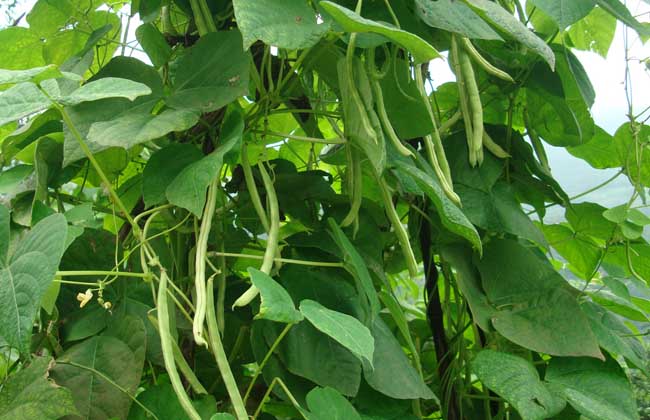
The concept of organic agriculture was first proposed in France and Switzerland in the 1920s. From the 1980s onward, with the formulation of some international and national organic standards, some developed countries began to pay attention to organic agriculture and encouraged farmers to transition from conventional agricultural production to organic agricultural production. Only then did the concept of organic agriculture begin to be widely accepted. Let us now take a look at the organic agriculture certification procedures!
Organic Agriculture Certification Procedures
1. Application
① The applicant submits a formal application to the sub-center, obtains the "Organic Food Certification Application Form," and pays the application fee.
② The applicant fills out the "Organic Food Certification Application Form" and at the same time obtains documents such as the "Organic Food Certification Questionnaire" and the "Organic Food Certification Written Materials Checklist."
③ The sub-center requires the applicant to establish, in accordance with the requirements of this standard, the enterprise's quality management system, technical measures for the quality assurance system, and a quality information tracking and handling system.
2. Pre-review and Formulation of a Preliminary Inspection Plan
① The sub-center conducts a pre-review of the applicant. If the pre-review is passed, the sub-center copies the relevant materials to the certification center.
② Based on the project information provided by the sub-center, the certification center estimates the inspection time (generally 2 inspections are needed: one during production and one during processing).
③ Based on the inspection time and the certification fee management rules, the certification center formulates a preliminary inspection plan and estimates the certification fees.
④ The certification center sends the enterprise a "Notice of Acceptance" and the "Organic Food Certification Inspection Contract" (referred to as the "Inspection Contract"), and at the same time notifies the sub-center.
3. Signing the Organic Food Certification Inspection Contract
① After confirming the "Notice of Acceptance," the applicant signs the "Inspection Contract" with the certification center.
② In accordance with the requirements of the "Inspection Contract," the applicant pays 50% of the relevant fees to ensure the normal progress of the pre-certification work.
③ The applicant assigns internal inspectors (1 person each for production and processing) to cooperate with the certification work and further prepare relevant materials.
④ All materials shall be provided in both written and electronic form, one copy each, and copied to the sub-center.
4. Review
① The sub-center conducts a comprehensive review of the applicant and their materials.
② The sub-center copies the review opinions and all of the applicant's materials to the certification center.
③ The certification center reviews and makes a decision on "when" to conduct the inspection.
④ If the review is not passed, the certification center notifies the applicant and will no longer accept their application for that year.
5. On-site Inspection and Assessment
① After all materials pass review, the certification center dispatches qualified inspectors.
② Inspectors shall obtain the applicant's relevant materials from the certification center or sub-center, and in accordance with the requirements of these guidelines, conduct on-site inspection and assessment of the applicant's quality management system, production process control system, traceability system, as well as the production site, production, processing, warehousing, transportation, and trade.
③ When necessary, inspectors need to take samples of soil and products, and the applicant shall send the samples to a designated quality inspection institution for testing.
6. Writing the Inspection Report
① After completing the inspection, the inspector writes an inspection report in accordance with the requirements of the certification center.
② The inspector delivers the inspection report to the certification center within two weeks after the inspection is completed.
7. Comprehensive Review and Assessment Opinion
① Based on the application form, questionnaire, and other relevant materials provided by the applicant, as well as the inspector's inspection report and sample test reports, the certification center conducts a comprehensive review and assessment and prepares a certification assessment form.
② The assessment opinion is put forward and submitted to the technical committee for deliberation.
8. Certification Decision Personnel/Technical Committee Resolution: The certification decision personnel conduct a comprehensive review of materials such as the applicant's basic information questionnaire, the inspector's inspection report, and the certification center's assessment opinion, and make a decision to approve certification, approve certification with conditions, approve organic conversion certification, or refuse certification. The certificate is valid for one year. When the applied project is relatively complex (such as livestock farming, fisheries, processing, and other projects), or within a certain period (such as 6 months), a technical committee working meeting is held to make a certification decision on the corresponding project. If the certification decision personnel/technical committee members have a direct or indirect economic interest relationship with the applicant, they shall recuse themselves.
① Approval of certification: If the application content fully complies with organic food standards, an organic food certificate is issued.
② Conditional certification: If the application content basically complies with organic food standards but certain aspects still need improvement, an organic food certificate may also be issued after the applicant provides a written commitment to make improvements as required.
③ Organic conversion certification: If the applicant's base has entered the conversion period for more than one year and continues to implement the organic conversion plan, an organic conversion base certificate is issued. Products harvested from the organic conversion base and processed in accordance with organic methods may be sold as organic conversion products, namely "conversion period organic food."
④ Refusal of certification: If the application content does not meet the requirements of organic food standards, the technical committee refuses certification and explains the reasons.
9. Use of the Organic Food Label: In accordance with the requirements of the certificate and the "Rules for the Management of the Use of the Organic Food Label," sign the "Organic Food Label Use License Contract" and complete the procedures for the use of the organic food trademark.
Organic Agriculture Certification Maintenance Procedures
1. Notification: In the new production year, the center/sub-center sends a certification maintenance notice to the certified enterprise. The notice includes the following contents:
① Documents the enterprise should prepare: the "Organic Food Certification Maintenance Questionnaire" and the documents required by the "Organic Food Certification Maintenance Written Materials Checklist."
② Inspection plan.
③ Certification maintenance fees.
2. On-site Inspection and Assessment
① The certification center dispatches qualified inspectors.
② Inspectors shall obtain the applicant's relevant materials from the certification center or sub-center, and obtain on site the "Certification Maintenance Questionnaire" and the documents required by the "Checklist." In accordance with the requirements of GB/T19630.1-.4 "Organic Products," conduct on-site inspection and assessment of the applicant's quality management system, production process control system, traceability system, as well as the production site, production, processing, warehousing, transportation, and trade, with particular emphasis on verifying and inspecting the applicant's completion and implementation of the rectification requirements from the previous year's certification.
③ When necessary, inspectors need to take samples of soil and products, seal the samples jointly with the applicant, and send the samples to a designated quality inspection institution for testing.
3. Writing the Inspection Report
① After completing the inspection, the inspector writes an inspection report in accordance with the requirements of the certification center.
② The inspector copies the inspection report to the certification center within two weeks after the inspection is completed.
4. Comprehensive Review and Assessment Opinion
① Based on the certification maintenance questionnaire and other relevant materials provided by the applicant, as well as the inspector's inspection report and sample test reports, the certification center conducts a comprehensive review and assessment and prepares a certification assessment form.
② The assessment opinion is put forward and submitted to the technical committee for deliberation.
5. Certification Decision Personnel/Technical Committee Resolution: The certification decision personnel conduct a comprehensive review of materials such as the applicant's basic information questionnaire, the inspector's inspection report, and the certification center's assessment opinion, and make a decision to approve certification, approve certification with conditions, approve organic conversion certification, or refuse certification. The certificate is valid for one year. When the applied project is relatively complex (such as livestock farming, fisheries, processing, and other projects), or within a certain period (such as 6 months), a technical committee working meeting is held to make a certification decision on the corresponding project. If the certification decision personnel/technical committee members have a direct or indirect economic interest relationship with the applicant, they shall recuse themselves.
① Approval of certification: If the application content fully complies with organic food standards, an organic food certificate is issued.
② Conditional certification: If the application content basically complies with organic food standards but certain aspects still need improvement, an organic food certificate may also be issued after the applicant provides a written commitment to make improvements as required.
③ Organic conversion certification: If the applicant's base has entered the conversion period for more than one year and continues to implement the organic conversion plan, an organic conversion base certificate is issued. Products harvested from the organic conversion base and processed in accordance with organic methods may be sold as organic conversion products, namely "conversion period organic food."
④ Refusal of certification: If during the certification maintenance period there is a serious violation of the requirements of organic food standards, the technical committee refuses certification and explains the reasons.