What is the difference between agricultural production cooperatives and people's communes?
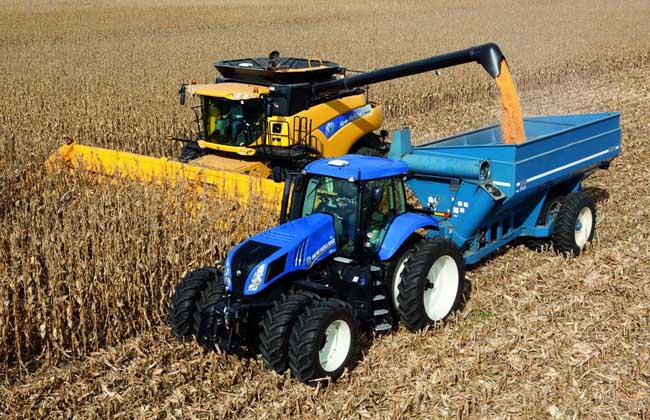
An agricultural production cooperative is a cooperative economic organization mainly engaged in agricultural production, organized by working farmers on the basis of voluntariness and mutual benefit. From the very beginning of its establishment it has an economic mutual-aid character, possesses a certain organizational structure, and its members enjoy certain rights while bearing certain responsibilities. Now let us look at the difference between agricultural production cooperatives and people's communes!
The difference between agricultural production cooperatives and people's communes
1. The past cooperative movement pooled the means of production together, abolished farmers' property rights, and was not conducive to mobilizing farmers' enthusiasm. Farmers' professional cooperatives, by contrast, are based on household contract management and involve farmers' voluntary association and cooperation; they do not pool land, farm tools and other assets into the organization, and do not touch farmers' property rights.
2. In the past cooperative movement, once farmers joined it was very difficult for them to withdraw, which in effect restricted farmers' right to personal freedom. Farmers' cooperative organizations, by contrast, adhere to the principle of voluntariness: farmers join voluntarily and withdraw freely.
3. In the past cooperative movement, farmers had to take part in production activities organized collectively and uniformly, and had no autonomy in production and operation. Farmers' professional cooperatives, by contrast, do not merge the production process and do not take on everything; they provide services only according to farmers' needs, and farmers can independently decide their own production and operation activities as well as the pricing and sales methods of their products. The relationship with the organization is in fact one of cooperation, not one of command and obedience.
Basic features of agricultural production cooperatives
1. Organizational composition: the cooperative takes farmers as its economic main body and is mainly formed by the union of citizens, enterprises and public institutions engaged in the production and sale of the same type of agricultural products; farmers make up at least 80 percent of the total number of members, thus creating a new form of organization.
2. Ownership structure: without changing household contract management, the cooperative achieves a union of labor and capital, thus forming a new ownership structure. The cooperative does not aim at profit with respect to its internal members and returns profits to them, thus forming a new income distribution system.
3. Income distribution: the cooperative does not aim at profit with respect to its internal members and returns profits to them, thus forming a new income distribution system.
4. Management mechanism: the cooperative applies the principles of voluntary joining, freedom to withdraw, democratic election and democratic decision-making, and has built a new management and operation system.
Members' rights in an agricultural production cooperative
1. To participate in the members' assembly and enjoy the right to vote, the right to elect and the right to stand for election, and to exercise democratic management of the cooperative in accordance with the provisions of its charter.
2. A farmers' professional cooperative takes serving its members as its purpose and seeks the common interests of all members. As a member of a farmers' professional cooperative, one has the right to use the services provided by the cooperative and the production and operation facilities equipped by it.
3. The surplus obtained by a farmers' professional cooperative depends on the pooling of members' products and on members' use of the cooperative, and in essence belongs to all members. The law protects members' right to participate in the distribution of surplus, and members have the right to share in the surplus in accordance with the provisions of the charter or a resolution of the members' assembly.
4. Members are the owners of the farmers' professional cooperative and enjoy the right to be informed about its affairs; they have the right to consult relevant materials, in particular to learn about the cooperative's operating conditions and financial situation, so as to supervise its operation.
5. The above provisions are the rights that members enjoy under the Law on Farmers' Professional Cooperatives. Apart from these, provided that the charter does not conflict with the Law on Farmers' Professional Cooperatives, it may also stipulate other rights enjoyed by members in light of the cooperative's actual situation.
Members' obligations in an agricultural production cooperative
1. Resolutions of the members' assembly and the members' representative assembly embody the common will of all members, and members shall strictly abide by and implement them.
2. To contribute capital to the cooperative in accordance with the provisions of the charter. Clarifying members' capital contributions usually has two aspects of significance: first, members' contributions serve as the main source of funds for the organization to engage in business activities; second, they clarify the credit guarantee basis for the organization's liability for external debts.
3. People join a cooperative in order to solve problems that individuals cannot solve on their own, cannot solve well, or cannot solve cost-effectively in independent production and operation, and in order to use the services provided by the cooperative. That members conduct transactions with the cooperative in accordance with the provisions of the charter is both the purpose of establishing the cooperative and an obligation of members.
4. Owing to the existence of market risks and natural risks, the production and operation of a farmers' professional cooperative may fluctuate: in some years there may be a surplus, and in others there may be a loss. When the cooperative has a surplus, sharing in the surplus is a member's statutory right; when the cooperative suffers a loss, bearing the loss is also a member's statutory obligation.
5. In addition to the statutory obligations mentioned above, members shall also fulfill other obligations stipulated by the charter in light of the cooperative's actual situation.