Detailed Explanation of the Planning and Design Concepts for Leisure Agriculture Parks
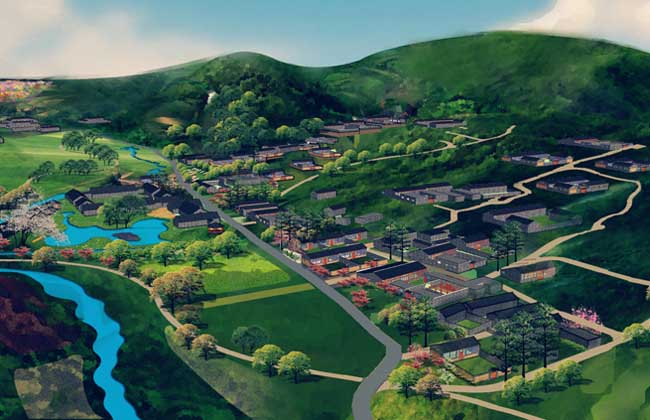
Leisure agriculture and rural tourism in China have just gotten started. In the suburbs of a few major cities such as Beijing, Shanghai, Guangzhou, Shenzhen, Chengdu, Hangzhou, Wuhan, Jinan and Xi'an, various forms of rural agricultural tourism activities have successively developed, including leisure agriculture parks, farmhouse inns, leisure farms and folk-culture tourism villages. Now let us take a look together at the planning and design concepts for leisure agriculture parks!
Planning and Design Concepts for Leisure Agriculture Parks
1. Simultaneous development and protection: In the planning and construction of leisure agriculture parks, and in activities such as agricultural production and operation and leisure experiences within the park, coexistence in harmony with nature is the highest principle. The laws of natural ecology must be followed, and the development and utilization of agriculture must be improved in the process of protecting, developing and cultivating resources and the environment, so as to ensure the integrity, primitiveness and ecological character of the park landscape.
2. Community-based operation should be promoted: Leisure agriculture parks should change their previous business thinking. Parks with the right conditions can move toward extension and transformation under a refined agriculture policy. This can change the current development situation in which leisure agriculture presents a “blooming everywhere” pattern in its spatial layout, and completely eliminate such drawbacks as picking with just a sign hung up, each going its own way, lack of systematic management, unremarkable development characteristics and lack of macro-level systematic planning.
3. The concept of embodying distinctive features: Agricultural production has strong regional and seasonal characteristics. The development of leisure and sightseeing agriculture must be based on the agricultural resources, agricultural production conditions and seasonal characteristics of each region, and must fully consider its locational and transportation conditions, adapting measures to local conditions and timing, and highlighting regional characteristics.
4. The concept of combining agriculture with tourism: The characteristic of leisure agriculture is that it combines agriculture with tourism. Through the development of tourism, leisure agriculture enters the market, establishes its own market position, raises its own value and obtains huge economic benefits. At the same time, leisure agriculture opens up new fields for the development of tourism, enriches the connotations of tourism and promotes the development of modern tourism.
Planning and Design Principles for Leisure Agriculture Parks
1. Ecological character: Tourism is bound to bring a large amount of pollution. The park's own production and daily life need to pay attention to ecological requirements, attach importance to environmental treatment, and above all avoid adverse effects on itself and its surroundings. The ecological principle of landscape planning is the basic principle for creating a quiet, suitable and natural production and living environment in the park, and is the basic basis for improving the quality of the park's landscape environment.
2. Economic viability: Carrying out tourism and sightseeing and renovating gardens is ultimately about bringing greater economic benefits. In planning and design, economic production must be integrated into the construction of the park. Especially for various types of picking gardens, the economic benefits of picking are very high. Planning and design should enable picking to be carried out better, while also paying attention to attracting visitors in the non-picking seasons to better improve economic benefits.
3. Participation: Direct personal participation in experiences and self-entertainment have become current tourism trends. Leisure agriculture parks have broad spaces and rich content, and are highly characterized by participation. Only when urban tourists participate extensively in every aspect of the park's production and daily life can they experience the pleasures of agricultural product picking and rural life on more levels, and can tourists enjoy an authentic rural cultural atmosphere.
4. Distinctiveness: Distinctiveness is where the life of tourism development lies. The more distinctive it is, the stronger its competitiveness and development potential will be. Therefore, planning and design must be combined with the actual conditions of the park, clarify resource characteristics, accurately identify breakthrough points, make the characteristics of the entire park more distinct, and make landscape planning serve tourism and the park more directly.
5. Cultural character: When people talk about agriculture, they usually first think of its production function, and rarely think of its cultural connotations and the poems and songs that arise from them. All of this easily leads people to overlook that agriculture is also an embodiment of culture. Therefore, in the landscape design of the park, its internal cultural resources should be deeply excavated, developed and utilized, so as to enhance the park's cultural taste and achieve the sustainable development of landscape resources.
6. Diversity: Whether it is sightseeing tourism or themed tourism, whether it is group tourism or independent travel, multiple opportunities for free choice must be provided to tourists. The diversity principle of park landscape planning requires not only that multiple options must be available for selection in the development of tourism products, tourism routes, modes of sightseeing, choice of time and determination of consumption levels, but also that the selection of varieties and the allocation of landscape resources in the park highlight the characteristics of richness and diversity.