Detailed Explanation of the Principles and Models of Ecological Agriculture Planning
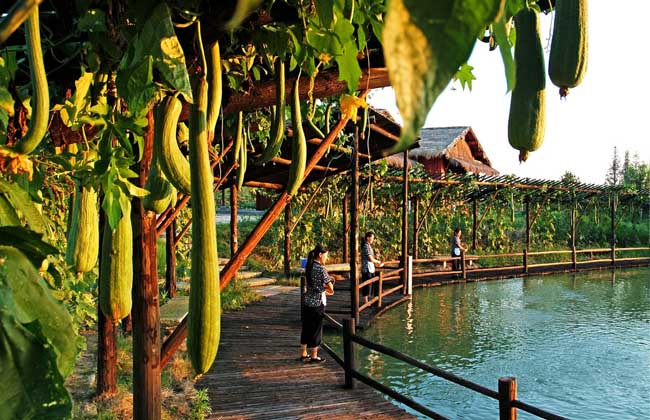
Ecological agriculture is a modern, highly efficient form of agriculture established according to ecological and economic principles, applying modern scientific and technological achievements and modern management methods, as well as the effective experience of traditional agriculture, and capable of achieving relatively high economic, ecological and social benefits. Let us now take a look at the principles and models of ecological agriculture planning!
Planning Principles of Ecological Agriculture
The requirements of ecological agriculture are not to use chemically synthesized insecticides or herbicides, to use beneficial natural enemies or mechanical weeding methods, not to use readily soluble chemical fertilizers but rather organic fertilizers or slow-release fertilizers, to use humus to maintain soil fertility, to adopt methods such as crop rotation or intercropping for cultivation, not to use chemically synthesized plant growth regulators, to control the stocking rate of pastures, to use natural feed for animal rearing, not to use antibiotics, and not to use genetically modified technology.
Model Types of Ecological Agriculture
1. Spatiotemporal structure: The spatiotemporal structure is a type of agricultural ecosystem rationally constructed according to the biological and ecological characteristics of biological populations and the mutually beneficial symbiotic relationships among organisms, so that biological populations at different ecological positions each find their proper place in the system and complement one another, making fuller use of solar energy, water and mineral nutrients. It is a three-dimensional structure with multiple sequences in time and multiple levels in space, and its economic and ecological benefits are both excellent. Specifically, there are models such as three-dimensional intercropping and interplanting in fruit tree plantations, three-dimensional intercropping and interplanting in farmland, three-dimensional aquaculture in water areas, and three-dimensional planting and rearing in farmhouse courtyards.
2. Food chain type: The food chain type is a benign-cycle agricultural ecosystem designed according to the laws of energy flow and material circulation in agricultural ecosystems. In the system, the output of one production link is the input of another production link, so that waste in the system is recycled and utilized multiple times, thereby increasing the energy conversion rate and resource utilization rate, obtaining relatively large economic benefits, and effectively preventing pollution of the agricultural ecological environment by agricultural waste. Specifically, there are models such as the material recycling model within the planting industry, the material recycling model within the breeding industry, and the material recycling model combining planting, breeding and processing.
3. Comprehensive type: The comprehensive type is an organic combination of the spatiotemporal structure type and the food chain type, enabling materials in the system to be efficiently produced and utilized multiple times. It is a model type featuring moderate input, high output, little waste, no pollution and high benefits.
Current Development Status of Ecological Agriculture
1. The theoretical foundation is still incomplete: Ecological agriculture is a complex systematic project that requires the support of multiple disciplines, including agronomy, forestry, animal husbandry, aquaculture, ecology, resource science, environmental science, processing technology and social sciences. Previous research was often confined to a single discipline, so there might have been some understanding, or even relatively in-depth understanding, of one aspect of this complex system, but little was known about the interactions among these aspects. Therefore, it is necessary to conduct more in-depth research on ecological agriculture from a systematic and comprehensive perspective, especially regarding the coupling laws among factors, the optimal design of structures, scientific classification systems and objective evaluation methods. Such research should be built on in-depth investigation and analysis of existing ecological agriculture models, must transcend the boundaries between biology, ecology, social sciences and economics, should be an interdisciplinary intersection and integration, requires the joint participation of experts from multiple disciplines, and necessitates the establishment of a theoretical system of ecological agriculture itself.
2. The technical system is not complete enough: An ecological agriculture system often contains multiple components, and the relationships among these components are very complex. For example, in order to raise ducks in a fish pond, the number of ducks to be raised must be considered, and the number of ducks will be constrained by numerous conditions such as the water exchange rate, pond volume, water quality, fish species types and quantities, water temperature, and the age and size of the ducks. Under ordinary circumstances, farmers do not have sufficient theoretical knowledge and experience to scientifically design this composite system, and simply copying the experience of another place is very difficult and often does not succeed. However, in current ecological agriculture practice, there is still a lack of research on technical measures, including both how to develop traditional technologies and how to introduce high and new technologies.
3. Policies are not complete enough: Without government support, it is impossible for ecological agriculture to achieve true popularization and development. The most important aspect of government support is the establishment of an effective policy incentive mechanism and guarantee system. Although China's rural economic reform is currently very successful, there are still many areas worthy of improvement in the implementation of ecological agriculture policies. In some places, due to policy-related reasons, farmers are unable to effectively protect resources such as land and water.
4. The influence of agricultural product prices: Factors related to agricultural product prices sometimes also become a limiting factor in the development of ecological agriculture, because for relatively poor populations, food security may be more important, but for those farmers in better circumstances, relatively high economic benefits may become the basic motivation stimulating them to engage in ecological agriculture.
5. The influence of services and technology: For the development of ecological agriculture, services and technology are equally important. However, an effective service system has not yet been established, and in some places it is still impossible to provide farmers with high-quality varieties, seedlings, fertilizers, technical support, credit and information services. For example, credit services are very important for the development of ecological agriculture in many places, because for farmers engaged in ecological agriculture, profits may often only be obtained several years after the project is implemented. Under such circumstances, credit services are naturally indispensable. In addition, information services are also an important aspect currently restricting the development of ecological agriculture, because effective information services will be very helpful for farmers to adjust their production structures in a timely manner, so as to meet market demands and obtain relatively high economic returns.