What Are the Prospects for Ecological Agriculture? A Detailed Guide
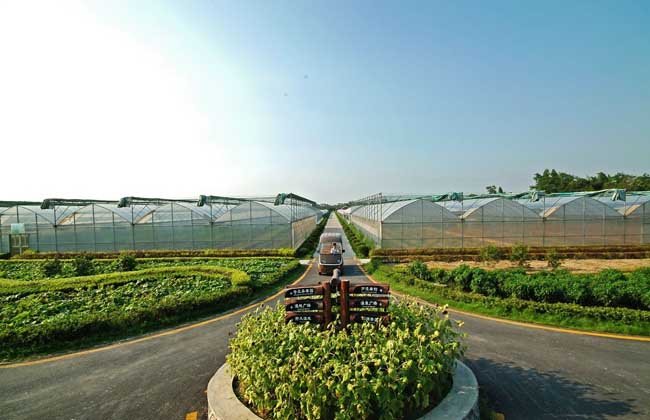
Ecological agriculture is an effective way to resolve the contradictions between population, resources, and the environment in our country. It achieves the unity of economic, ecological, and social benefits and is an inevitable choice for the sustainable development of agriculture and the rural economy. Although our country has already achieved great results in theoretical research, experimental demonstration, and widespread promotion of ecological agriculture, it cannot be denied that some problems still exist, and these problems are becoming obstacles limiting the further development of ecological agriculture.
The Development Prospects of Ecological Agriculture
The production of ecological agriculture takes the sustainable use of resources and the protection of the ecological environment as important prerequisites. Based on principles such as the coordination and adaptation between organisms and the environment, the optimized combination of species, the efficient operation of energy and matter, and the balance of inputs and outputs, it uses systems engineering methods, relies on modern science and technology and the input of social and economic information to organize production. Through the rational use and enhancement of agricultural natural resources, it emphasizes improving the utilization rate of solar energy and the conversion efficiency of biological energy, fully taps the potential of resources and the advantages of species diversity, establishes a benign material circulation system, promotes the sustained and stable development of agriculture, and achieves the unity of economic, social, and ecological benefits. Therefore, ecological agriculture is a knowledge-intensive modern agricultural system and a new model of agricultural development.
The Development Characteristics of Ecological Agriculture
1. Comprehensiveness: Ecological agriculture emphasizes giving play to the overall function of the agricultural ecosystem. Taking broad agriculture as the starting point, and following the principles of “overall, coordinated, circular, and regenerative,” it carries out comprehensive planning, adjusts and optimizes the agricultural structure, enables the integrated development of farming, forestry, animal husbandry, sideline production, and fisheries as well as the primary, secondary, and tertiary industries in rural areas, and makes these industries support each other and complement each other, thereby improving comprehensive production capacity.
2. Diversity: In view of our country's vast territory and the relatively large differences among regions in natural conditions, resource foundations, and levels of economic and social development, ecological agriculture fully absorbs the essence of our country's traditional agriculture and combines it with modern science and technology. It equips agricultural production with multiple ecological models, ecological engineering, and richly varied types of technology, so that each region can maximize its strengths and avoid its weaknesses, give full play to regional advantages, and allow each industry to develop in a coordinated way according to social needs and local realities.
3. High Efficiency: Through material circulation and the multi-level comprehensive utilization and serialized deep processing of energy, ecological agriculture realizes economic value-added, carries out the resource utilization of waste, lowers agricultural costs, improves benefits, creates employment opportunities within agriculture for the large surplus rural labor force, and protects farmers' enthusiasm for engaging in agriculture.
4. Sustainability: Developing ecological agriculture can protect and improve the ecological environment, prevent and control pollution, maintain ecological balance, improve the safety of agricultural products, transform the conventional development of agriculture and the rural economy into sustainable development, and closely combine environmental construction with economic development. While maximally meeting people's growing demand for agricultural products, it improves the stability and sustainability of the ecosystem and enhances the staying power of agricultural development.
The Current State of Ecological Agriculture Development
1. The theoretical foundation is still incomplete: Ecological agriculture is a complex systems engineering endeavor that requires support from multiple disciplines, including agronomy, forestry, animal husbandry, aquaculture, ecology, resource science, environmental science, processing technology, and social sciences. Previous research was often single-disciplinary, so it may have provided a certain, even relatively deep, understanding of one aspect of this complex system, but little is still known about the interactions among these aspects. Therefore, it is necessary to conduct more in-depth research on ecological agriculture from a systematic and integrated perspective, especially regarding the coupling laws among elements, the optimized design of structures, scientific classification systems, and objective evaluation methods. Such research should be built on in-depth investigation and analysis of existing ecological agriculture models, must transcend the boundaries among biology, ecology, social sciences, and economics, should be an interdisciplinary intersection and integration, requires the joint participation of experts from multiple disciplines, and needs the establishment of a theoretical system of ecological agriculture itself.
2. The technical system is not complete enough: An ecological agriculture system often contains many components, and the relationships among these components are very complex. For example, in order to raise ducks in a fish pond, the number of ducks to be raised must be considered, and the number of ducks will be constrained by many conditions, such as the water exchange rate, pond volume, water quality, fish species and quantity, water temperature, and the age and size of the ducks. Under ordinary circumstances, farmers do not have enough theoretical knowledge and experience to scientifically design this composite system, and simply copying the experience of another place is very difficult and often does not succeed. However, in current practice of ecological agriculture, there is still a lack of research on technical measures, including both how to develop traditional technology and how to introduce high and new technology.
3. Policies are not complete enough: Without government support, it is impossible for ecological agriculture to achieve true popularization and development. The most important aspect of government support is the establishment of effective policy incentive mechanisms and safeguard systems. Although China's rural economic reform is currently very successful, there are still many areas in the implementation of ecological agriculture policy that need improvement. In some places, due to policy-related reasons, farmers cannot effectively protect resources such as land and water.
4. The impact of agricultural product prices: Factors related to agricultural product prices sometimes also become a limiting factor in the development of ecological agriculture, because for relatively poor people, food security may be more important, but for farmers in better circumstances, higher economic benefits may become the basic driving force stimulating them to engage in ecological agriculture.
5. The impact of services and technology: For the development of ecological agriculture, services and technology are equally important. However, an effective service system has not yet been established, and in some places it is still impossible to provide farmers with high-quality varieties, seedlings, fertilizers, technical support, credit, and information services. For example, credit services are very important for the development of ecological agriculture in many places, because for farmers engaged in ecological agriculture, profits may often only be obtained several years after the project is implemented. In this situation, credit services are naturally indispensable. In addition, information services are also an important aspect currently restricting the development of ecological agriculture, because effective information services will be very helpful for farmers to adjust their production structure in a timely manner to meet market requirements and obtain higher economic returns.