What Is Green Agriculture? A Complete Guide to Its Concept and Meaning
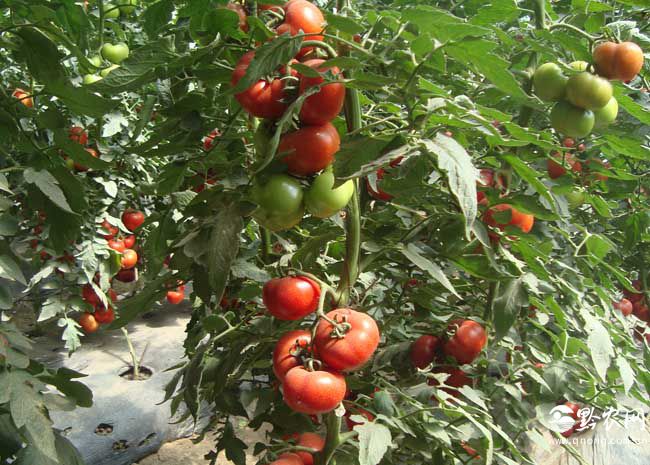
We often hear people talk about green agriculture, but do you know what green agriculture actually is? In fact, green agriculture is "big agriculture" in the broad sense, including green plant and animal agriculture, white agriculture, blue agriculture, black agriculture, fungal agriculture, facility agriculture, horticultural agriculture, sightseeing agriculture, environmental protection agriculture, information agriculture, and more. In specific application, we generally group the "three products" - pollution-free agricultural products, green food, and organic food - together under the name green agriculture. After joining the WTO, the high-grade, high-quality, superior-variety, non-toxic, harmless and pollution-free requirements of the international market for agricultural products mean that China must take the path of green agriculture development.
How Is Green Agriculture Defined?
So-called green agriculture refers to a mode of agricultural production and operation centered on producing, processing and selling green food.
1. The proposal of green agriculture: In October 2003, Mr. Liu Lianfu, former director of the Land Reclamation Department of the Ministry of Agriculture and former president of the Green Food Association, put forward the concept of "green agriculture" at the "International Symposium on Building Market Channels for Green Food and Organic Agriculture in the Asia-Pacific Region" hosted by the United Nations Economic and Social Commission for Asia and the Pacific. At the same time, Vice Premier Hui Liangyu gave official approval and allocated 35 million yuan for the construction of demonstration bases.
2. The principles of green agriculture: Green food follows the principle of sustainable development, is produced in a specific way, and is certified by a specialized body, allowing the use of the green label for pollution-free, safe, high-quality, nutritious food. Actively developing green agriculture has become a strategic measure for meeting international challenges.
3. The necessity of green agriculture: At the same time, developing green agriculture is also a requirement for adhering to sustainable development and protecting the environment. The "black agriculture" mode of operation often relies heavily on large farm machinery, chemical fertilizers and pesticides, which not only consumes large amounts of non-renewable energy but also causes soil loss, air and water pollution, and other harmful consequences. Developing green agriculture, by contrast, can fundamentally solve these problems. Green agriculture, with "green environment", "green technology" and "green products" as its core, pushes chemical agriculture, which relies excessively on chemical fertilizers and pesticides, to transform into ecological agriculture that mainly relies on the intrinsic mechanisms of living organisms.
What Does Green Agriculture Encompass?
Green agriculture is not a return to traditional agriculture, nor is it a rejection of ecological agriculture, organic agriculture, natural agriculture and other types of agriculture. Rather, it is a new type of agriculture with rich connotations that avoids the various drawbacks of each type of agriculture and draws on their strengths to make up for their weaknesses. Its connotations include five aspects.
1. Green agriculture and the green food that accompanies it come from a sound ecological environment. The Earth provides humanity with a good climate, fresh air, abundant water sources and fertile soil, enabling humanity to multiply and thrive for generations. However, due to rapid population growth and economic development, resources have been damaged and the environment has been polluted. This harm to natural resources ultimately feeds back to humanity itself. Thus, out of instinct and scientific understanding, people began to care more and more about health, pay attention to food safety, and protect the ecological environment. In particular, they favor agricultural products that are free of pollution and free of public hazards. Against this background, green agriculture and green food, with their inherent advantages, have been recognized by consumers broadly and have become an inevitable product with the characteristics of the times.
2. Green agriculture is protected agriculture. Green agriculture is not only an environmental protection industry that improves the ecological environment and raises people's health levels, but also a weak industry that needs support and protection. Although green agriculture has no legislation, green food, as a special product of green agriculture, is produced under quality standard control. Green food certification, in addition to requiring compliance in the production area environment and the use of production input materials, also has extremely strict quality standards for the internal quality of products and the implementation of production technical operating procedures. It can be said that from the land to the table, the entire process from production to post-production processing, management, storage and transportation, packaging and sales is achieved through monitoring. Therefore, green food is more scientific, authoritative and safe than other agricultural products.
3. Green agriculture is an organic combination with traditional agriculture. Traditional agriculture is self-sufficient agriculture. Its advantages are saving energy, saving resources, saving money, intensive cultivation, combining human and animal labor, applying organic fertilizer, and causing no environmental pollution. But it also has the drawbacks of low input, low output, low efficiency, single cropping, low disaster resistance and low labor productivity. Green agriculture is an organic combination of traditional agriculture and modern agriculture. With the goals of high yield, stable yield and high efficiency, it not only increases inputs of agricultural production materials such as labor, machinery and equipment, but also increases soft inputs such as science and technology, information and talent, giving green agriculture more distinct characteristics of the times.
4. Green agriculture is a comprehensive agriculture of multiple combinations. With agriculture, forestry and animal husbandry as the main body, and with industrial chains such as agriculture-industry-commerce, production-processing-sales, trade-industry-agriculture, and transport-construction-service as extensions, it vigorously carries out basic farmland construction, improves disaster resistance and the level of applying advanced science and technology, and reflects the compound combination of multiple ecological engineering elements.
5. Green agriculture is an effective way for poor areas to escape poverty and become prosperous. From 1996 to 2000, the China Investment Promotion Office of the United Nations Industrial Development Organization organized experts many times to conduct on-site inspections of the locations of green industry projects. In most project areas, water quality, soil and air were good, and green food raw material resources were abundant. However, due to the lack of scientific rules, poor market information and low scientific and technological literacy, some poor areas could only sell green food raw materials, with low returns. After the implementation of green food development, poor areas gave play to the resource advantage of being lightly polluted by industry and agriculture and having a relatively clean environment. Raw materials were transformed into products, and high technology, high added value and a high market share drove the rapid development of green industries in poor areas and promoted the revitalization of regional economies. This not only has guiding significance for China's remote mountainous areas and economically underdeveloped areas, but also provides a useful attempt for some poor areas in Asia to escape poverty and become prosperous.
How Is Green Agriculture Developing?
China's per capita arable land area is only 40% of the world average, and its per capita water resources are only 28% of the world average. With the rapid advancement of industrialization and urbanization, the shortage of agricultural resources such as arable land and water has become more prominent. Ensuring the safe supply of grain and other agricultural products for more than 1.3 billion people is the primary goal of China's agricultural development.
China's green agriculture is developing rapidly. Beginning in 2005, the Chinese government implemented a subsidy project for soil testing and formulated fertilization, vigorously promoting scientific fertilization technology. By 2010, it had covered 2,498 counties (districts), with a promoted area of more than 1.1 billion mu. Beginning in 2006, the Chinese government implemented a soil organic matter improvement project, which over five years promoted more than 30 million mu cumulatively. Through measures such as returning straw to the field, planting green manure and increasing the application of commercial organic fertilizer, it raised soil organic matter content and improved the basic fertility of arable land. China has established an organic agricultural product certification system in line with international standards, and has issued more than 6,000 organic product certification certificates cumulatively. In 2010, the total number of green food production enterprises in China reached 6,391, and the total number of products reached 16,748.
China's agricultural productivity has been greatly improved, and many agricultural products have begun to appear in surplus. The government attaches great importance to the development of environmentally friendly and quality-oriented agriculture, farmers' quality awareness and environmental awareness have also greatly increased, and the basic conditions for vigorously developing green agriculture are already in place. The Chinese government attaches great importance to research and pilot work on environmental protection and ecological agriculture, which has a history of more than 20 years since 1980. China has established more than 2,000 pilot sites for ecological agriculture construction of different types and at different levels, and has achieved gratifying results. From the early 1980s to the present, the state has formulated a number of policies and measures for ecological environmental protection and governance. In 1998, it also issued the National Ecological Environment Construction Plan. Some commodities and foods in China have already begun to implement a green labeling and environmental labeling system.
The development of green agriculture should focus on: first, focusing on optimized design; second, focusing on comprehensive development; third, focusing on environmental protection.