Interpretation of the New Policy on Rural Land Transfer in 2016
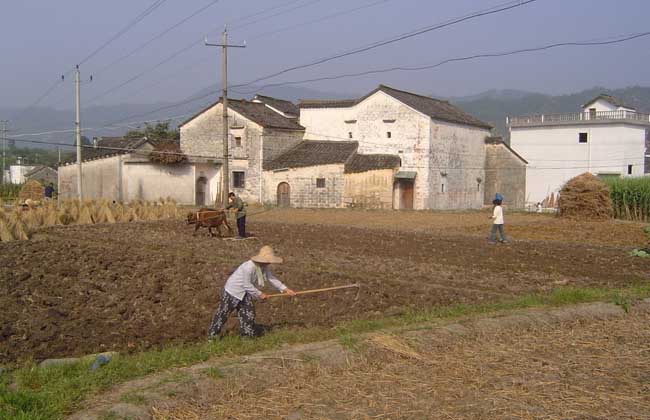
Rural land transfer refers to the act by which land contracted by rural households, through lawful means, retains the contracting right and transfers the operating right to other farming households or other economic organizations. It is a product of rural economic development reaching a certain stage. Through land transfer, large-scale, intensive, and modernized agricultural operation models can be developed. Let us now take a look at what the new policies on rural land transfer in 2016 include!
Standardizing Land Transfer
However, at present, land transfer faces many problems, such as many transfers carried out by farmers on their own and few reported to villages and townships for approval and filing, many transfers based on oral agreements and few with written contracts signed. It is urgent to formulate land transfer policies as soon as possible and standardize land transfer procedures. Governments at all levels should gradually tighten land transfer management, standardize transfer procedures, improve contract management, standardize transfer contracts, and ensure that the transfer term does not exceed the remaining years of the second round of rural land contracting. Once disputes arise in land transfer, they are difficult to handle and lack legal protection. According to data provided by relevant departments, in recent years disputes caused by land transfer in various provinces and municipalities have shown a year-on-year upward trend.
Accelerating Land Rights Confirmation
Land rights confirmation and registration has far-reaching significance, and once rights are confirmed, it is beneficial to land transfer. Clarifying the property rights of collective land and accelerating the tasks of confirming, registering, and issuing certificates for rural collective land are extremely urgent and heavy. Advancing the confirmation, registration, and issuance of certificates for rural collective land is a practical necessity for safeguarding the rights and interests of farmers and land transferees and promoting social harmony and stability in rural areas. Through the confirmation, registration, and issuance of certificates for rural collective land, it is possible to effectively resolve disputes over the ownership of rural collective land, defuse social conflicts in rural areas, confirm farmers' land rights in accordance with the law, and strengthen farmers' and especially the whole society's awareness of land property rights, which helps to effectively safeguard farmers' rights and interests in the process of advancing urbanization, industrialization, and agricultural modernization.
Building a Land Trading Platform
Along with the introduction of the land transfer system, various places have accelerated the implementation of pilot agricultural land transfer projects, which directly promoted the establishment of rural property rights exchanges, built a platform for agricultural land to enter the market, established county-, township-, and village-level land transfer management and service institutions, developed various forms of intermediary service organizations for land transfer, built a three-level broadband network information platform at the county, township, and village levels, disclosed land transfer information in a timely and accurate manner, strengthened the collection, sorting, archiving, and preservation of transfer information, and provided farmers with services such as land transfer policy consultation, land registration, information release, contract formulation, dispute arbitration, and legal aid in a timely manner.
Basic Farmland Protection System
The first of the main tasks of the central economic work is to effectively ensure national food security. This means that the red line for cultivated land must be strictly defended, the red line of 1.8 billion mu of cultivated land must still be upheld, and at the same time the existing cultivated land area must remain basically stable. Under the new situation of continuously expanding agricultural land transfer and the construction of new modern agriculture, the Ministry of Land and Resources will continue to implement the strictest farmland protection policy, while exploring policy innovations for farmland and basic farmland protection under the new situation, intensifying basic farmland protection, adhering to placing equal emphasis on both quantity and quality, and effectively ensuring national food security.
Mortgage Loans on Land Contracting Rights
The 2014 No. 1 document already began encouraging mortgage loans on land contractual operating rights, and land transfer will be an opportunity to revitalize rural resources. Once land can be transferred in a standardized manner, mortgage loans become possible, and land can generate added value. At the same time, it allows agricultural land to create broader operating channels in production and daily life, stimulating the enthusiasm of a group of large contracting households. Carrying out mortgage loans on rural cultivated land contractual operating rights solves the problem that large growers cannot meet the needs of large-scale planting due to a shortage of funds, effectively breaks the funding "bottleneck" problem in the development of large grain growers, and promotes the intensive operation of the agricultural industry. It also helps agriculture-related financial institutions explore innovation in rural financial products and service methods, accelerate the establishment of a modern rural financial system, and promote institutional innovation in rural systems and mechanisms, including accelerating the progress of issuing certificates for cultivated land contractual operating rights in rural areas, improving the rural cultivated land transfer market, and improving the construction of agricultural risk protection mechanisms, while continuously raising the degree of organization in agricultural production and operation.
A Unified Urban-Rural Construction Land Market
There are two preconditions for agricultural land to enter the market. First, it must be operating-type construction land. Second, it must comply with planning and use control. In response to the illegal and non-compliant problems that have already appeared, the government should, while consolidating land rights and powers, reform the land expropriation system, standardize expropriation procedures, and establish a scientific and diversified land expropriation compensation system, safeguard system, and employment system. Agricultural wealth creators also hope that by transforming government functions, a unified trading service platform can be established for the transfer of urban and rural land. Establish fair, open, and transparent market rules, improve the mechanism in which prices are mainly determined by the market, and establish a unified urban-rural construction land market. It was also stated that the urban-rural dual structure is the main obstacle restricting the integrated development of urban and rural areas. It is necessary to accelerate the construction of a new agricultural operating system, grant farmers more property rights, and promote equal exchange of urban and rural factors and balanced allocation of public resources.
Advancing Urbanization
Against the background of accelerating urbanization, as an important part of farmers' property, homestead land could have provided farmers with their first sum of money for moving into the cities, but under the existing land management system, the transfer of homestead land is still subject to many restrictions. Farmers who transfer should be allowed, on a voluntary basis, to sell contracted land, houses, and homestead land of compliant area through market transfer methods and obtain property income. This will remove the worries of the rural labor force about settling in the cities. Although urbanization will become one of the main lines of China's economic development, homestead land management still remains within the conceptual framework of the urban-rural dual structure. The entities of rural homestead land transfer can be members of the local collective economic organization, members of other village collective economic organizations, or urban residents. From the perspective of equality of property rights, restricting the scope of entities eligible for rural homestead land transfer lacks legitimate basis.