What are the policies for migrant workers returning home to start businesses? Read this to understand
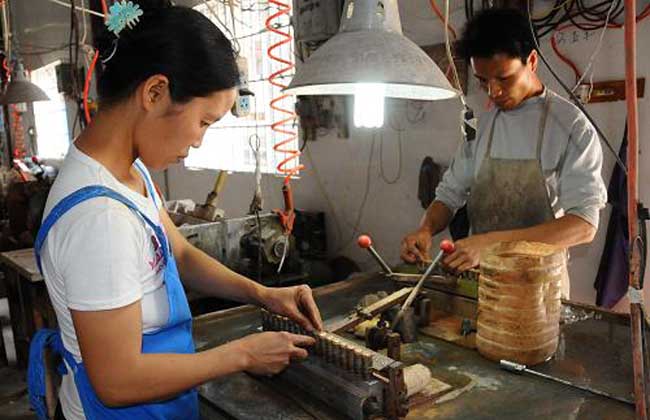
China has a huge group of migrant workers, and more and more returning migrant workers are striving to turn their entrepreneurial dreams into reality. At the same time, employment is the foundation of people's livelihood. Vigorously promoting entrepreneurship to drive employment and working to resolve the contradiction between labor supply and demand and the structural contradiction in employment are important ways to maintain social harmony and stability. Now let us take a look at what policies there are for migrant workers returning home to start businesses!
Government support for migrant workers returning home to start businesses
The State Council executive meeting pointed out that supporting migrant workers, college students, and retired soldiers in returning home to start businesses, and making the vast townships prosperous in all trades through mass entrepreneurship and innovation, can promote employment, increase income, and open up a new situation of coordinated development between industrialization and agricultural modernization, and between urbanization and new rural construction. The meeting determined: First, simplify the registration procedures for entrepreneurial sites and advance reforms such as "one address, multiple licenses" and cluster registration. Second, implement targeted tax reductions and general fee reductions for migrant workers and other personnel returning home to start businesses, and provide interest subsidies as prescribed for entrepreneurial guarantee loans. Third, in areas with relatively concentrated returning-home entrepreneurship, explore the issuance of collective bonds for small and medium-sized enterprises, and encourage banks to increase credit support and services. Fourth, rely on existing development zones and agricultural industrial parks to develop returning-home entrepreneurship parks and incubation bases. Encourage e-commerce trading platforms to extend channels downward to drive online entrepreneurship. Fifth, strengthen entrepreneurship training, include returning migrant workers starting businesses into the public service systems for social security, housing, education, medical care, and so on, and use mechanisms such as government purchase of services to help returning-home entrepreneurs improve operations and open up markets.
Preferential policies for migrant workers returning home to start businesses
Migrant workers returning home to start businesses can enjoy, on an equal basis, all the investment promotion preferential policies already issued by the state and governments at all levels in the provinces. For enterprises founded by returning migrant workers and other personnel whose main business is an industrial project specified in the Catalogue of Encouraged Industries in the Western Region, and whose main business revenue in the current year accounts for more than 70% of the enterprise's total revenue, enterprise income tax is levied at a reduced rate of 15%; those recognized as high-tech enterprises are levied enterprise income tax at a reduced rate of 15% in accordance with relevant provisions.
Entrepreneurial guarantee loans for migrant workers returning home to start businesses
Entrepreneurial guarantee loans are special loans issued to meet entrepreneurial needs. At present, the target groups supported by the policy include registered urban unemployed persons who meet the prescribed conditions, persons with employment difficulties (generally referring to those who are older, have disabilities, receive the minimum living guarantee, have been continuously unemployed for more than one year, and those who have difficulty finding employment due to loss of land and other reasons), as well as labor-intensive small enterprises that newly hire in the current year persons meeting the conditions for applying for entrepreneurial guarantee loans reaching 30% or more of the enterprise's total existing active employees (15% for enterprises with more than 100 people), and sign labor contracts of more than 1 year with them. Individual entrepreneurial projects for loans must be low-profit projects, specifically referring to projects other than high-profit industries such as advertising, sauna, massage, internet cafes, and oxygen bars, and industries not encouraged by other national industrial policies.
Application procedures for entrepreneurial guarantee loans
Eligible loan applicants may submit applications to the local village (community) and submit relevant application materials. After review by the village (community), they are submitted to the local township government (subdistrict office) for review. After review by the township government (subdistrict office), they are recommended to the county-level human resources and social security department for review. After review by the human resources and social security department, they are recommended to guarantee institutions and financial institutions for review. After approval by the guarantee institution, it promises to provide guarantee. After each financial institution approves according to its own investigation, review, approval requirements and procedures, loan procedures are handled, and the finance department provides interest subsidies as prescribed.
Extension: Policies for migrant workers returning home to start businesses
In June 2015, the General Office of the State Council issued the Opinions on Supporting Migrant Workers and Other Personnel in Returning Home to Start Businesses, promoting migrant workers and other personnel to return home to start businesses.
The Opinions pointed out that supporting migrant workers, college students, and retired soldiers and other personnel in returning home to start businesses, and making the vast townships prosperous in all trades through mass entrepreneurship and innovation, can promote employment, increase income, and open up a new situation of coordinated development between new industrialization and agricultural modernization, and between urbanization and new rural construction. It is necessary to strengthen overall planning, improve systems and mechanisms, integrate entrepreneurial resources, improve support policies, optimize the entrepreneurial environment, fully stimulate the enthusiasm of migrant workers and other personnel to return home and start businesses, fully integrate into the upsurge of mass entrepreneurship and innovation, accelerate the cultivation of new drivers of economic and social development, and generate new momentum for improving people's livelihood, adjusting the economic structure, and maintaining social harmony and stability.
The Opinions proposed adhering to the combination of inclusive and supportive policies, adhering to both revitalizing existing stock and creating new increments, adhering to coordination between government guidance and market leadership, and adhering to linked development between input areas and output areas, and driving returning-home entrepreneurship through channels such as promoting industrial transfer, promoting industrial upgrading in output areas, encouraging output areas to graft resources onto input area markets, guiding the integrated development of primary, secondary, and tertiary industries, and supporting the development of new agricultural operating entities.
The Opinions emphasized the need to improve infrastructure and the entrepreneurial service system, strengthen the construction of grassroots service platforms and online and offline infrastructure for internet entrepreneurship, rely on existing resources to integrate and develop migrant worker returning-home entrepreneurship parks, strengthen entrepreneurship training for returning migrant workers and other personnel, improve public services for migrant workers and other personnel returning home to start businesses, improve market intermediary services for returning-home entrepreneurship, and guide the connection between returning-home entrepreneurship and mass innovation.
The Opinions proposed policy measures in five aspects to support returning-home entrepreneurship: First, lower the threshold for returning-home entrepreneurship. Second, implement targeted tax reductions and general fee reduction policies. Those meeting the prescribed policy conditions may enjoy tax and fee reduction policies such as reduced enterprise income tax and exemption from value-added tax and business tax. Third, increase fiscal support. For eligible enterprises and personnel, provide social security subsidies as prescribed; those meeting the prescribed conditions for enjoying agriculture-supporting and farmer-benefiting and small and micro enterprise support policies are included in the support scope; online merchant employees registered with industry and commerce enjoy all employment and entrepreneurship support policies on an equal basis; those not registered with industry and commerce may enjoy support policies for flexibly employed persons on an equal basis. Fourth, strengthen financial services for returning-home entrepreneurship. Use venture investment funds to support migrant workers and other personnel returning home to start businesses, accelerate the development of village and township banks, rural credit cooperatives, and microfinance companies, encourage banking financial institutions to develop targeted financial products and financial services, increase credit support and service intensity for returning-home entrepreneurs, and provide entrepreneurial guarantee loans to those eligible. Fifth, improve support policies for returning-home entrepreneurship parks.
The Opinions also required doing a good job in implementing the Outline of the Three-Year Action Plan for Encouraging Migrant Workers and Other Personnel to Return Home and Start Businesses (2015-2017), and creating a batch of demonstration bases for entrepreneurship in traditional ethnic industries and a batch of county-level internet entrepreneurship demonstration bases.