Are there subsidies for pig farming in rural areas? Understanding the subsidy policy in one article
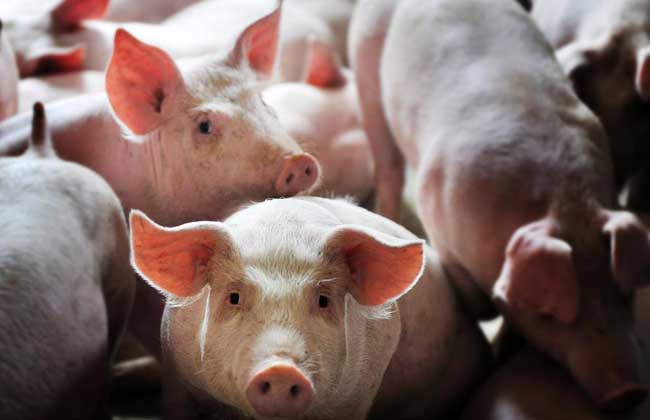
Many farmers report that they simply cannot get the subsidies, and in reality some subsidy scandals do exist. Besides the parties involved knowingly breaking the law and acting recklessly, the more important reason is that the vast majority of farmers are not clear about the subsidy details. To put it bluntly, they are easy to fool. Let's take a look below at whether there are subsidies for pig farming in rural areas!
Are there subsidies for pig farming in rural areas?
There are subsidies for pig farming in rural areas. To stabilize pork supply and improve the pork reserve system, the state will provide financial subsidies for pig breeding, especially sow breeding. The state will subsidize 50 yuan per sow, of which the state bears 60% and the local government bears 40%. In addition, the state will also reward major pig transport counties.
Rewards for major pig counties
In 2014, the central government arranged 3.5 billion yuan in reward funds, specifically for developing pig production. In 2015, the central government continued to implement rewards for major pig-exporting counties, specifically including expenditures for pen renovation, improved breed introduction, and manure treatment for large-scale pig farmers (farms), as well as insurance premium subsidies, loan interest subsidies, and epidemic prevention service expenses. The reward funds are calculated according to the principle of "guiding production, more transfers more rewards, direct allocation to counties, and dedicated use," based on the weights of pig transfer volume, slaughter volume, and inventory at 50%, 25%, and 25% respectively.
Pig insurance subsidies
1. For raising high-quality breeding sows, the annual premium is 60 yuan per sow, of which the government bears 48 yuan per sow and the farmer bears 12 yuan, with a coverage amount of 1000 yuan.
2. For raising commercial pigs, the annual premium is 10 yuan per pig, of which the government bears 7 yuan per pig and the farmer bears 3 yuan, with a coverage amount of 400 yuan.
Subsidies for breeding sows
1. Subsidy recipients: all farms (households) raising breeding sows, including large-scale breeding farms, breeding households, breeding pig farms, and backyard raisers. Breeding sows included in the subsidy scope refer to sows that have given birth to one litter of piglets and can continue to breed piglets, also known as adult sows or basic sows.
2. Subsidy standard: a subsidy of 100 yuan per breeding sow, with subsidy funds borne by the state. Of this, the central government bears 60%, and the local government bears 40%.
Subsidies for improved pig breeds
1. Subsidy basis: Notice of the General Office of the Ministry of Agriculture and the General Office of the Ministry of Finance on Issuing the Guiding Opinions on the Implementation of the 2013 Livestock Improved Breed Subsidy Project (Nong Ban Cai [2013] No. 46)
2. Subsidy recipients: sow raisers using improved boar semen for artificial insemination within 49 project implementation counties (cities, districts), including backyard raisers and large-scale breeding households (farms).
3. Subsidy standard: subsidies are given to sow raisers for purchasing improved boar semen. A subsidy of 20 yuan is given for each artificial insemination performed, and a subsidy of 40 yuan per sow per year.
Subsidies for harmless treatment of dead pigs
1. Subsidy basis: Notice of the General Office of the Ministry of Agriculture and the General Office of the Ministry of Finance on Doing a Good Job in Subsidies for Harmless Treatment of Large-Scale Pig Farms (Nong Ban Cai [2011] No. 163).
2. Subsidy standard: for harmless treatment of dead pigs in the breeding process at large-scale farms (communities), a subsidy of 80 yuan per pig is given. The central government gives subsidies of 60 yuan and 50 yuan respectively for Xiangxi Autonomous Prefecture and other places, while local governments bear 20 yuan and 30 yuan respectively.
4. Subsidy method: monetary subsidy.
Pig epidemic prevention subsidy policy
1. Subsidies for compulsory immunization vaccines against major animal diseases: the state implements a compulsory immunization policy for animal diseases such as highly pathogenic avian influenza, foot-and-mouth disease, highly pathogenic porcine reproductive and respiratory syndrome, classical swine fever, and peste des petits ruminants. Compulsory immunization vaccines are organized by provincial governments for bidding and procurement, and vaccine funds are shared proportionally by the central and local governments. Farms (households) do not need to pay for compulsory immunization vaccines.
2. Subsidies for culling livestock and poultry due to epidemics: the state implements compulsory culling of animals infected with highly pathogenic avian influenza, foot-and-mouth disease, highly pathogenic porcine reproductive and respiratory syndrome, and peste des petits ruminants, as well as animals in the same group, and dairy cows positive for brucellosis and tuberculosis. The state subsidizes losses caused to raisers by culling livestock and poultry due to the above diseases, and compulsory culling subsidy funds are borne proportionally by the central government, local governments, and farms (households).
3. Subsidies for grassroots animal epidemic prevention work: the subsidy funds are mainly used for labor subsidies for village-level epidemic prevention workers undertaking compulsory immunization of livestock and poultry and other grassroots animal epidemic prevention work. In 2015, the central government continued to arrange 780 million yuan in subsidy funds.
Subsidies for construction of standardized large-scale farms (communities)
1. Farms (communities) with an annual slaughter volume of 300-499 head: an average subsidy of 100,000 yuan per farm.
2. Farms (communities) with an annual slaughter volume of 500-999 head: an average subsidy of 250,000 yuan per farm.
3. Farms (communities) with an annual slaughter volume of 1000-1999 head: an average subsidy of 500,000 yuan per farm.
4. Farms (communities) with an annual slaughter volume of 2000-2999 head: an average subsidy of 700,000 yuan per farm.
5. Farms (communities) with an annual slaughter volume of more than 3000 head: an average subsidy of 800,000 yuan per farm.