How to Grow Japanese Forest Grass in Pots: Planting Conditions and Care Methods
Japanese forest grass, or Hakonechloa, is an elegant arching plant with bamboo-like leaves. This forest dweller is perfect for shade and performs well in containers. Growing forest grass in containers in shady to partially shady landscape locations brings a touch of the East to the garden, with a perfect low-light plant.
Growing Forest Grass in Containers
Using ornamental grasses in pots lets gardeners control where they grow, and keep them if they are tender or half-hardy. When temperatures turn cold, the pots can always be buried in the ground or brought indoors to help preserve the root system, but in spring and summer, the plants can be admired on a patio, balcony or other shady corner. Container-grown forest grass is an excellent example of an ornamental plant propagated in pots.
Forest grass is native to the temperate regions of Japan. It is hardy in USDA zones 5 to 9. It is considered a deciduous, half-hardy, warm-season grass, and will die back in winter.
The golden foliage is especially spectacular in a dark pot, set off by colorful shade years or simply on its own. The root system is particularly suited to the restricted setting of a container. If freezing temperatures are threatened, it will not need repotting for years, and container-grown forest grass is easy to move.
As an added bonus, forest grass container care is minimal, and the plant is very forgiving of most conditions, as long as it stays moist and in lower light conditions. It is also not favored by deer.
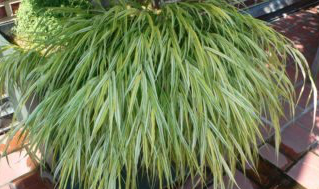
How to Grow Forest Grass
Forest grass is a reliable, slow-growing grass with broad ornamental appeal. It can be planted in the ground or in attractive containers. Choose a well-draining growing medium, or make one with equal parts peat moss, horticultural sand and compost.
Japanese forest grass needs consistent moisture, but cannot tolerate boggy conditions, so it needs a container with several drainage holes. Combine it with larger containers, using dark or blue foliage plants such as hosta or the purple sweet potato vine, for maximum impact.
In northern climates, it can tolerate partial sun, but in warmer regions, it must be grown in partial to full shade.
Forest Grass Container Care
Keep Japanese forest grass evenly moist. You can spread organic material such as compost on top, fine bark or even gravel, which prevents weeds and preserves moisture.
If freezing occasionally occurs in winter, bury the pot in the ground or move it indoors. Northern gardeners need to move the container to a place where the plant will not freeze.
Provide half the water it normally gets in winter, and increase it as spring arrives. Every three years, divide the plant for better growth. In early spring, take it out of the container and use a sharp, clean tool to cut the plant into 2 or 3 sections, each with leaves and roots. Plant each section in fresh potting medium.
Cut back dead leaves in autumn or early spring to make way for new foliage. This grass has few disease or pest problems, and will add a wonderful containerized element to a moving garden.