How to Scientifically Apply "Postpartum Fertilizer" After Grape Harvest
Original title: What Is the Most Nourishing Way to Replenish Grape "Postpartum Fertilizer"
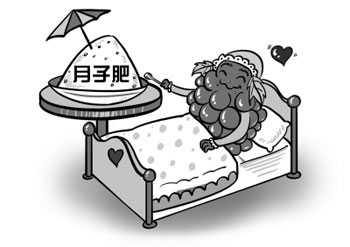
Postpartum fertilizer Illustration: Wu Di
Trench application of base fertilizer
Hole application of base fertilizer
Integrated water and fertilizer management
San Nong Express comprehensive report: Do grapes also need to "go through postpartum confinement"? That's right! After the grapes are harvested, the fruit has taken away most of the nutrients from the vine, and at this point the grapevine is as weak as a mother after childbirth, needing timely nutrient supplementation to restore its vigor. During the "postpartum confinement" period, what should growers supplement for their grapevines? Ji Yanzhi, associate professor at Hebei Agricultural University, suggests that the period from after fruit harvest to before overwintering is the nutrient storage stage for grapes, and growers should promptly apply "postpartum fertilizer" to the grapevines, mainly organic fertilizer supplemented by chemical fertilizer, to provide sufficient nutrients for vine growth in early spring of the following year.
"Just like a mother after childbirth, the period from grape harvest to overwintering is the nutrient storage stage, requiring 'postpartum confinement' to replenish the consumed nutrients," Ji Yanzhi told reporters. "During this period, which is both the flower bud differentiation stage and the peak period of root growth, tree nutrients shift from being transported to the fruit before harvest to accumulating in the vine itself, thus requiring large amounts of nutrients. In addition, the air and soil temperatures are relatively high at this time, and damaged roots of the vine heal easily, so timely 'postpartum confinement' can effectively promote new root growth."
The "postpartum confinement" Ji Yanzhi refers to means growers applying "postpartum fertilizer" to grapevines after harvest through trench or hole application of base fertilizer and foliar spraying. "'Postpartum fertilizer' has obvious effects: first, it can increase nutrient accumulation in the vine; second, it helps damaged roots heal and new roots sprout; third, it avoids soil drought caused by fertilization; fourth, it allows base fertilizer to exert its fertilizer effect at the right time," Ji Yanzhi explained.
"Postpartum Fertilizer" Must Be Timely
Grape "postpartum fertilizer" sounds interesting, but fertilization must be done at the right time. Generally speaking, September to November each year is the best fertilization period for "postpartum fertilizer." Ji Yanzhi said: "Autumn application of base fertilizer helps increase nutrient accumulation in the vine, improve photosynthesis and increase the storage of organic matter in the plant, which is extremely beneficial to the vine vigor, fruit yield and quality of the following year."
Ji Yanzhi introduced that her research team found during a survey in Zhuolu County, Hebei, that many growers tend to neglect applying "postpartum fertilizer" after grape harvest: some are pressed for time because they immediately carry out winter pruning and burying vines for cold protection after harvest; some find it troublesome and think there is no need to fertilize after harvest since there is no fruit; and some have insufficient understanding of the effects of "postpartum fertilizer."
In addition, the research team's survey of 158 growers found that only 15 applied base fertilizer in autumn, accounting for 9.5% of the total surveyed, while other growers all applied fertilizer in spring. In response, Ji Yanzhi pointed out: "If base fertilizer is only applied in winter or spring, the fertilizer effect will be delayed. In spring, when new shoots and fruit are growing simultaneously and require large amounts of nutrients, there will be competition due to insufficient nutrients, reducing the fruit set rate and affecting flower bud differentiation, fruit enlargement, coloring and sugar content."
It can be seen that if grape "postpartum fertilizer" is neglected, it really can be a case of "one missed fertilization affecting three generations of fruit." Ji Yanzhi stated that if grapes do not "go through postpartum confinement" properly and later-stage vine management is neglected, it will lead to premature leaf damage, reduced photosynthesis and depleted stored nutrients in the vine, thereby causing nutrient deficiency in early spring of the following year, with late and uneven sprouting, and even flower bud degradation, reducing flowering and fruiting. Fewer flowers and fruit will in turn cause excessive vegetative growth of branches and leaves the following year, further affecting the fruit yield in the third year.
"Postpartum Fertilizer" Must Be Applied Well
"Grape 'postpartum fertilizer' should be mainly organic fertilizer, including decomposed farmyard manure or factory-produced commercial organic fertilizer, supplemented by chemical fertilizer," Ji Yanzhi said by way of example. The research team's 4-year experiment at the Grape Science and Technology Demonstration Park in Huailai County, Hebei Province, found that autumn application of organic fertilizer reduced the amount used by 30% compared with traditional fertilization, yet increased yield by 13.8%; the vitamin C content in the fruit was 14.25 mg per 100 g, about 40% higher than with traditional fertilization.
In fact, Ji Yanzhi also found during her survey that nitrogen, phosphorus and potassium nutrient inputs in the main grape-producing areas of Hebei Province were on the high side. Soil organic matter content in the orchards ranged from 9.6 to 14.3 g/kg, at a deficient or low level, and 74% of the orchards in the survey samples applied less than 1000 kg of organic fertilizer per mu.
"This shows that many farmers still only value chemical fertilizer while neglecting organic fertilizer," Ji Yanzhi continued. "Of course, an appropriate amount of chemical fertilizer input is also important. For example, for table grapes 'going through postpartum confinement,' the fertilization principle should be base fertilizer as the main component, supplemented by reasonable topdressing of chemical fertilizer during key growth stages, and foliar spraying of medium and trace element fertilizers."
"Postpartum Fertilizer" Must Be Applied Skillfully
How can post-harvest grape "postpartum fertilizer" be applied skillfully? Ji Yanzhi said there are two methods: first, trench or hole application of base fertilizer; second, foliar spraying.
How should trench or hole application of base fertilizer be carried out? Ji Yanzhi explained that from after harvest to before burying vines for cold protection, from September to mid-November is the peak period of grape root growth and development. Generally, trenches are opened or multiple holes are dug alternately on both sides of the planting row every other year, at a distance of 40 cm from the vine, with a fertilization trench 40 cm deep and 30 cm wide. When digging the trench, topsoil and subsoil should be placed separately. Before fertilizing, first backfill a layer of about 10 cm of topsoil, apply 1000-1500 kg of organic fertilizer per mu, then apply 35 kg of grape-specific fertilizer, mix the soil and fertilizer evenly, and finally backfill with subsoil until the trench is level.
How should foliar fertilizer be sprayed? She said that from after harvest to before leaf fall, generally from September to the end of October, leaf photosynthesis enters its second peak, and 0.2% urea + 0.2% potassium dihydrogen phosphate should be sprayed about every 10 days, for 2-3 consecutive applications.
"In addition, we have also proposed soil testing and formulated fertilization technology, making grape 'postpartum fertilizer' more targeted," Ji Yanzhi stated. "This is based on soil testing and fertilizer field trials, and according to the fertilizer requirements of grapes, soil nutrient supply capacity and fertilizer effects, on the basis of reasonable application of organic fertilizer, to study the amount, timing and method of applying nitrogen, phosphorus, potassium and other fertilizers."
Don't Let "Postpartum Fertilizer" Cause Harm
Apply it well, apply it skillfully, but don't cause harm! "Broadcasting or shallow application of organic fertilizer can easily lead to increased fertilizer amounts, making it difficult for grape roots to grow downward, and poorly decomposed organic fertilizer can also easily cause problems such as pests and diseases," Ji Yanzhi explained. On the one hand, excessive application of organic fertilizer can cause ammonia volatilization and nitrate leaching, thereby raising nitrate content in groundwater; on the other hand, fresh and undecomposed organic fertilizer will strengthen the denitrification trend in soil, increasing nitrous oxide emissions. Third, excessive application of manure can also cause heavy metal accumulation in soil.
Excessive application of chemical fertilizer can also cause soil pollution. Nitrogen fertilizer in particular can enter water bodies and raise nitrate content while also increasing nitrous oxide emissions into the atmosphere. Ji Yanzhi gave an example: in recent years, nitrogen fertilizer application in Hebei Province's grape production has reached as high as 75 kg of pure nitrogen per mu, equivalent to 163 kg of urea. After nitrogen fertilizer is applied to the soil, apart from being absorbed and utilized by the vines, 15%-46% of the nitrogen remains in the soil, 3%-57% is lost through volatilization, and 10%-38% is lost through infiltration, with about 70% of the nitrogen fertilizer in total entering the environment, causing deterioration of the ecological environment.
"Also, remember that chlorine-containing fertilizers must not be applied," Ji Yanzhi reminded. "In fact, the key to grapes 'going through postpartum confinement' well is still scientific and reasonable fertilization and vine management." (Reporter Liu Zhenyuan)
>>> San Nong Technology, more ways to wealth await you
http://www.gdcct.net/agritech/kjxnbl/
>>> Technology feature, uncovering the scientific secrets behind traditional agricultural experience
http://www.gdcct.net/agritech/feature/
>>> Agricultural commentary, the most creative professional opinions on agriculture, rural areas and farmers
http://www.gdcct.net/agritech/bzh/