Free-range eggs from the Taihang Mountains are sold in Beijing city
Original title: Raising chickens in the mountain forest
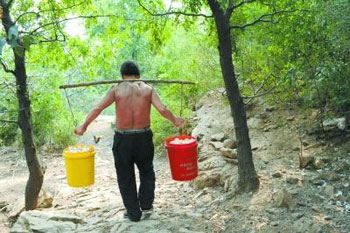
Hou Zhenjiang carries the eggs down the mountain on a shoulder pole, then at the foot of the mountain loads them onto an electric tricycle and hauls them home.
The free-range chickens peck for insects and eat grass on the mountain, and Hou Zhenjiang still has to feed several thousand chickens 300 kg of corn on schedule every morning and evening.
At night, Hou Zhenjiang stays in the small red house on the mountain, with the chickens, dogs and geese for company. Hou Zhenjiang goes to bed early and rises early every day, full of energy.
Hou Zhenjiang cracks open a free-range egg and inspects its freshness in the sunlight.
Before the holiday, the Beijing Zhongjing Veterans Green Industry Base bought quite a few free-range eggs from Hou Zhenjiang's home. The Hou family's free-range eggs left the mountains for the first time and were sold to Beijing.
Comprehensive report by San Nong Zhi Tong Che: Hou Zhenjiang raises several thousand free-range chickens in the forest of the Taihang Mountains. Before the holiday, his family's free-range eggs were sold to Beijing, 200 km away. The 67-year-old Hou Zhenjiang was overjoyed: “I never expected our eggs to sell so far away and make it onto Beijing people's dinner tables.”
Hou Zhenjiang's way of raising chickens is traditional, green and close to nature.
Hou Zhenjiang is a villager of Xinzhuang Village, Pushang Town, Shunping County, Hebei Province. Years ago he contracted two mountain tops that no one else in the village wanted, obtaining the right to use the barren hills. Hou Zhenjiang first planted 600 persimmon trees and more than 100 jujube trees on the hillside, and later raised more than 20 sheep, but the returns were never good. Later, Hou Zhenjiang set up a natural chicken farm in the orchard that had already grown up, raising free-range chickens the traditional way.
He bought 4,000 chicks and let them range freely on the hillside, and also bought two wolfdogs and 10 large geese to guard against weasels and eagles stealing the chicks. Hou Zhenjiang himself also moved up the mountain to look after the chicks. A few months later, the several thousand chicks had grown up, pecking for insects and eating grass all over the mountain, and laying more and more eggs. In recent years, the free-range chickens on the mountain have been replaced generation after generation, Hou Zhenjiang's chicken-raising experience has grown richer and richer, and his fame as a chicken raiser in Shunping County has grown greater and greater.
The mountain forest chicken farm is four or five li from the village. Relying on pecking for insects and eating grass alone, the chickens cannot eat their fill. Every morning Hou Zhenjiang feeds several thousand chickens corn, then carries a plastic bucket around the mountain collecting eggs, and then carefully transports them down the mountain. After eating breakfast at home, Hou Zhenjiang hauls 700 kg of water from home up the mountain for the chickens, geese and dogs to drink. In the afternoon, Hou Zhenjiang collects eggs on the mountain once more, and then hauls them home while they are still fresh.
Shunping is an old revolutionary base area and a nationally designated poverty-stricken county. Hou Zhenjiang, who as a child did not finish primary school because his family was poor, sells his family's free-range eggs directly to Beijing, and he is very proud of it. His wish is to let more Beijing people eat his family's authentic free-range eggs. (Staff reporter Hu Tiexiang, photo report)