A path to wealth through chicken farming: The "Chicken Commander" grasps market demand and connects with consumer groups
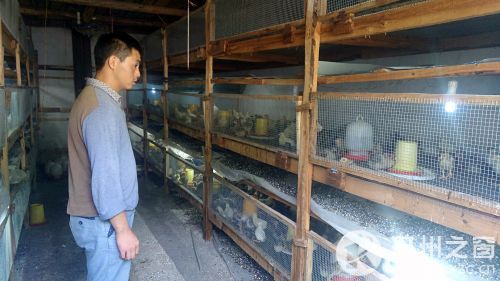
Chen Shuang inspects the growth of the chicks
Recently, the reporter visited Chen Shuang's chicken farm, where several chickens with unusual appearances were chasing each other and playing under the muskmelon vines. He told the reporter that these are called "Princess chickens" (Silkie chickens), a breed not commonly seen locally.
Choosinga startup project
Chen Shuang, 27, is from Tianbaozhai Village in Dajin Town and moved to Qunhe Village in the same town many years ago. After years of working away from home at a surveying company, he enjoyed a generous salary and a worry-free life, but he was not satisfied and had other plans in mind.
"I want to start my own business and accomplish something." In 2014, Chen Shuang returned to his hometown and began looking for a startup project.
At a chicken farm in Chengdu, Chen Shuang saw tall nets all around. When the flock was startled, the chickens actually took off one after another.
The owner told Chen Shuang that he mainly raised Princess chickens and helmeted guinea fowl. Both could run and fly, had good meat quality, and sold well.
After hearing this, Chen Shuang got the idea to raise chickens, so he invested more than 700,000 yuan to build a chicken farm and buy chicks, starting his entrepreneurial path in chicken farming.
Going out to learn techniques
Watching the chicks grow day by day, Chen Shuang was full of confidence, but an epidemic dealt him a heavy blow.
More than 10,000 helmeted guinea fowl at the farm became infected with bacteria and died in large numbers. Although Chen Shuang immediately took remedial measures such as isolation and medication, the losses were still severe.
"I never thought about giving up. Since I chose this path, I have to see it through." Unwilling to admit defeat, Chen Shuang quickly pulled himself together and began to strengthen his study of farming techniques.
In the second half of 2015, Chen Shuang handed management of the chicken farm to his father and traveled to major chicken farms in Chongqing, Shaanxi, Chengdu and other places to learn from peers. Half a year later, he had finally gained something from his studies and mastered methods for preventing and treating chicken diseases.
In addition, Chen Shuang invited professors from Southwest University to visit his chicken farm and guide him on scientifically mixing feed. "This feed formula can shorten the farming cycle without changing the taste or nutritional value of the chicken meat. I plan to produce it on a large scale to improve efficiency," Chen Shuang said.
Grasping market demand
Chen Shuang's chicken farm mainly raises meat chickens and helmeted guinea fowl, supplemented by a small number of Princess chickens. This farming structure was the conclusion he reached after market research and other efforts.
"At present, the most sold on the market are meat chickens, followed by helmeted guinea fowl, while demand for Princess chickens is relatively small," Chen Shuang said. The farm keeps a large inventory of meat chickens, which are lower in price and mainly sold wholesale. Helmeted guinea fowl and Princess chickens are higher in price; helmeted guinea fowl are mainly sold through contacts made by the farm, while most Princess chickens are ordered by individuals.
"This sales model connects with different consumer groups and avoids the situation of chickens going unsold," Chen Shuang told the reporter. He also brings meat chickens of different weights to market in different seasons, successfully matching consumer seasons.
"In this season I sell meat chickens of about 3 jin, a suitable weight with very tender meat, and they are quite popular," Chen Shuang said. Around the Chinese New Year, market demand for larger meat chickens increases, so he mainly sells meat chickens of more than 5 jin.
As of August this year, Chen Shuang's chicken farm had sold a total of 25,000 commercial chickens, with sales of nearly 1 million yuan. After deducting various costs, net income was more than 300,000 yuan.
Planning under-forest chicken farming
"Market competition is fierce this year. I plan to expand the farm's inventory to 30,000-60,000 chickens." Chen Shuang's chicken farm is backed by a mountain and close to a kudzu root base, creating good conditions for free-range raising.
"Raising chickens under the forest not only saves costs, but the chicken meat is also better and the price is higher," Chen Shuang said. Both Princess chickens and helmeted guinea fowl have flying ability, so when free-range raising them, nets must be built well to prevent them from escaping.
Chen Shuang plans to transfer the surrounding mountain forest before the end of the year and set up nets along the forest edge so the chickens can be raised free-range in the woods, fed corn and other coarse grains, and build a brand of under-forest grain-fed chickens. At the same time, he has discussed with the owner of the kudzu root base that after the kudzu vines spread, the chickens will be let into the field to eliminate weeds and pests. This can both reduce farming costs and save management costs at the kudzu root base, achieving two goals at once.