Citrus becomes the golden fruit that makes villagers rich
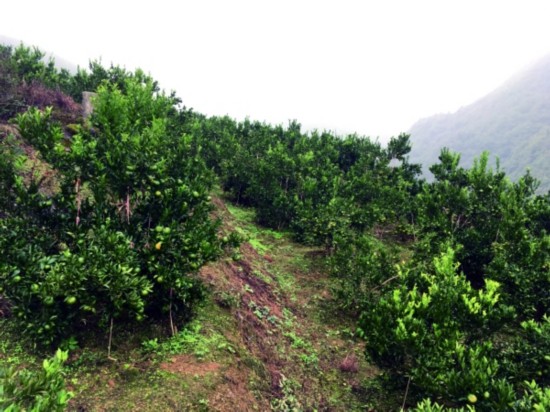
The picture shows Chen Qi's citrus orchard.
In November, the weather gradually turns cold, but Chen Qi's face is covered with a warm smile, because the more than 50 mu of citrus he planted is about to yield a bumper harvest.
As early as 2010, Chen Qi, who lives in Wangche Village, Hefeng Township, began growing citrus. At that time, most villagers in Hefeng Township still made a living by growing traditional crops such as corn and rice. The villagers believed that only by planting grain on the land would people not go hungry. As for Chen Qi's "risky attempt," the villagers all said, "This guy is simply reckless."
"To get rich, you have to seize opportunities and find some good ways," Chen Qi said in response to the villagers' lack of understanding.
Before growing citrus, Chen Qi always loved watching CCTV agricultural news and Guizhou tourism news, because that was the "treasure bowl" of his dream of getting rich. "Agricultural news let me understand the prospects of the planting industry and some planting techniques; Guizhou tourism news made me realize that developing the planting industry can also develop tourism, which on TV is called 'integrated agriculture and tourism.'" Chen Qi said.
In recent years, Hefeng Township has continuously increased investment in rural tourism infrastructure and has now successfully built rural tourism brands such as Matou Ancient Village, Shuidiaogetou and Wangche Bouyei Calligraphy Village, laying a good foundation for the masses to develop the planting industry and advance the development of "integrated agriculture and tourism."
By comparing the village's advantages with some typical news cases, Chen Qi finally decided to grow citrus in the village. To do a good job in citrus planting, Chen Qi also asked someone to buy back from Guiyang books and CDs on citrus planting management, grafting and pruning, and pest and disease prevention, and he would study them whenever he had time.
Everything is difficult at the beginning. In those two years, the villagers' land was all used for growing grain, so transferring land from the villagers became the first problem in Chen Qi's development of citrus planting. Therefore, Chen Qi went from door to door to do ideological work, and finally transferred 30 mu of land from the villagers. Adding his own more than 20 mu of land, the total was 50 mu. With the land secured, Chen Qi began growing citrus.
In recent years, due to abundant rainfall and proper management, the fruit trees have grown extremely well. Last year, the citrus began to bear fruit. But Chen Qi knew that letting the fruit trees bear fruit and go into production early would greatly affect the quality of the citrus produced later. Therefore, all of last year's citrus was removed by hand.
This year, more than 50 mu of citrus trees officially bore fruit and went into production. Walking into the orchard, abundant fruit hangs all over the branches, and Chen Qi naturally beams with joy.
"This December the citrus can be picked, and each citrus tree is expected to produce about 100 jin of fruit. Based on the current average market price of 1 to 3 yuan per jin, after deducting costs, a profit of 30,000 yuan can be obtained. In addition, as tourism in Hefeng Township continues to mature, people have already called to ask about fruit forest picking experiences," Chen Qi said.
For future development, Chen Qi plans to expand the planting scale and cooperate with farmers growing citrus in surrounding villages to establish a professional cooperative for collective development. At the same time, taking rural tourism as an opportunity, he will explore holding a citrus tasting festival to enhance product visibility, and use rural e-commerce platforms for online sales, making citrus the "golden fruit" that makes villagers rich.