A master's degree holder becomes a farmer, using 75,000 mushroom sticks to lead everyone to prosperity
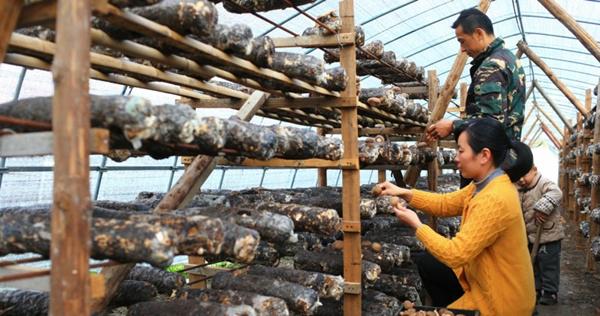
Wang Jun, a master's graduate from Zhejiang Ocean University, is a young woman from Henan. A few years ago, filled with entrepreneurial passion, she actively explored new markets for mushroom cultivation and became a "new farmer." Today, she not only grows new mushroom varieties and opens up sales channels, but has also set up a professional cooperative, leading growers to prosperity together.
Recently, a reporter visited the mushroom cultivation base of the Junmantang Agricultural Products Professional Cooperative in Shuangqiao Street, and found several cylindrical potted plants wrapped in colorful gift paper sitting on a table. Several customers were holding one of the potted plants and asking mushroom farmer Wang Jun for "tips on growing mushrooms." Looking closer, the reporter saw that the tops of these potted plants were covered with colorful oyster mushrooms of various sizes, looking exceedingly delicate and lovely.
According to Wang Jun, these are ornamental oyster mushroom potted plants she trial-planted this year. This new type of potted plant, with its bright colors and unique shapes, is very popular among young mothers and children. "For children, growing mushrooms is quite novel. It can be taken home as an educational product for kids to plant and cultivate, letting them have fun while also learning about the growth process of edible fungi," Wang Jun explained.
At present, this mushroom cultivation base has a total of 26 mushroom cultivation greenhouses, containing about 75,000 mushroom sticks, cultivating shiitake mushrooms, wood ear mushrooms, lion's mane mushrooms and several other varieties. Among them, the Zhoushan local shiitake mushrooms she focuses on cultivating account for 60,000 mushroom sticks and are the best-selling variety.
"People who come to me to buy shiitake mushrooms have now all become repeat customers. In terms of appearance, Zhoushan local shiitake mushrooms look good, and in terms of quality, the taste is also richer," Wang Jun said. Growing shiitake mushrooms may seem simple, but there is quite a bit of knowledge involved. Shiitake cultivation takes half a year, and especially in summer, water must be continuously sprayed outside the greenhouses to cool them down, otherwise it easily causes the "stick burning" phenomenon. In addition, the choice of wood material in the mushroom sticks requires great care. Local pine, camphor and fir trees, which contain antibacterial substances, cannot be used. Attention must also be paid to coordinating the carbon-to-nitrogen ratio of the nutrient material, and after the material is mixed, it must be thoroughly sterilized.
At present, Wang Jun's shiitake cultivation base has already produced mushrooms in large quantities, with a daily harvest of 250 to 300 kg. Besides traditional sales methods such as retail, wholesale and connecting with the "vegetable basket project," this year Wang Jun also sells through platforms such as WeChat and Weidian. Total sales this year are expected to reach about 800,000 yuan, double that of last year.
"Because the people of Zhoushan quite like tea tree mushrooms, and their taste and nutritional value are both good, next year we will also introduce new varieties such as tea tree mushrooms," Wang Jun said. After repeated market research, next year, in addition to increasing the planted varieties, she also plans to expand the mushroom cultivation base and set up a sales outlet at the Sannong Zhoushan Agricultural Products Wholesale Market in Shuangqiao Street, split into two sections for fresh edible mushroom wholesale and dried goods specialty sales. At present, Wang Jun has already established her own mushroom industry company and mushroom cultivation cooperative, providing professional technical assistance to farmers in places such as Daishan and Xiaosha, leading everyone to prosperity together.