What is the difference between sage and rosemary? A quick guide to telling them apart
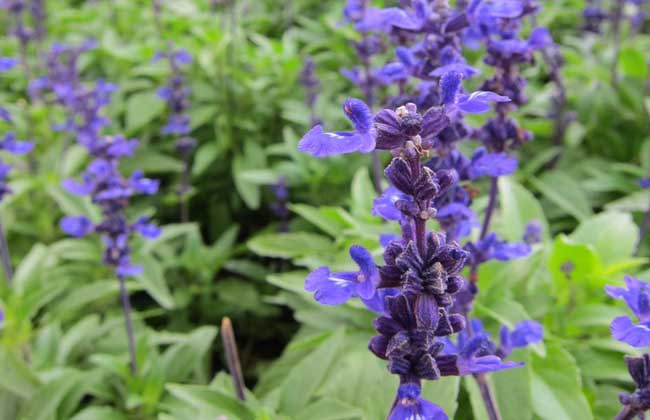
Sage is also known as garden sage, common sage, and culinary sage, among other names. It has many different uses and benefits and is often grown as a kitchen herb or a medicinal herb. Rosemary is also known as dew of the sea and tansy, among other names. Rosemary essential oil, which has excellent antioxidant properties, can be extracted from its flowers and leaves. Let us take a look below at the differences between sage and rosemary!
The difference in family and genus between sage and rosemary
1. Sage: Sage is an aromatic plant in the plant kingdom, Angiosperms, Dicotyledons, Sympetalae, Lamiales, Tubiflorae, Lamiaceae, Lamioideae, Mentheae, Salvia, subgenus Salvia.
2. Rosemary: Rosemary is a shrub in the plant kingdom, Angiosperms, Dicotyledons, Asteridae, Lamiales, Lamiaceae, Lamioideae, Rosmarineae, Rosmarinus.
The difference in appearance between sage and rosemary
1. Sage: The sage plant is shrub-like, about 60 cm tall, with broadly elliptical leaves covered in short fine hairs, grayish-green to whitish-green, rough or finely wrinkled. The verticillasters have 2 to 6 flowers and form elongated racemes or, when branched, form racemose panicles. The color varies by variety: purple, pink, white, or red. The flowering period is from June to September, and it has a fragrant, slightly pungent scent.
2. Rosemary: Rosemary grows up to 2 m tall. The stem and old branches are cylindrical, with dark gray bark that splits in irregular longitudinal fissures and peels off in chunks. The young branches are four-angled and densely covered with fine white stellate hairs. The leaves often grow in clusters on the branches, with very short petioles or no petioles. The flowers are nearly stalkless and opposite, with a few gathered at the tips of short branches to form racemes. The floral disc is flat-topped with equal lobes, and the ovary lobes alternate with the disc lobes. The flowering period is November.
The difference in origin between sage and rosemary
1. Sage: Sage is native to southern Europe and the coastal areas of the Mediterranean. In China it mainly grows in Zhejiang, southern Anhui, Jiangsu, Jiangxi, Hubei, Fujian, Taiwan, China, Guangdong, Guangxi, and other places, and it is also found in Japan.
2. Rosemary: Rosemary is native to Europe and the Mediterranean coast of North Africa. In southern Europe it is mainly grown as a cash crop. It was introduced to China during the Cao Wei period, and is now mainly cultivated in most parts of southern China and the Shandong region.
The difference in benefits between sage and rosemary
1. Sage: Sage tastes bitter and pungent and is neutral in nature. It has the benefits of clearing heat and draining dampness, promoting blood circulation and regulating menstruation, and detoxifying and reducing swelling. It is mainly used to treat jaundice, red and white dysentery, damp-heat leukorrhea, irregular menstruation, dysmenorrhea, sores and boils, and bruises. Traditional hospitals in Europe used sage essential oil to disinfect wards. Because it also has the benefit of promoting hormone activity, women used sage after childbirth to reduce breast milk secretion.
2. Rosemary: Rosemary has calming and mind-sharpening effects and has a certain therapeutic effect on indigestion and stomach pain. It can also be used to treat insomnia, palpitations, headaches, indigestion, and many other conditions. When used externally, it can treat trauma and arthritis. It also has effects such as strengthening the heart, promoting metabolism, and promoting blood circulation in the peripheral blood vessels.