What is the general market price for a pot of Aloe polyphylla?
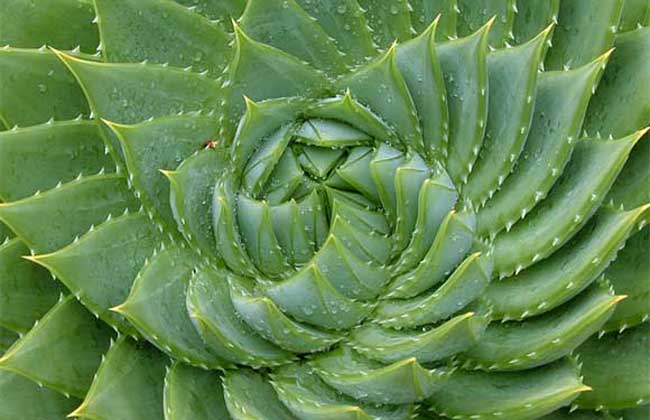
Aloe polyphylla is an aloe endemic to the Drakensberg Mountains of Lesotho, also known as spiral aloe, Solomon's royal jade crown, and so on. Unlike ordinary aloes, its leaves are triangular and arranged in a spiral, forming the shape of a round pot. It usually blooms in spring and early summer and has extremely high ornamental cultivation value. Let us take a look below at how much a pot of Aloe polyphylla costs!
How much is a pot of Aloe polyphylla?
The price of a small seed-grown Aloe polyphylla seedling is about 40 to 60 yuan per pot. Aloe polyphylla is an aloe endemic to the Drakensberg Mountains of Lesotho and has extremely high ornamental value. Seedlings can usually only be obtained by sowing seeds and by manually intervening to damage the growth point, so the price of Aloe polyphylla seeds is also among the most expensive of almost all plants. Because it does not bloom often, and even when it blooms there is no suitable opportunity and pollination makes seed setting difficult, the record price for a single seed even exceeds 10 euros.
Growth habits of Aloe polyphylla
Aloe polyphylla is distributed on high-altitude mountain slopes, growing in loose rocks within basalt rock crevices on steep slopes, and often grows in the cloud belt of Lesotho. The soil in its growing area is well drained, and summer rainfall is abundant. It likes environments with extremely large day-night temperature differences. During the winter dormant period, the plant can withstand freezing without damage, and in summer during the day it can also withstand high temperatures above 40°C. It has a very long lifespan and can survive for more than 50 years.
Propagation methods of Aloe polyphylla
Aloe polyphylla cannot reproduce asexually and can only be grown by sowing seeds. After the plant blooms, it can self-pollinate, but it cannot be determined whether the resulting seeds are viable. Cold moist stratification of Aloe polyphylla seeds can break embryo dormancy. Hydrogen peroxide, alcohol, hydrochloric acid, and sodium hydroxide can increase the permeability of the inner seed coat, but do not increase the germination rate. Soaking in gibberellic acid will not increase the germination rate.
How to grow Aloe polyphylla
1. Soil: Aloe polyphylla likes to grow in loose soil that drains well and does not easily compact. Some water gravel and ash residue can be mixed into ordinary soil. Just be careful to avoid soil with poor drainage and poor aeration. Soil with poor drainage and aeration easily hinders root respiration and leads to poor growth.
2. Light: Aloe polyphylla is relatively light-loving, and sufficient light is essential. During cultivation, it should be placed in a sunny area to get more sun. However, newly planted Aloe polyphylla is not suitable for direct sun exposure. It is best to let it receive sunlight only in the morning. After ten days to half a month, it will slowly adapt and thrive in the sun.
3. Temperature: Aloe polyphylla has strong adaptability and likes to grow in environments with extremely large day-night temperature differences. It tolerates high temperatures and also adapts to low temperatures. It can withstand freezing without damage and can also endure high temperatures above 40 degrees, so there is nothing much to pay attention to regarding temperature.
4. Watering: Aloe polyphylla also needs an appropriate amount of water supply for growth, but like ordinary aloe plants, it is very afraid of waterlogging. Waterlogging is very likely to damage the growth and development of the plant's root system, causing root rot and wilting. In daily cultivation, watering should be appropriate, watering when dry and letting it dry between waterings, and it is best to keep the soil slightly dry.
5. Fertilizing: Although Aloe polyphylla has a very low fertilizer requirement, this does not mean that no fertilizing is needed. At the same time, when fertilizing, in addition to the necessary potassium phosphate fertilizer, an appropriate amount of trace elements can ferment organic fertilizer, making plant growth smoother and faster.
6. Diseases: The common diseases of Aloe polyphylla mainly include anthracnose, brown spot disease, leaf blight, southern blight, and bacterial diseases. Before diseases occur, or after removing the diseased parts of plants that have already become diseased, applying 0.5 to 0.8 Bordeaux mixture with equal amounts of lime to the leaf surface can effectively prevent and inhibit the invasion and spread of pathogens.