How much does one Aloe vera plant cost? Market price reference
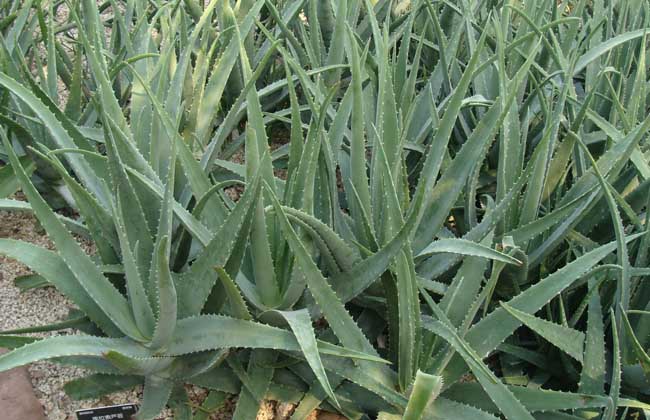
Aloe vera is also known as Barbados aloe, American aloe, and Curacao aloe, among other names. It originated in the Curacao Islands and Barbados in the West Indies of the Americas. The dried leaf juice yields a crude drug called "old aloe," which is a red paste, opaque reddish-brown or dark brown, and is therefore also called "liver-colored aloe." It has extremely high medicinal value. Let's take a look below at how much one Aloe vera plant costs!
How much does one Aloe vera plant cost?
The market price of Aloe vera is very cheap. It can be eaten and also used for beauty care. Generally, a large Aloe vera plant suitable for beauty care costs about 20 to 30 yuan each, while small plants can be bought on the market for just a few yuan. Aloe vera can be grown as a household potted plant. Later, as a result of artificial selection, many varieties were selected from Aloe vera, such as Chinese aloe, Shangnong Daye aloe, and others.
Beauty benefits of Aloe vera
1. Whitening: The natural anthraquinone glycosides in aloe are natural whitening and sunscreen ingredients. They can effectively block ultraviolet stimulation of tyrosinase activity and prevent the formation and deposition of melanin, thus having good effects in brightening skin tone, removing sallow complexion, and whitening.
2. Freckle removal: Aloe contains amino acids and vitamins that the human body cannot synthesize on its own, and can effectively stabilize melanin-active enzymes. It can decompose and inhibit enzyme activity, promote the rapid decomposition and metabolism of already formed melanin, prevent melanin from forming again, and achieve whitening and freckle-removing effects.
3. Wrinkle removal: Superoxide dismutase, with aloe polysaccharides as its core, has important effects in scavenging free radicals, preventing cell aging, and treating chronic allergies. It also accelerates cell division and revival, can quickly penetrate into the basal layer of human skin, and at the same time promotes the activation of skin cells, delays cell aging, and restores skin elasticity and firmness.
4. Repair: Aloe polypeptides and amino acids have anti-inflammatory, pain-relieving, and skin wound-repairing effects. They can also be used to treat skin inflammation and have good healing effects on acne, freckles, pimples, burns, cuts, mosquito bites, and more.
5. Sun protection: Natural mucopolysaccharides have the effect of absorbing and blocking ultraviolet rays, and can block sunlight including infrared rays, visible light, and ultraviolet rays. They prevent skin reddening, sunburn, and the formation of brown spots, and also have an anti-X-ray effect, while also having the effect of preventing skin cancer.
6. Moisturizing: While penetrating deep into the skin, aloe can block the evaporation of skin moisture. After penetrating the skin, polysaccharide components and amino acid substances have very obvious hydrating, nourishing, and softening effects, enhancing the adsorption and water-binding capacity of the stratum corneum, so that skin that has lost elasticity and a dry stratum corneum quickly achieve activation and a moisture-filled effect.
7. Acne removal: Natural aloe polypeptides can enhance the resistance of human skin, deeply cleanse the skin, inhibit bacterial growth, and have a very good effect on skin inflammation, especially acne and pimples. They can quickly repair damaged skin cells, unblock clogged pores, effectively remove acne, and repair scars left after acne removal.
Health benefits of Aloe vera
1. Beauty effects: Aloe polysaccharides and vitamins have good nutritional, nourishing, and whitening effects on human skin, with little irritation and a comfortable feeling after use. They have certain therapeutic effects on rough skin, facial wrinkles, scars, freckles, acne, and more. Aloe-emodin and other anthraquinone glycoside substances can make hair soft and glossy, light and comfortable, and have a dandruff-removing effect. Natural anthraquinone glycosides or anthracene derivatives can absorb ultraviolet rays and prevent skin reddening and brown spots.
2. Slowing aging: The mucus in aloe is an important component for preventing cell aging and treating chronic allergies. Mucin exists in human muscles and gastrointestinal mucosa, among other places, making tissues elastic. If mucin is insufficient, muscles and mucosa will lose elasticity and become stiff and aged. If the cells that make up the human body lack sufficient mucin, the cells will gradually weaken and lose the ability to defend against bacteria and viruses.
3. Detoxification: Aloe has the effect of inhibiting excessive immune reactions and enhancing the phagocytic function of phagocytes, so it can remove metabolic waste from the body. It has the effect of promoting the liver's decomposition of harmful substances in the body, and can also eliminate toxins invading the organism from outside. In the treatment of cancer with radiation or nuclear radiation, it can cause burn-like skin ulcers; aloe not only has detoxifying, anti-inflammatory, and new cell-regenerating effects, but can also increase white blood cells reduced by radiation therapy.
4. Resisting tumors: The viscous polysaccharides in aloe have the effect of improving immunity and inhibiting and destroying the growth of abnormal cells, thereby achieving an anti-cancer purpose. "Aloe antigen" has agglutinating properties for red blood cells and contains substances that can react with cell membranes. Aloe anti-cancer element-A has strong physiological activity, can improve the human body's anti-cancer immunity, increase NK cells, and kill abnormal cells in organisms such as cancer cells.
5. Bactericidal effects: Aloe tincture is a substance with strong antibacterial properties. It can kill fungi, molds, bacteria, viruses, and other pathogens, and inhibit and eliminate the development and reproduction of pathogens. The bacteria it acts against include diphtheria bacteria, tetanus bacteria, pneumonia bacteria, lactic acid bacteria, dysentery bacteria, coliform bacteria, plague bacteria, cholera bacteria, as well as those causing otitis media, cystitis, purulent infections, measles, rabies, polio, epidemic encephalitis, and others.